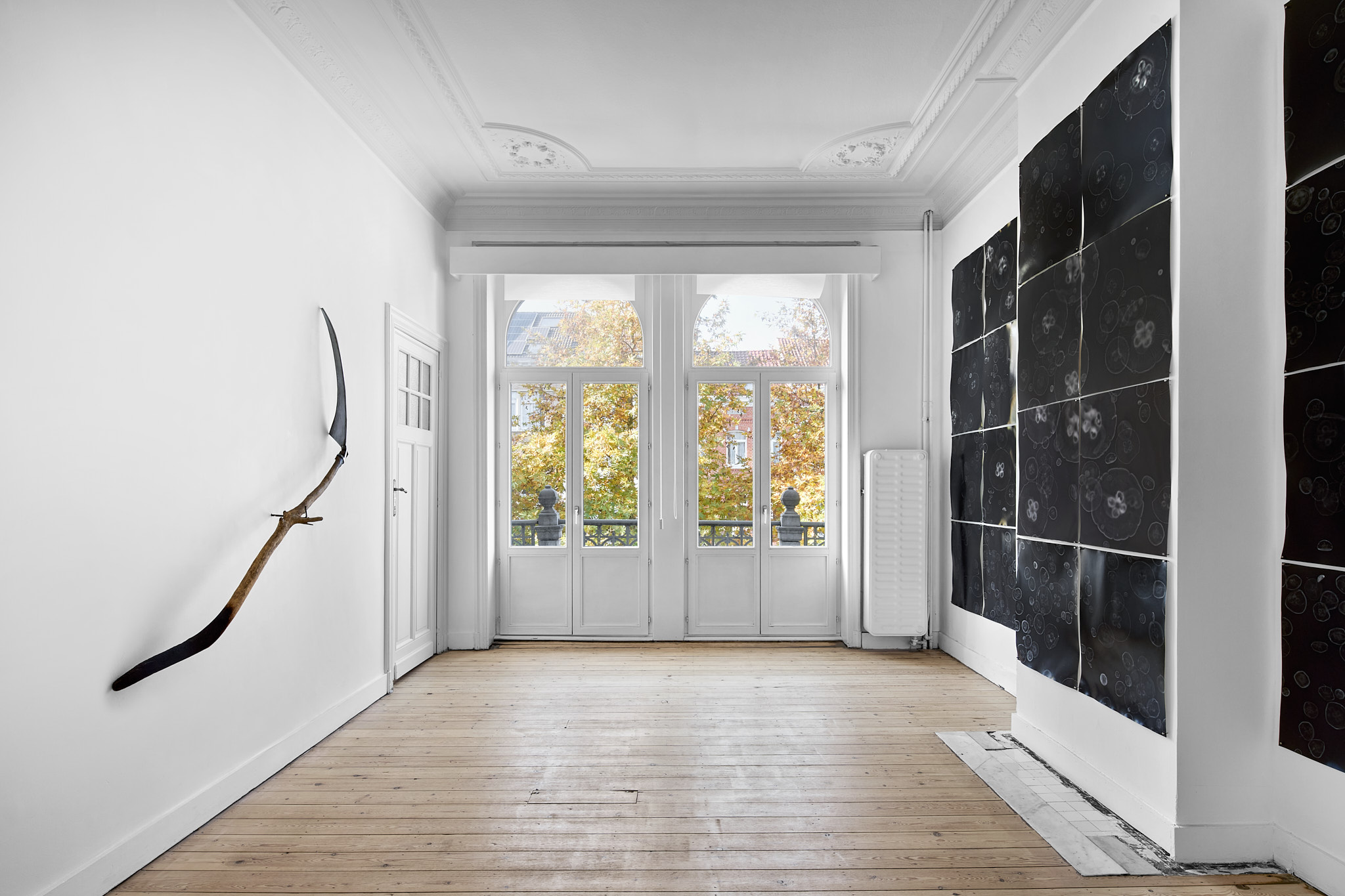
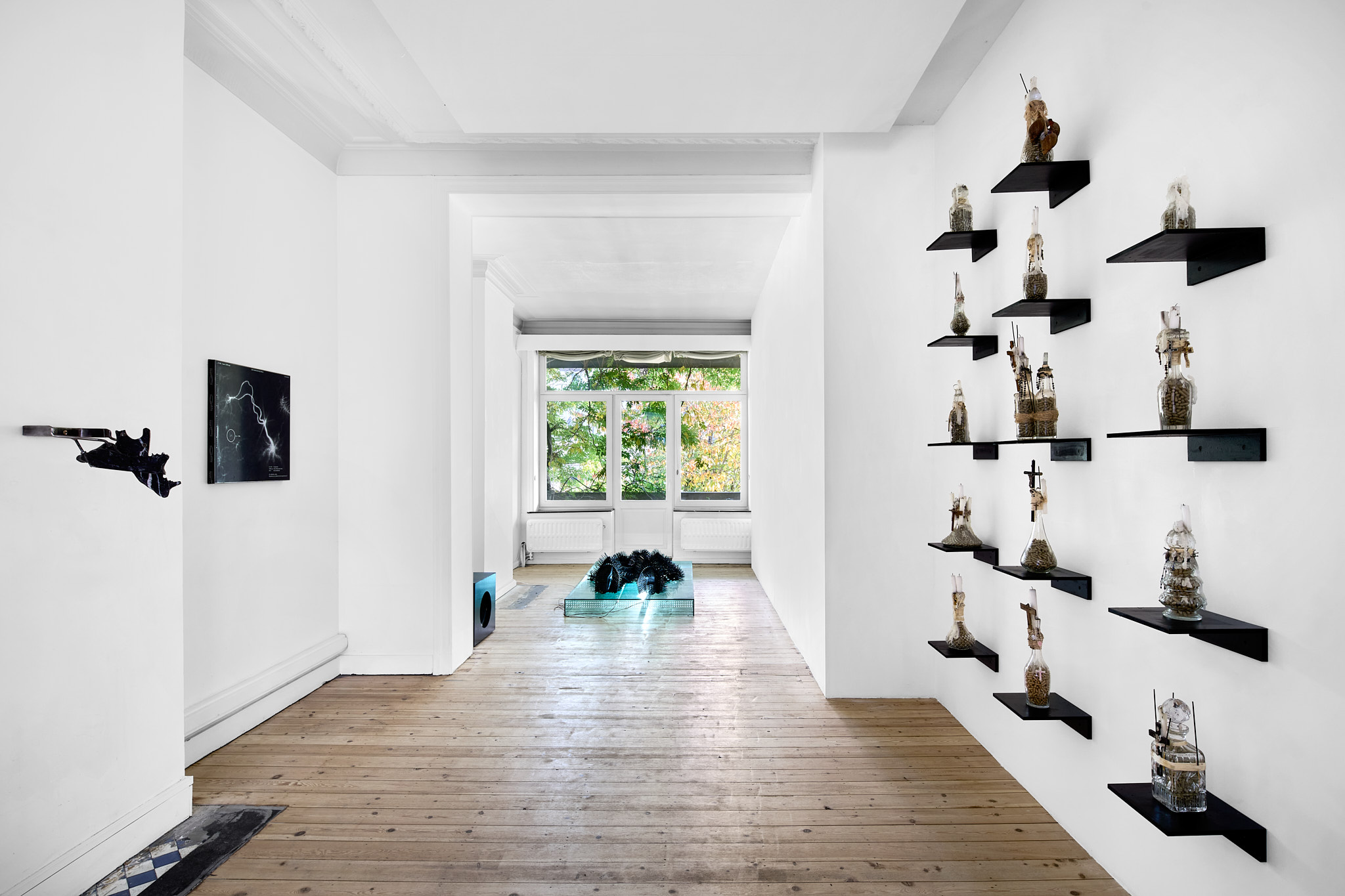
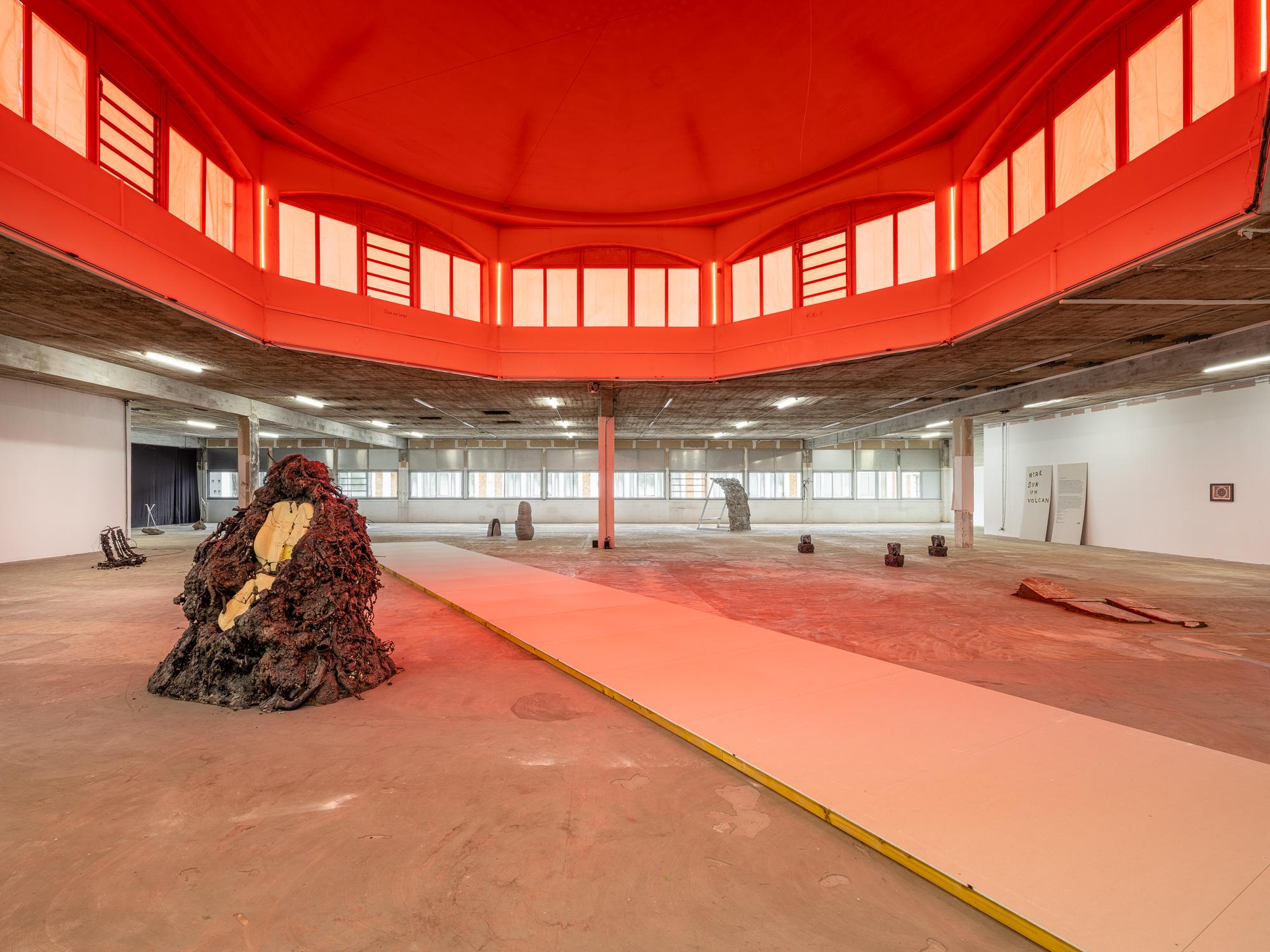
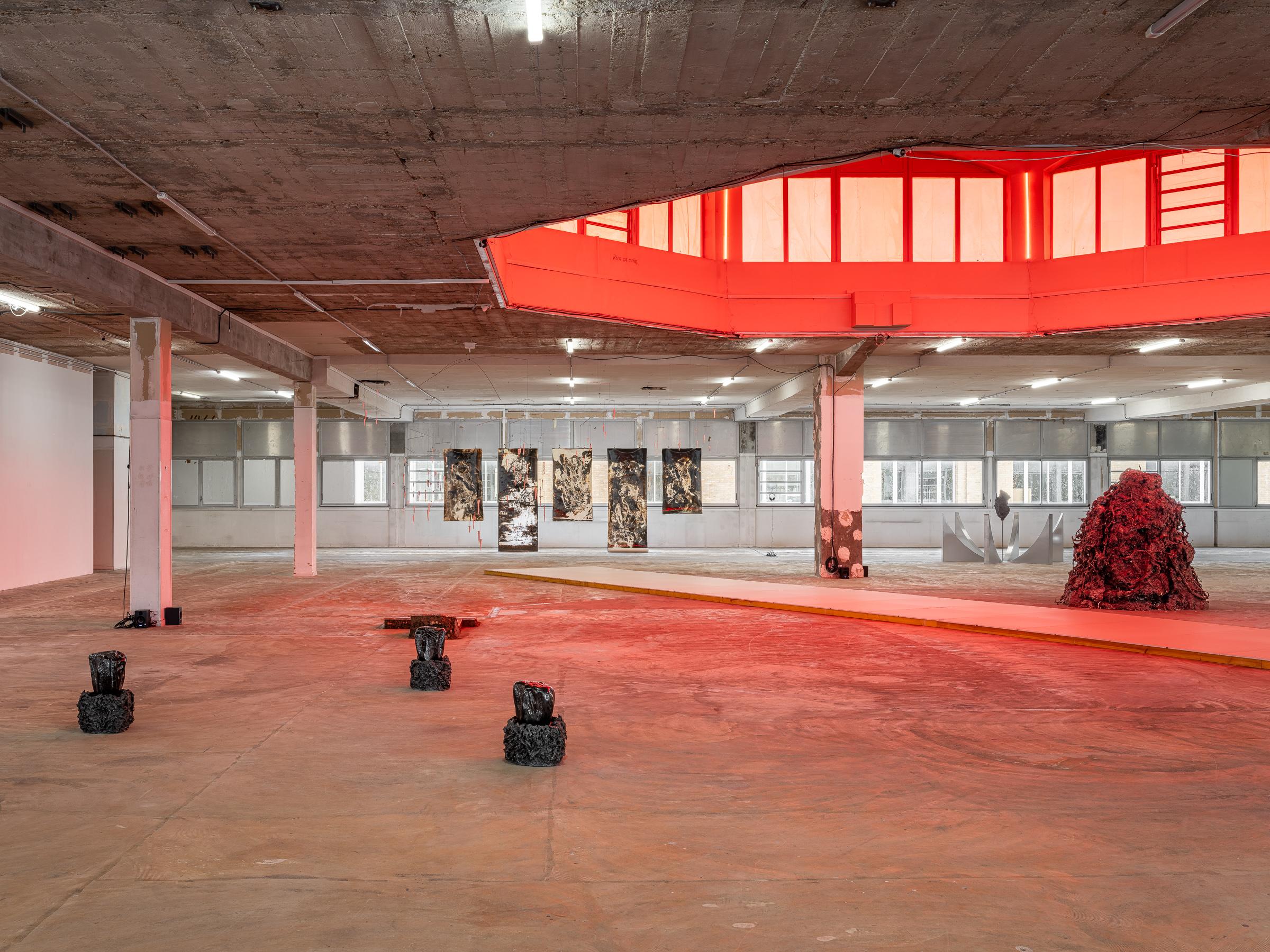
Bullshit job

Location
Centre Wallonie-Bruxelles/Paris
Dates
13 November - 3 December 2025
Co-curator(s)
Manon Klein
Artist(s)
Sophia Abderrazak, Ayla Aktan, Renaud Artaban & Alexandre Barbé, Ugo Ballara, Joséphine Berthou, Clémentine Blaison Vandenhende, Elie Bolard, Clara Bougon, Editions Burn Aout, Evangeline Font, Reem Hasanin, Ruoxi Jin, JINGDI, Lune Jusseau & Tom Rambaud, Elouan Le Bars, Fañch Le Bos, Rémi Lecussan, Raphaël Maman, Raphaël Massart & Matthias Odin, Sara Noun, Clarisse Pillard, Manon Torné-Sistero, Marcos Uriondo, Maxime Vignaud, Winju, W.I.P. Collective, Daniel Zduniuk, Kylian Zeggane
Press
Camille Bardin in Present·e - Anthony Ong in Artaïs - Artviewer
Credits
Raphaël Massart

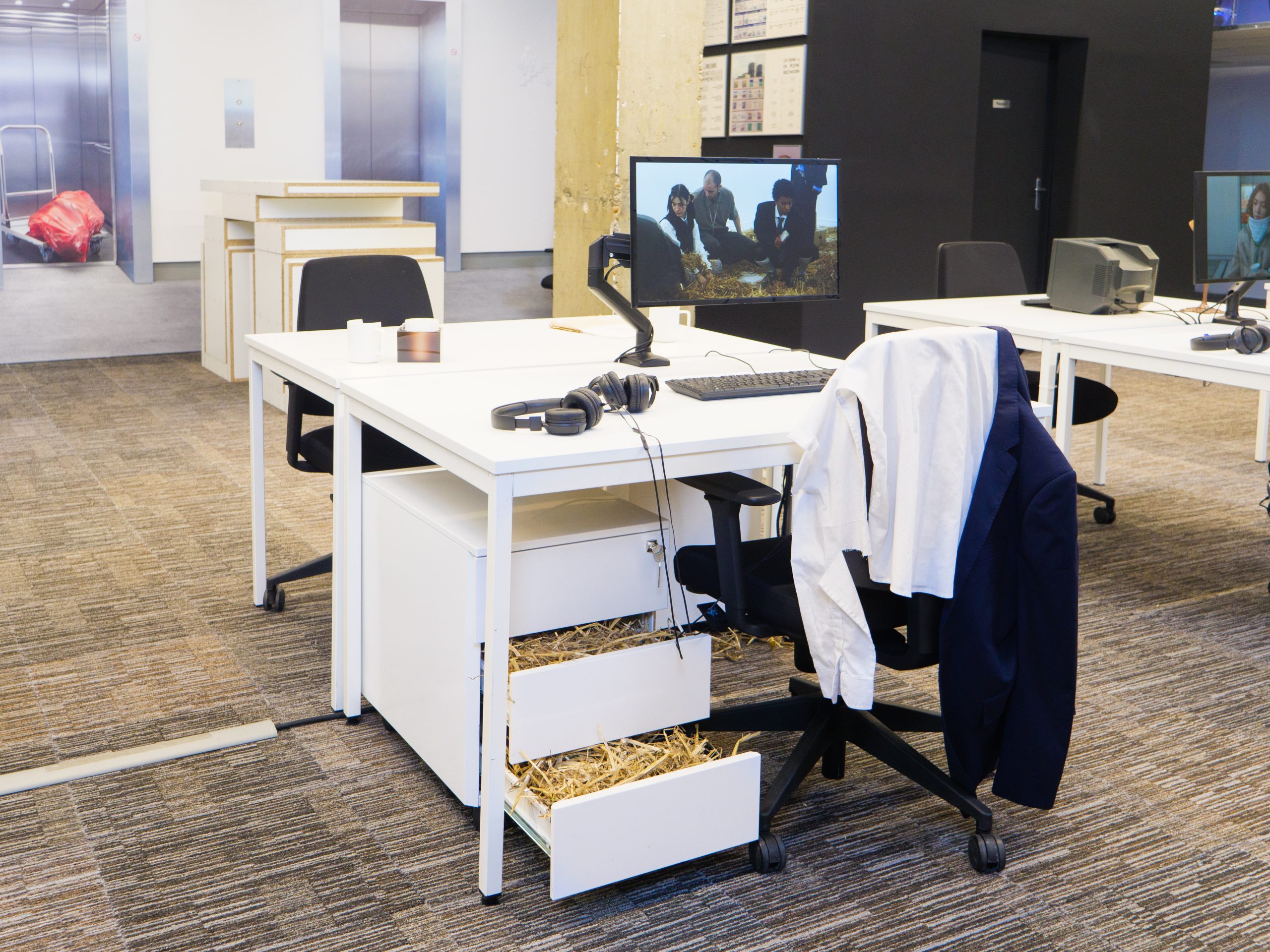
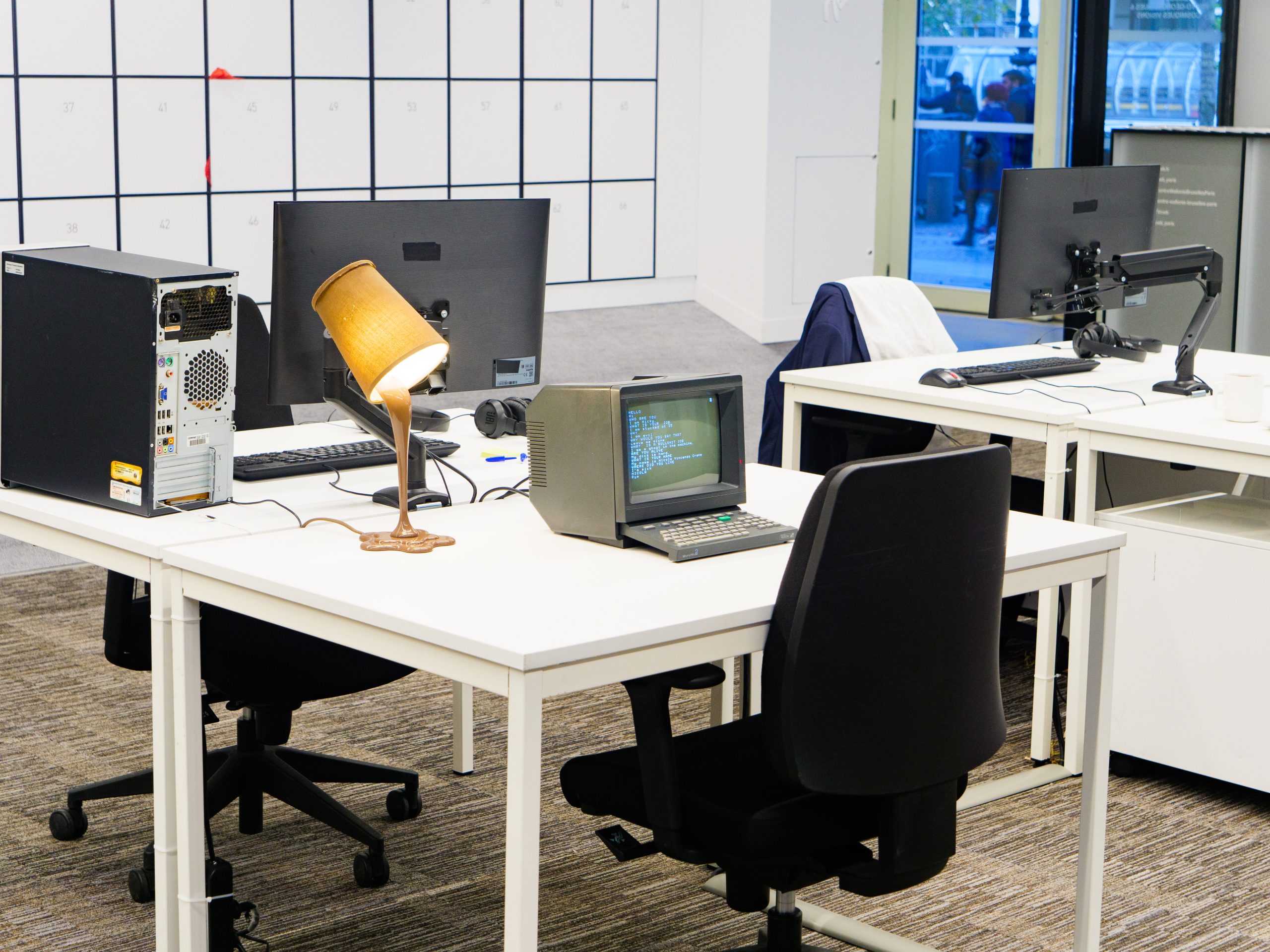
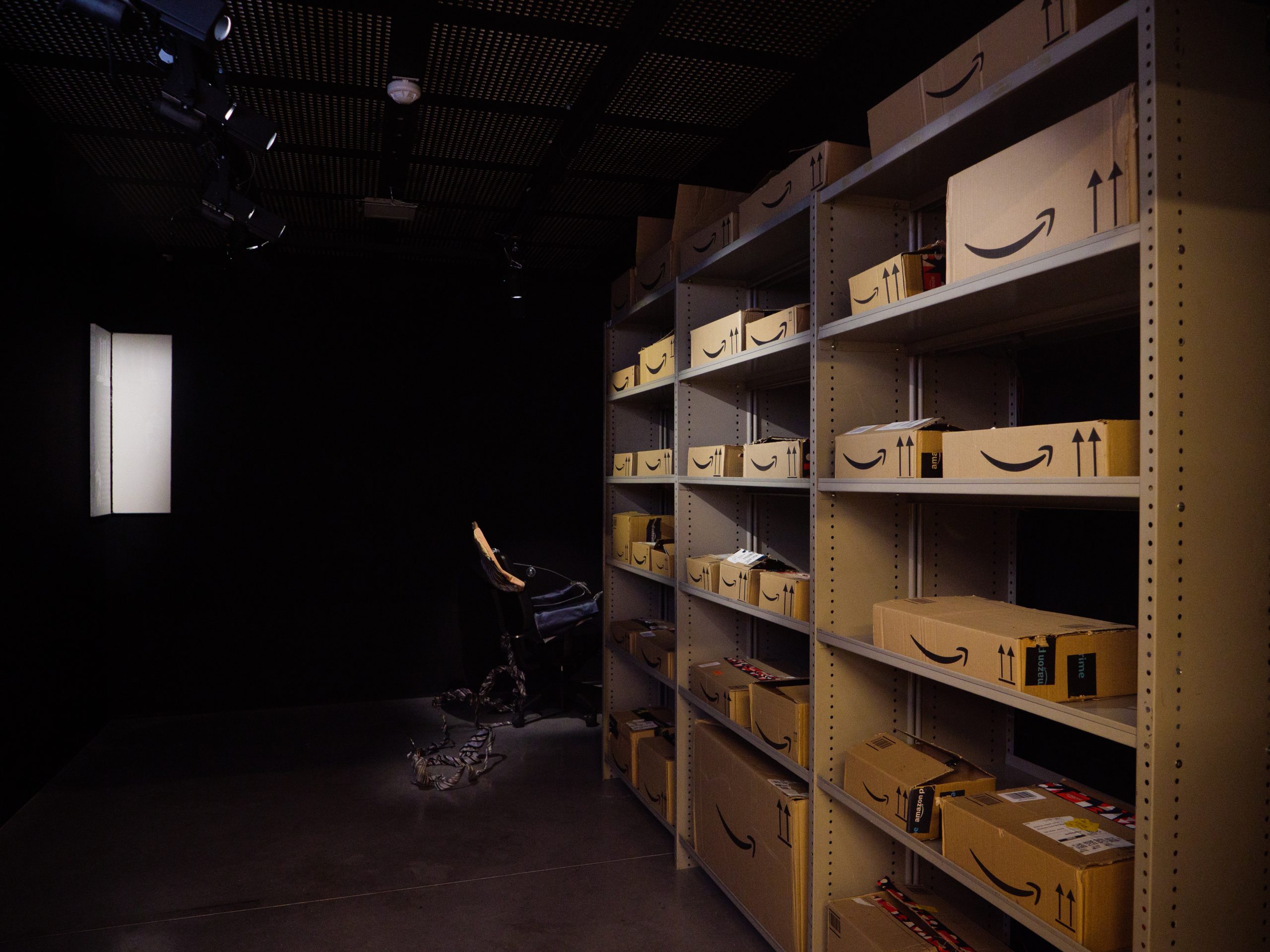
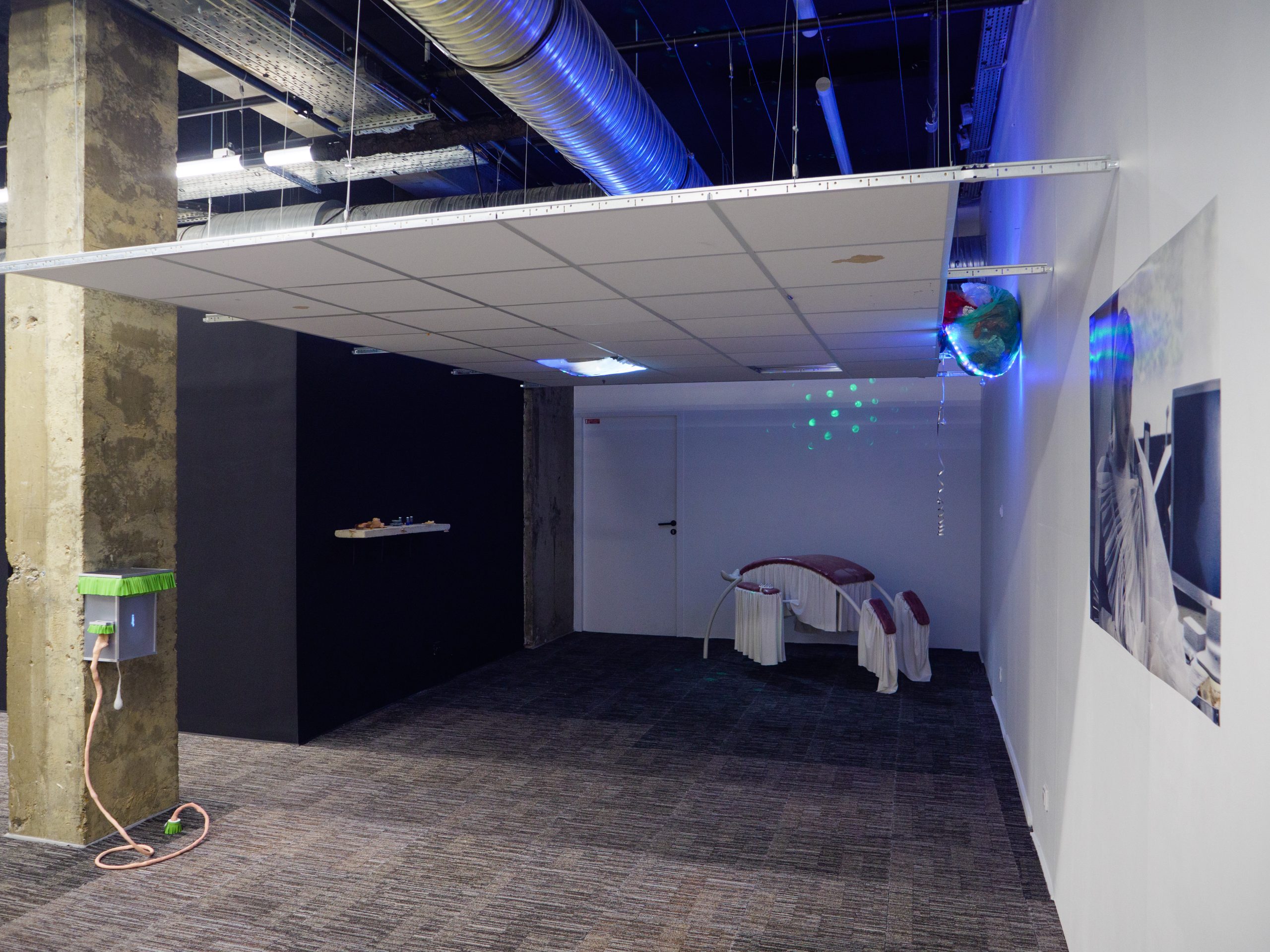
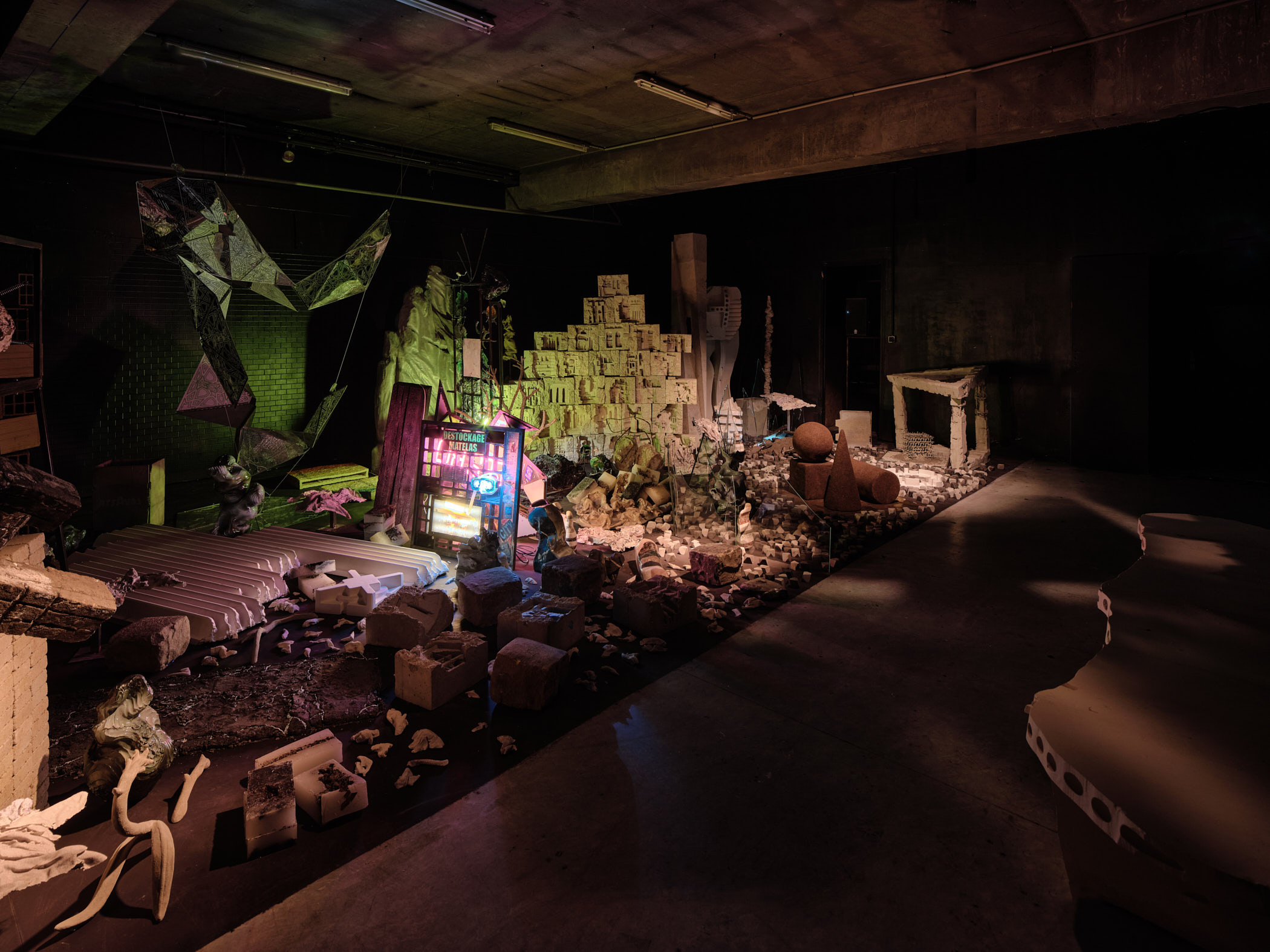
Grey carpet, cold neon lights, standardised furniture. A faint smell of bland coffee hanging in the air conditioning. Windows cascading on screens. Chained to email loops. Bodies barely moving. Gestures repeated. Repressed desires. You lose track of how long you’ve been here. Welcome to the open plan.

Its aesthetic haunts a whole strand of contemporary creation. From The Office to Severance, from Playtime to Brazil, from catwalks to video clips, office design becomes the set of a collective performance orchestrated by an invisible machinery. It is also a terrain of analysis that fascinates critical thought: David Graeber interrogates the proliferation of meaningless jobs1 ; Byung-Chul Han describes an era consumed by burnout, where individuals become their own oppressors2 ; Silvia Federici situates the invisibilisation of care work within broader mechanisms of exploitation3 ; Federico Campagna reads Work as a God followed by devoted employees4 ; Jonathan Crary shows how capitalism tends to suppress all unproductive time, from sleep to daydreaming5. All describe a world in which the organisation of labour infiltrates affects, behaviours, and belief systems.

Visual artists inevitably take up these questions, as the art world is fully implicated in these dynamics. For graduates, « working life » means often moving through a succession of precarious jobs, time-consuming applications, unpaid projects, and nebulous tasks. They learn to navigate a competitive ecosystem where creativity coexists with instability. Between the pressure of visibility, the imperative of profitability, and the internalization of self-employment models, they become both workers and managers of their own survival. The COVID-19 pandemic also brought about a brutal shift: from the studio to the screen, from the collective to the cloud, their practices absorbed the tools and rhythms of the tertiary. Now, in the age of generative AI and the automation of creative tasks, new questions arise: who still creates value? Who is essential, and who merely ticks boxes? Who, ultimately, holds a bullshit job?

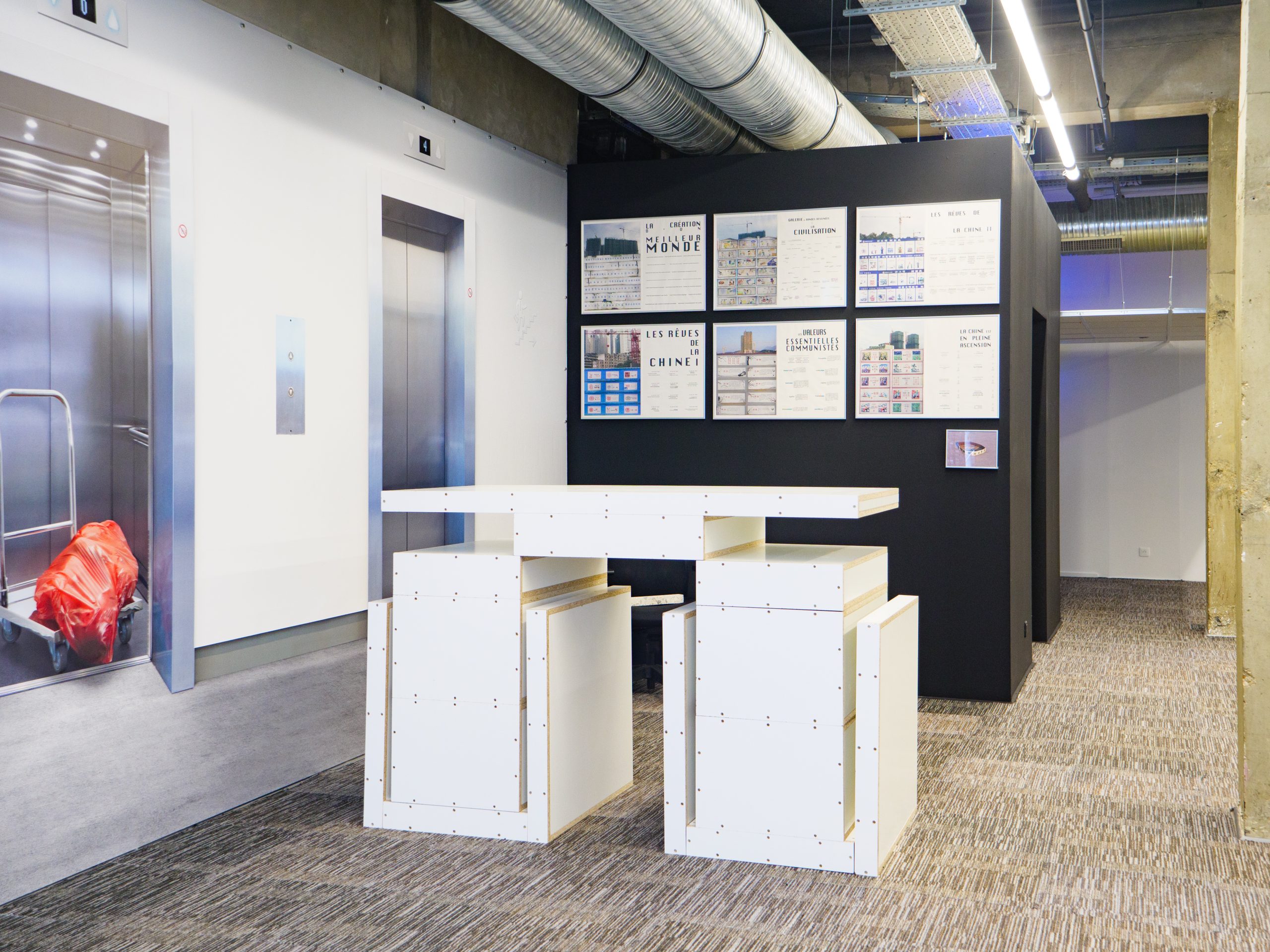
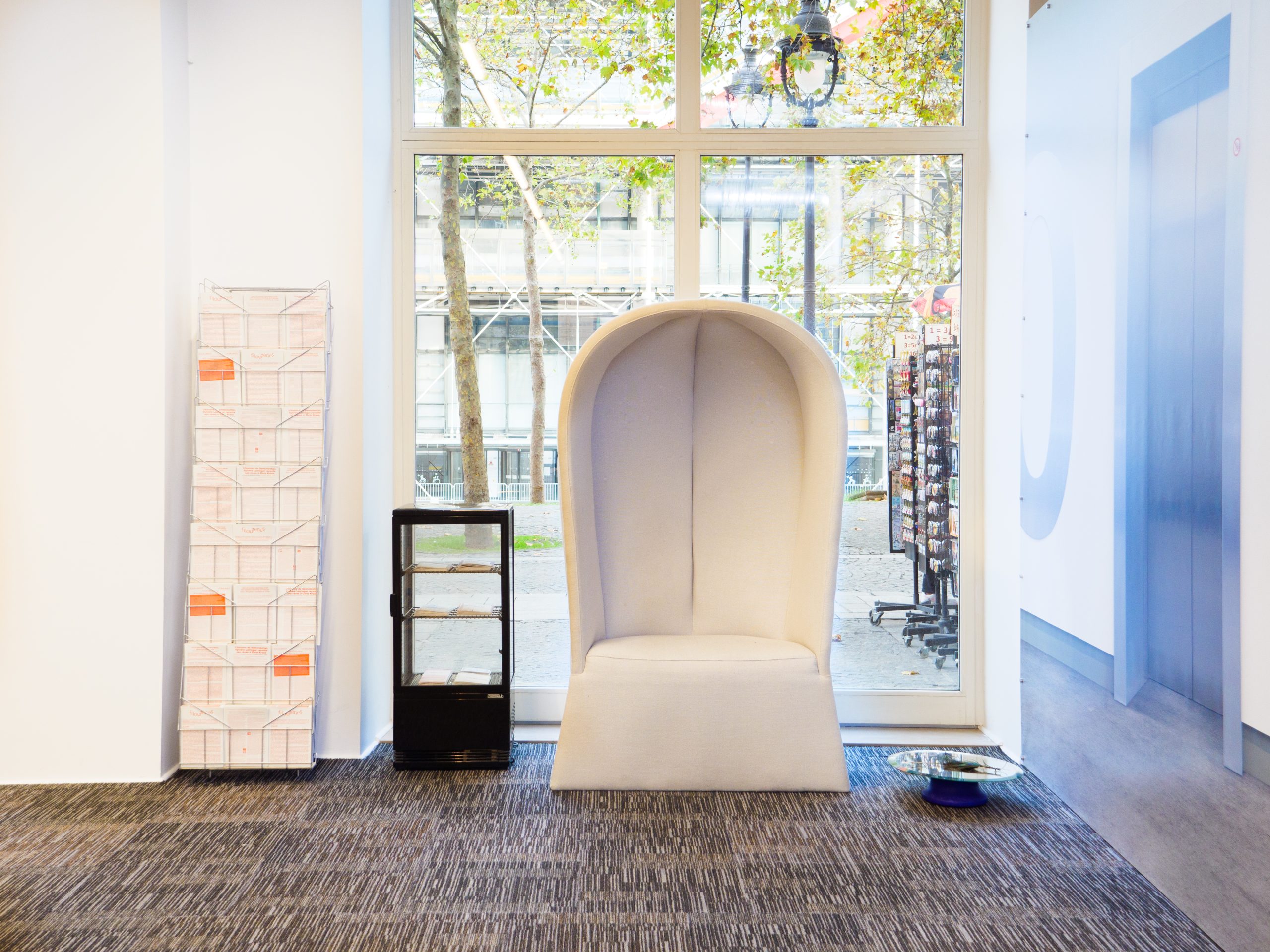
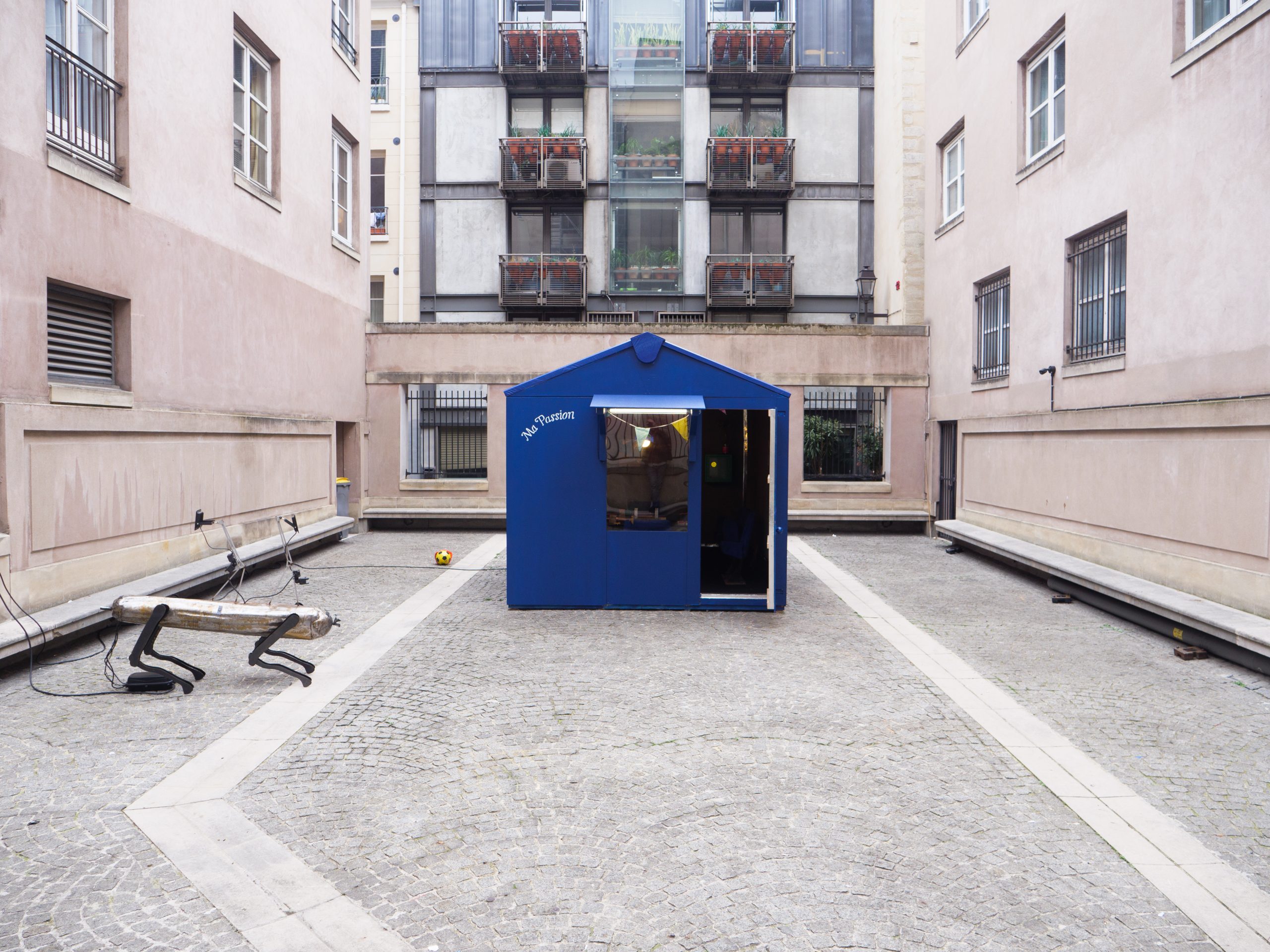
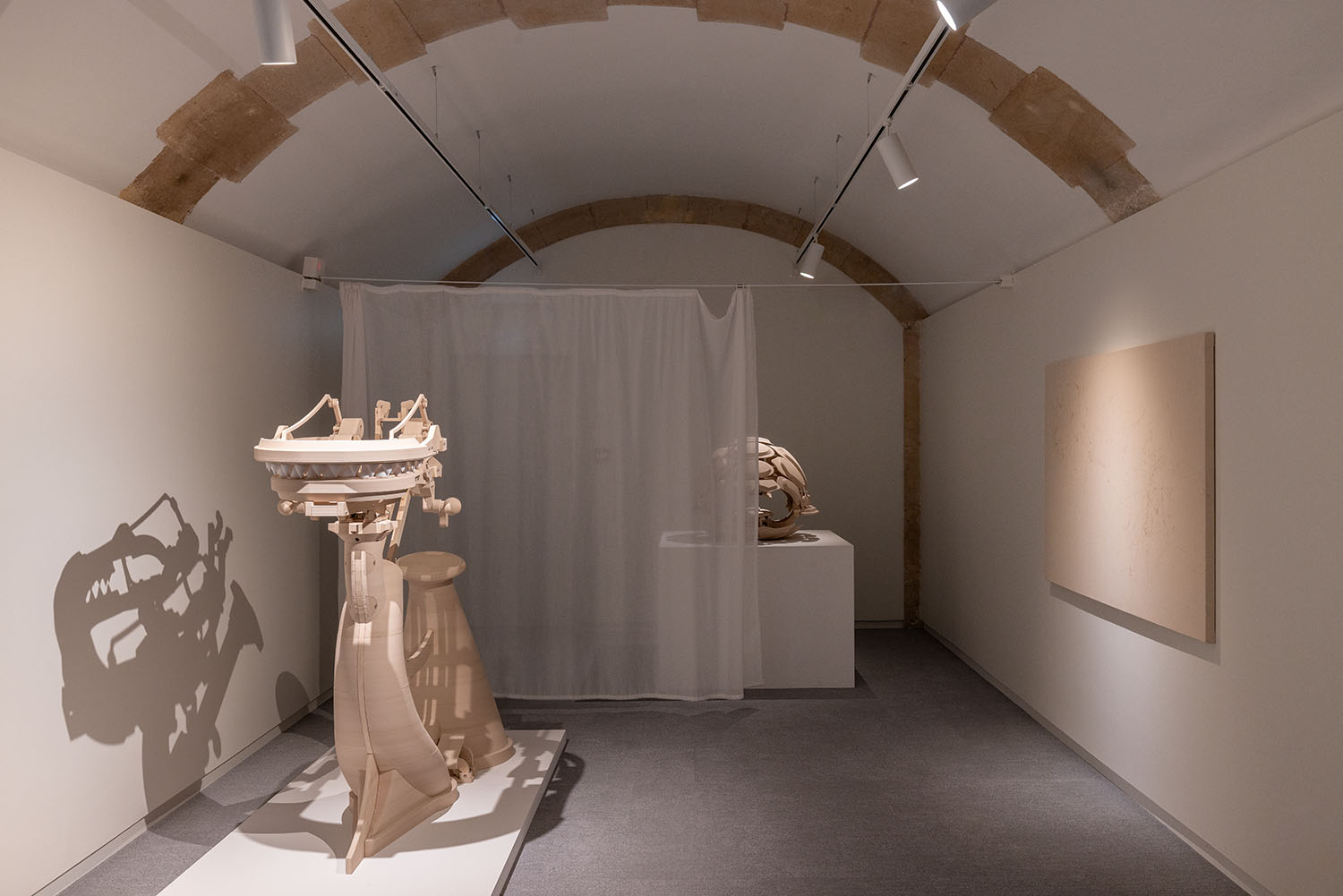
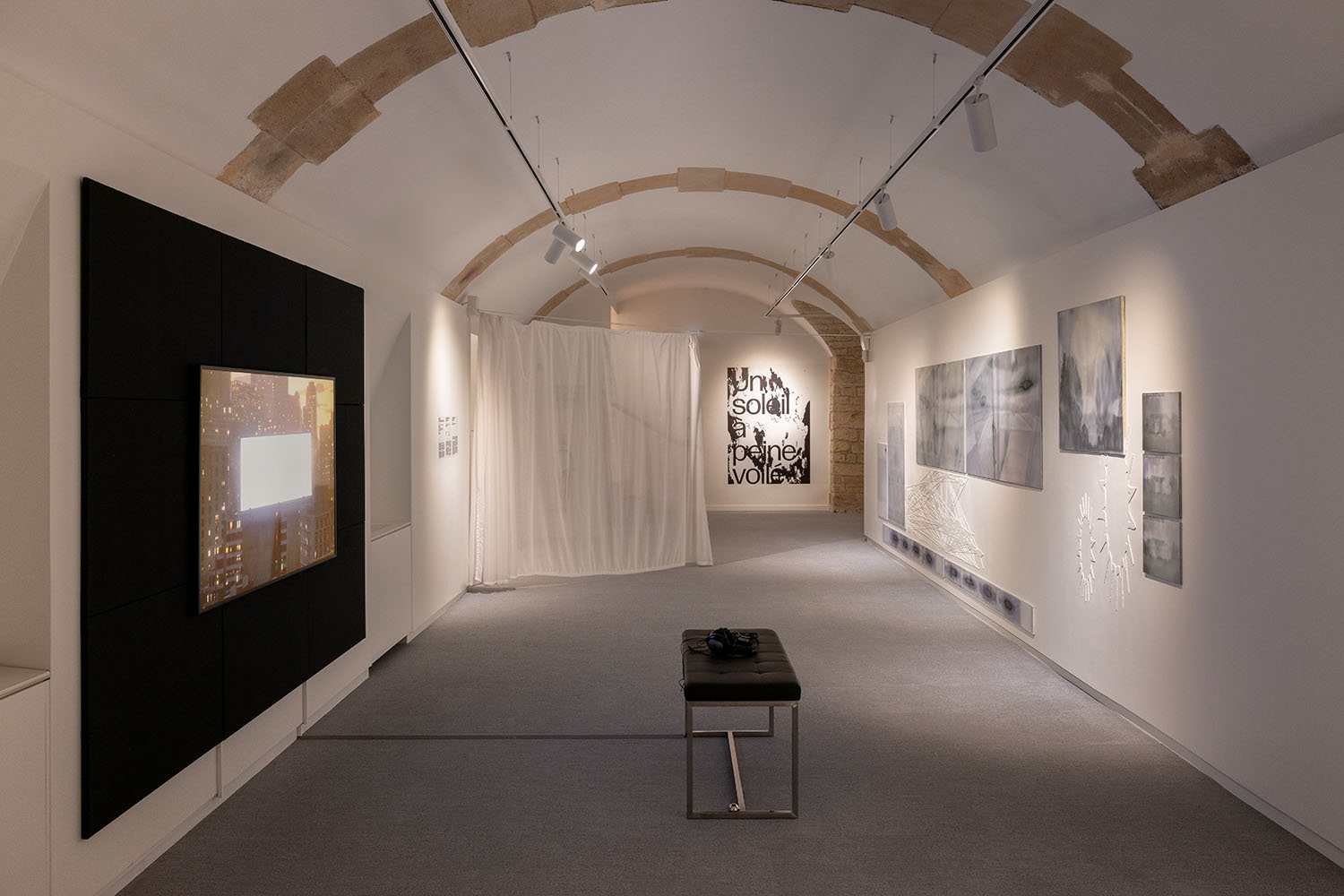
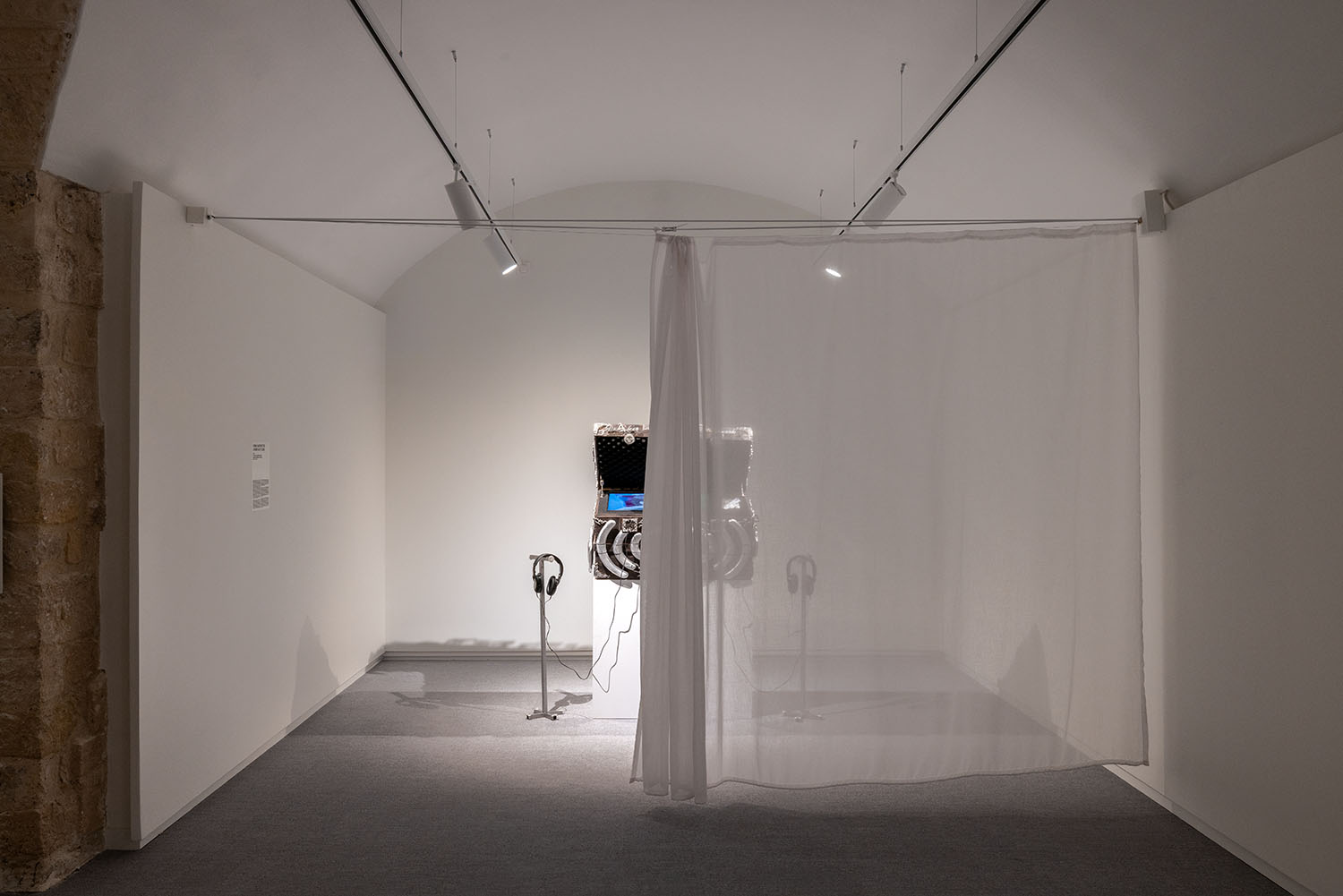
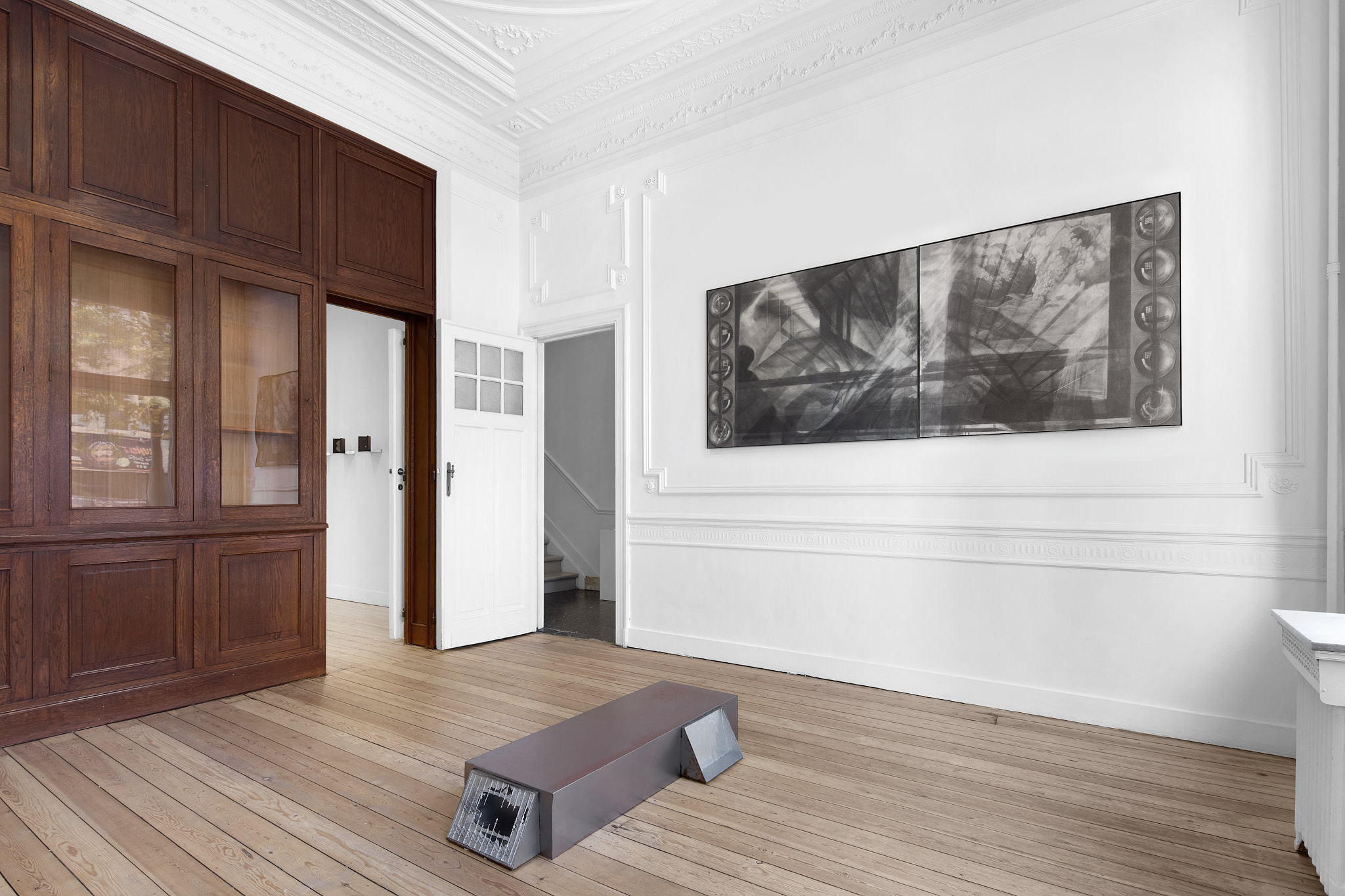
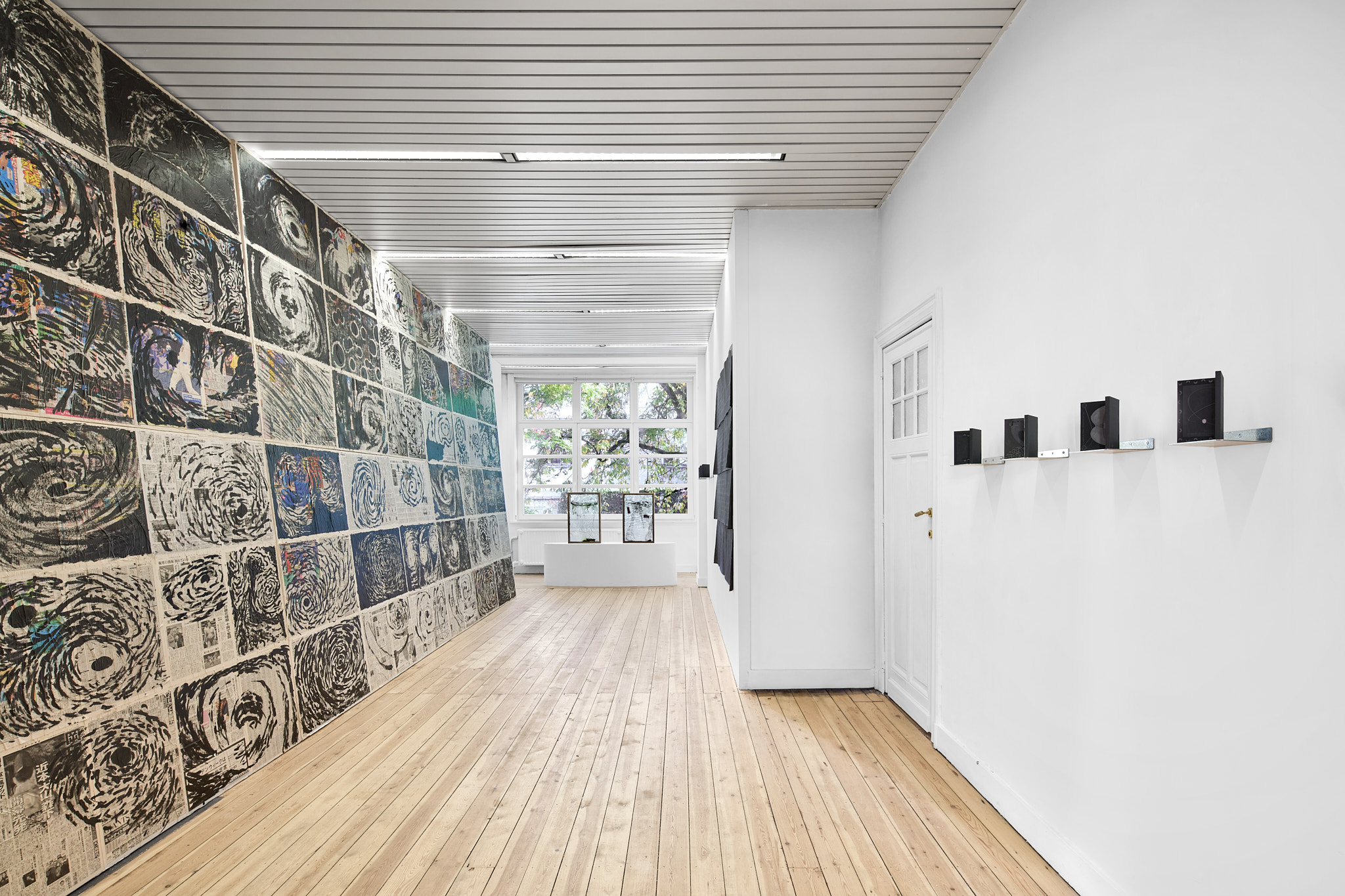
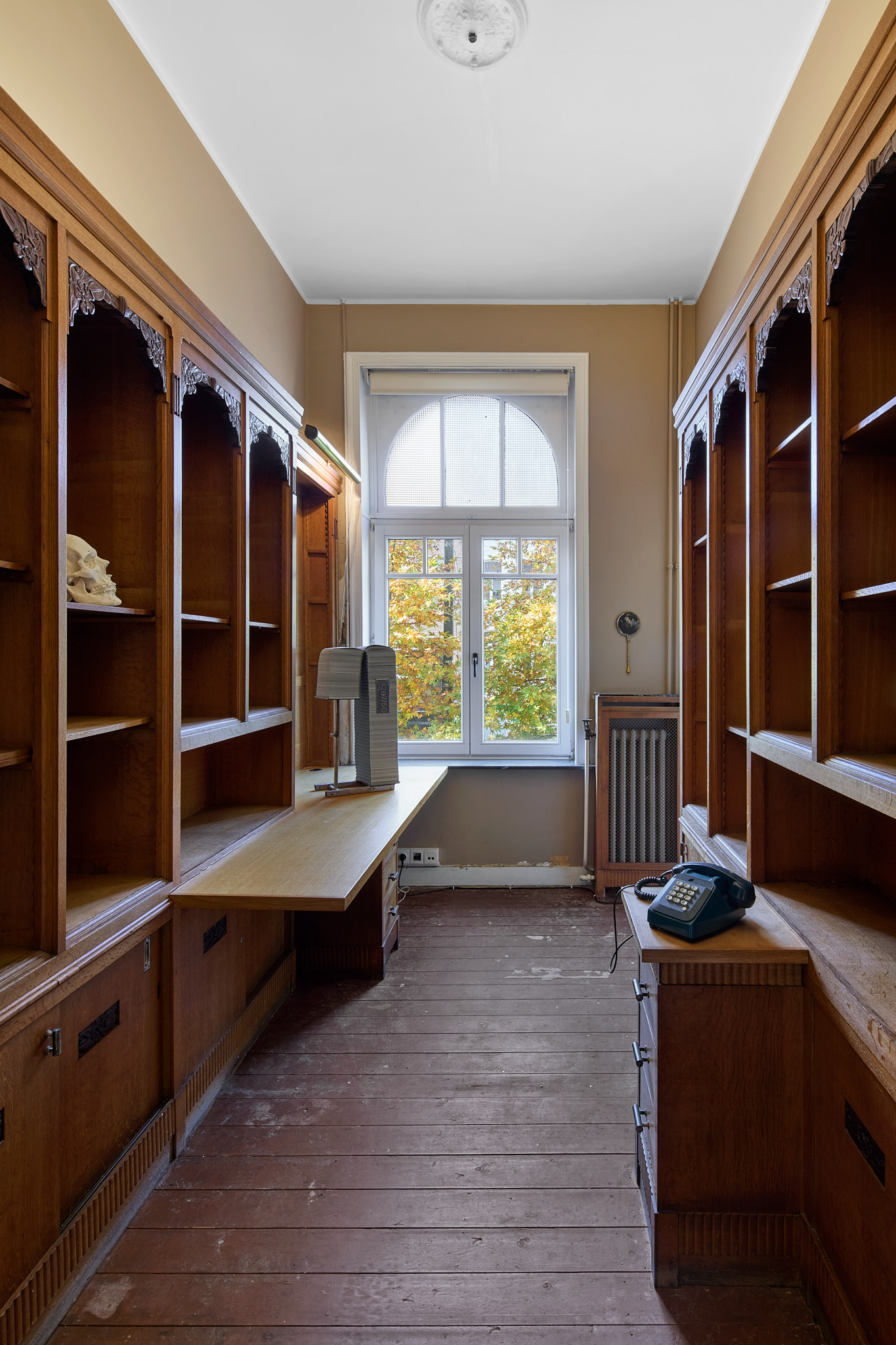
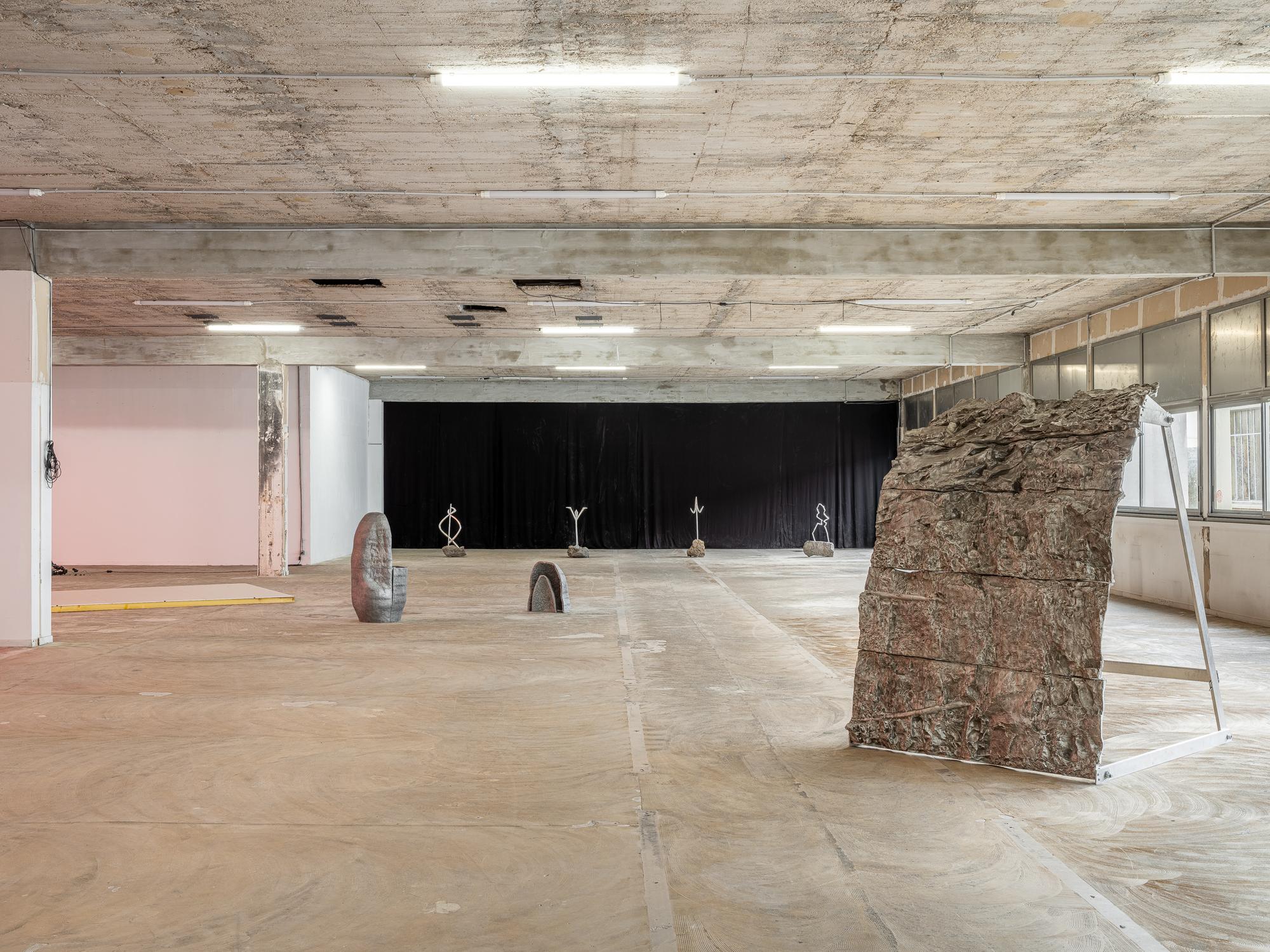
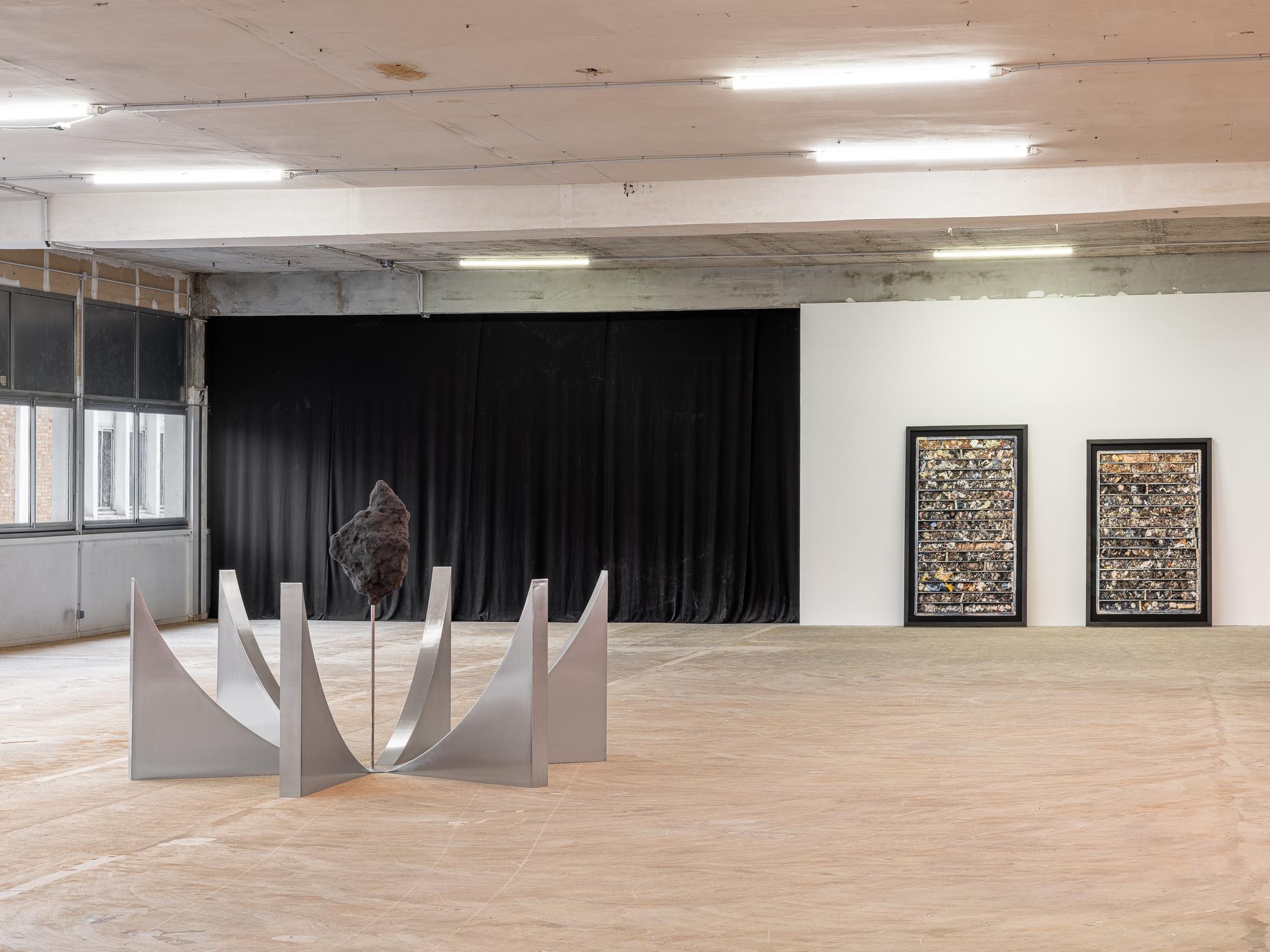
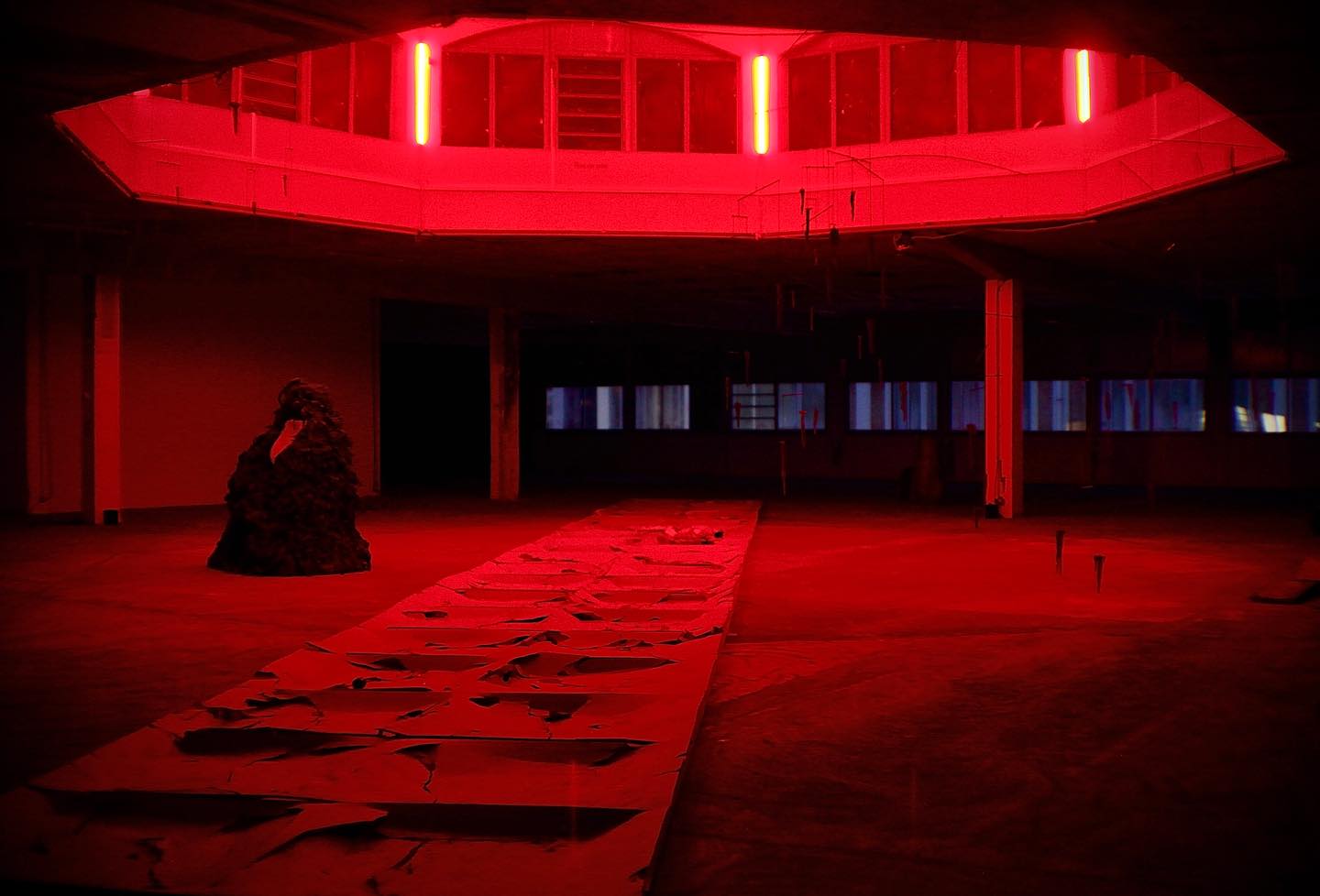
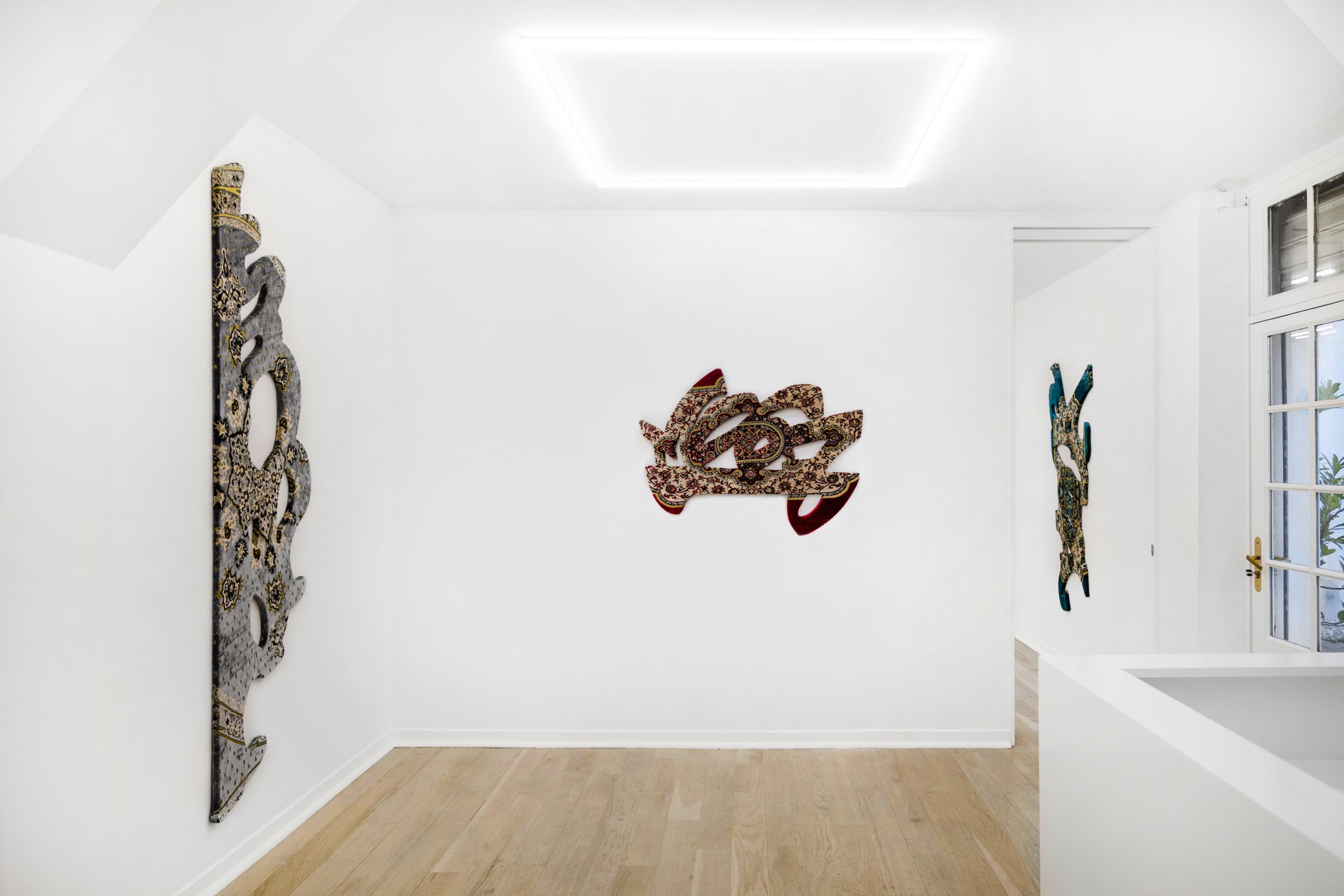
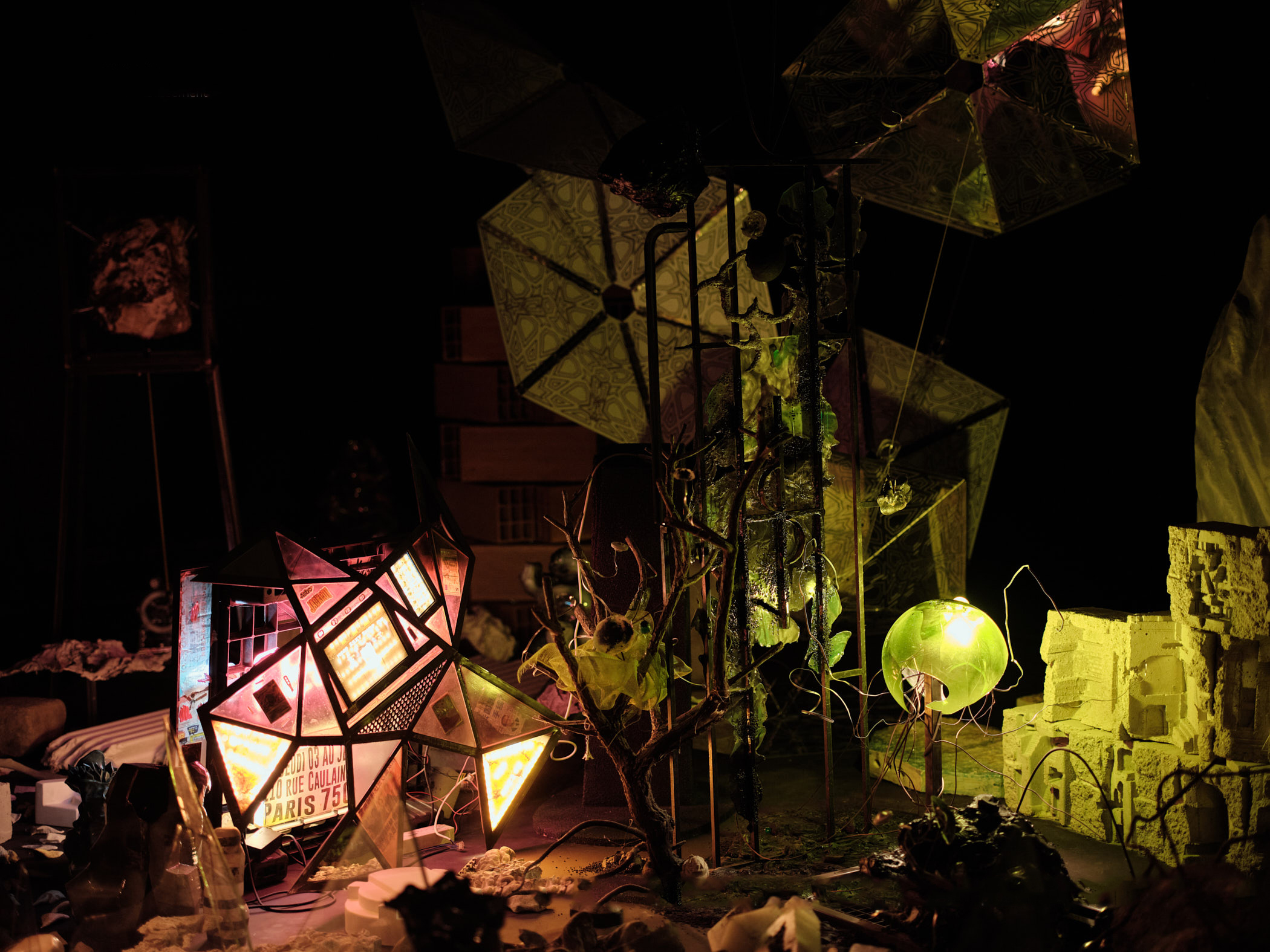
The exhibition stages, through its scenography, the simulacrum of a corporate workspace. But this fictitious coworking environment is riddled with cracks, saturated with glitches, haunted by ghosts. It becomes the theatre for numerous acts of resistance aimed at breaking the spell of capitalist and bureaucratic logic. Some works bring back the buried emotions and stifled voices of vanished professions and abandoned factories. Others devise corporate fictions or engage with administrative malfunction. In this unstable landscape, populated by art-eating bugs and nostalgic bots, team-building exercises slip into dystopian tales. Mottos give way to visions of collapse. In places, fantasies of escape pierce the sanitised surface of reality, like glimmers at the end of a tunnel.

The exhibited artists operate in a range of parasitic tactics, squandering techniques, and a bit of magic. Through irony, glitch, care, or dissonance, they sabotage the mechanisms of the dominant order, shaking the promise of progress and neoliberal mirages from within. Their actions carve out lines of flight within a saturated system, sketching out alternative ways of working and being together. In the wake of Pignarre and Stengers’ intuition, they whisper that « another world is possible. »6

Manon Klein & Andy Rankin


  1. Graeber, David. 2018. Bullshit Jobs: A Theory. Simon & Schuster.
  2. Han, Byung-Chul. 2015. The Burnout Society. Stanford University Press.
  3. Federici, Silvia. 2019. Patriarchy of the Wage: Notes on Marx, Gender, and Feminism. PM Press.
  4. Campagna, Federico. 2013. The Last Night: Anti-Work, Atheism, Adventure. Zero Books.
  5. Crary, Jonathan. 2013. 24/7: Late Capitalism and the Ends of Sleep. Verso.
  6. Pignarre, Philippe, and Isabelle Stengers. 2011. Capitalist Sorcery: Breaking the Spell. Translated by Andrew Goffey. Palgrave Macmillan.

Un soleil à peine voilé

Location
La Galerie de l'Académie des beaux-arts
Dates
17 October - 30 November 2025
Artist(s)
Louise Belin, Megan Bruinen, Liên Hoàng-Xuân, Elouan Le Bars, Puqi Liu, Mathieu Sauvat, Anne Swaenepoël, Maxime Vignaud
Credits
Romain Darnaud


APOCALYPSE: From ancient Greek ἀποκάλυψις, apokálupsis, a Greek noun meaning « act of revealing », itself derived from apokaluptein, « to uncover » or « to unveil ». ἀπό apo (« from » or « away from »), a preposition and prefix indicating removal, detachment, etc. Kaluptein: « to cover » or « to veil ».


We were born between the fall of the Berlin Wall and that of the Twin Towers. We, Generations Y and Z, have not merely witnessed the end of the alphabet: we grew up in the shadow of the decline of both the Soviet and American empires. At school, we were taught Fukuyama’s The End of History, while museum wall texts were systematically prefixed with « post-« , as if to remind us that the party was over. Now, on our screens, one crisis chases another: financial, sanitary, political, diplomatic, ecological. Fake news spreads exponentially through the noise of our phones, while the Uyghurs, the Congolese, and the people of Gaza are massacred in a deafening silence. Rather than seeking to identify and hold accountable those truly responsible for these atrocities, our exhausted Western democracies do nothing but tear themselves apart, shifting blame onto the most precarious, the most marginalised, the most vulnerable. Our way of life has led to the disappearance of 82% of wild mammals,1 while not a single drop of rain that falls on the surface of the planet is now safe to drink,2 and we ingest the equivalent of a credit card’s worth of microplastics every week.3 It is time to question what previous generations have bequeathed to us.

Once, our ancestors dreaded divine wrath and the end of days proclaimed by prophets. Then science took on the role of ill omen: first by creating the atomic bomb, whose destructive force can annihilate billions of human beings by the sole will of a single mortal; then through the reign of figures, calculations, and statistics laying bare the critical state of our planet and foreshadowing the imminent demise of our death-dealing civilisations. In these uncertain times, where the oracles of the IPCC trace for us the horizon of the end, only one obsessive question remains: how to respond? What to do when one wants to flourish in a world that knows itself to be doomed? What to do when reality surpasses fiction in its horror? What to do when the terrifying visions of Black Mirror and 1984 become news ticker headlines? We can no longer make do with last century’s responses paralysis, sarcasm, and nihilism for, as Michaël Foessel rightly observes: « the world whose disappearance we await with feverish impatience is not the same as the one we hope will transform for the better. »4

We must cut the threads of fatality, so that the Fates, left idle, are compelled to imagine other possibilities. In such circumstances, it is imperative to recall the etymology of the word crisis, which in ancient Greek referred not only to the peak of an illness, but above all to the judgement rendered upon it in order to treat it. May our crises prove fertile with metamorphoses, may they become so many opportunities to invent other futures!

From this impulse, ERUPTION EXPOSURE was born: a bolt of lightning streaking across the night of the permacrisis. If figures and probabilities announce the worst, we will choose words to tell the story of potentialities differently and to write poetry. If our societies polarise, we will not yield to division: we will form autonomous and inclusive collectives. If this world collapses, we will refuse resignation and invent others, as the enigmatic Philip K. Dick so aptly urges: « If you find this world bad, you should see some of the others. »5 We are not the generation of the end of times; we are the generation of dawns, of rebirths, of worlds still curled in the hollow of our imaginations, impatient to be unveiled.

At the heart of our shared reflections stood the hypothesis of a mega solar flare. This phenomenon, while known to scientists, remains poorly documented. We are therefore extremely ill-prepared for this risk. The Sun, both nurturing and destructive star, is a hydrogen furnace in which nuclear reactions occur. These convulsions sometimes intensify, generating colossal solar storms whose torrents of waves, particles, and radiation are ejected into the vastness of the universe. The Earth regularly finds itself in the path of these invisible thunderbolts. The atmosphere and the magnetosphere channel the vast majority of these imperceptible collisions. If the electromagnetic flow is too powerful, it can penetrate the protective layers of our planet. The only recorded manifestation of a large-scale cataclysm occurred in 1859 and bears the name of the astronomer who observed peculiar precursory sunspots. The « Carrington Event »6 lasted several days, during which the aurora borealis lit up the sky at many latitudes, some telegraph poles caught fire, and the magnetic shockwave that disabled telegraph systems reverberated through buried cables.7

What would happen if such a calamity were to strike today, in our world saturated with data, electronics, and electricity? Within moments, satellites and aircraft would fall, screens would go dark forever, and our certainties would be shaken beyond repair. Every flow communicational, financial, cognitive would dissolve instantaneously. It would not even be possible to use our phones to verify what was happening. Reduced to silence, in an originary darkness, we would finally understand how entirely our civilisations depend on nothing more than temporary goodwill and a few copper wires.

This worst-case scenario, however improbable, remains possible. Recent estimates put the economic consequences of a mega solar flare in the trillions of dollars for the global economy, and speak of entire decades needed for a recovery that would remain uncertain.8 Between desire and disaster, only a handful of letters differ, for a shared etymology unites them under the same constellation. Whether the star is absent or falling, it always burns with the thousand fires lit by the potentialities orbiting around it: passion, tragedy, promise, or twilight. The works brought together in A Barely Veiled Sun explore the slender thread connecting desire and disaster, conceived not as opposing forces but as two powers of potentiality and creation, like so many possible threads stretched across the thinness of a veil of uncertainty.

Throughout our residency at Villa Dufraine, the sun gradually became the metaphor for all the threats suspended above our heads. Each artist seized, in full freedom, this incandescent point in the sky and made it the hearth of new narratives. Their lenses focused on the study of anecdotes, micro-histories, and epiphenomena as so many fissures piercing the fatalism of grand, totalising historical accounts. To continue creating in an unstable world is to prove that imagination is stronger than what drives it towards its ruin. Memory, desire, and collaboration are forces that cannot be quantified by the tools of late capitalism and that thereby render it obsolete.

This ideology founded on domination and extraction shows no regard for the oppressed from whom it draws its infernal power, much like the Hymenoepimecis argyraphaga. To reproduce, the parasitoid wasp paralyses a spider and inserts its egg into its abdomen. It then chemically compels its host to spin a web optimised for protecting the larva that will devour it after hatching.9 As with the phagocytic insect, the existence of this death-dealing ideology necessarily implies the destruction of what allows it to exist. Its pursuit of infinite growth in a finite world is nothing other than a shroud in the making.

The engineer and philosopher Jean-Pierre Dupuy has very aptly updated the principle of responsibility as set out by Hans Jonas.10 His reasoning holds that the worst-case scenario will, sooner or later, come to pass. He thus inverts the classical calculation of probabilities: it is no longer a matter of evaluating a risk in statistical terms, but of taking it as a certainty for which a measured response must be prepared which will paradoxically have the effect of averting it: « a prudence adapted to the age of catastrophes consists in projecting oneself into the post-catastrophe, and seeing in it retrospectively an event that was both necessary and improbable. »11 Applied to the dogmatism of capital, this reasoning invites us to think beyond its own end. Taking the logic of capitalism to its conclusion does not mean waiting for or hastening the completion of its web, but imagining what will happen when it gets there. In this way, the trap will be dismantled before it can close. To resist is to begin today to spin other threads, to weave other arachnoid frameworks in which the wasp will be unable to lay further larvae.

Alas, the web of late capitalism permeates every stratum of our existence, to the point of parasitising our imaginations. To free ourselves from it, we needed to summon a force of a different order immeasurably vaster, and against which it is powerless. Without a collective will for change, only a superior power is capable of instantly suspending its irrational expansion. This is not a call for a purifying shock, one of those tabula rasa fantasies savoured by the proponents of an appalling liberalism, as the Canadian journalist Naomi Klein has brilliantly demonstrated,12 but rather a matter of opposing one hyperobject with another. In the face of a mega solar flare, the megamachine can only yield. This narrative reversal allowed us to glimpse the end of the great phagocyte’s web, and thereby sketch out other ways of weaving our stories.

For theorist Timothy Morton, hyperobjects13 are those colossal entities that exceed our understanding in terms of both space and time. Like spectres, they cling to our existence without our ever perceiving more than fragments of them, much like climate disruption or radioactivity. Hyperobjects are the unveiling of what we seek to ignore. To think through their prism is to acknowledge that we inhabit a world saturated with forces whose scale exceeds us and upon which we are entirely dependent. It is to understand that capitalism, in its logic of infinite expansion, itself belongs to this category: a diffuse, viscous, non-local entity that nothing seems capable of stopping. Yet if one hyperobject can stop another, then a mega solar flare, in its cosmic immensity, reveals the limits of an all-encompassing system that believed itself boundless.

In this collision of magnitudes, the apocalypse returns to its original meaning: an unveiling. It is not the end of everything, but the laying bare of a system that believed itself immortal and that ultimately proves to be merely transitional. A discreet, ethereal, and repeated choreography, the apocalypse opens a dance of perpetual rediscovery. Its diaphanous veils compel us to see, exposing what we persist in ignoring. From this play of appearances and withdrawals, a silent resistance takes shape against the ambient accelerationism.

Perhaps the projections announcing the imminence of a solar flare comparable to that of 1859 will prove accurate.14 On that day, the aurora borealis will set the sky ablaze and every electronic device will be reduced to silence. With any luck, you will remember A Barely Veiled Sun and understand what is happening. Perhaps you will see in it a new apocalypse not as an ending but as a revelation: a crack in the self-evidence of a system that believed itself immutable. But do not forget, as Lucian Boia reminds us in his delightful work The End of the World: A History Without End,15 that the date of the fall of the Roman Empire was only fixed more than fifteen centuries after the supposed event. Charlemagne himself was crowned Emperor of Rome more than three centuries after that declared « end ». If Rome was not built in a day, it will not fall in a night. It is, after all, still standing.


  1. IPBES (2019). Global assessment report on biodiversity and ecosystem services of the Intergovernmental Science-Policy Platform on Biodiversity and Ecosystem Services (pp. 1–1082). Brondízio, E. S., Settele, J., Díaz, S., and Ngo, H. T. (eds). IPBES secretariat, Bonn, Germany. https://doi.org/10.5281/zenodo.3831673
  2. Cousins, I. T., Johansson, J. H., Salter, M. E., Sha, B., & Scheringer, M. (2022). Outside the Safe Operating Space of a New Planetary Boundary for Per- and Polyfluoroalkyl Substances (PFAS). Environmental Science & Technology, 56(16), 11172–11179. https://doi.org/10.1021/acs.est.2c02765
  3. Arp, H. P. H., Kühnel, D., Rummel, C., MacLeod, M., Potthoff, A., Reichelt, S., Rojo-Nieto, E., Schmitt-Jansen, M., Sonnenberg, J., Toorman, E., & Jahnke, A. (2021). Weathering Plastics as a Planetary Boundary Threat: Exposure, Fate, and Hazards. Environmental Science & Technology, 55(11), 7246–7255. https://doi.org/10.1021/acs.est.1c01512
  4. Foessel, M. (2019). Après la fin du monde : Critique de la raison apocalyptique.
  5. Rumpala, Y. (2018). Hors des décombres du monde : Écologie, science-fiction et éthique du futur.
  6. Carrington, R. C. (1859). Description of a Singular Appearance seen in the Sun on September 1, 1859. Monthly Notices of the Royal Astronomical Society, 20(1), 13–15. https://doi.org/10.1093/mnras/20.1.13
  7. Green, J. L., Boardsen, S., Odenwald, S., Humble, J., & Pazamickas, K. A. (2006). Eyewitness reports of the great auroral storm of 1859. Advances in Space Research, 38(2), 145–154. https://doi.org/10.1016/j.asr.2005.12.021
  8. Council, N. R. (2008). Severe Space Weather Events Understanding Societal and Economic Impacts. National Academies Press. https://doi.org/10.17226/12507
  9. Eberhard, W. G. (2000). Spider manipulation by a wasp larva. Nature, 406(6793), 255–256. https://doi.org/10.1038/35018636
  10. Jonas, H., & Greisch, J. (1990). Le principe responsabilité : une éthique pour la civilisation technologique. Cerf.
  11. Dupuy, J.-P. Introduction au catastrophisme éclairé. La peur. (2006). https://doi.org/10.4000/books.pusl.22168
  12. Klein, N. (2007). The Shock Doctrine: The Rise of Disaster Capitalism. Metropolitan Books.
  13. Morton, T. (2013). Hyperobjects: Philosophy and Ecology After the End of the World. Posthumanities.
  14. Miesch, M. S. (2025). Solar Cycle Prediction at NOAA’s Space Weather Prediction Center. Space Weather, 23(6). https://doi.org/10.1029/2025sw004444
  15. Boia, L. (1999). La fin du monde : une histoire sans fin. Éditions La Découverte.

L’Atelier du désastre: outils, instruments et autres spectres

Location
Musée National des Arts et Métiers
Dates
21 October - 30 November 2025
Artist(s)
Louise Belin, Megan Bruinen, Liên Hoàng-Xuân, Elouan Le Bars, Puqi Liu, Mathieu Sauvat, Anne Swaenepoël, Maxime Vignaud
Credits
Romain Darnaud

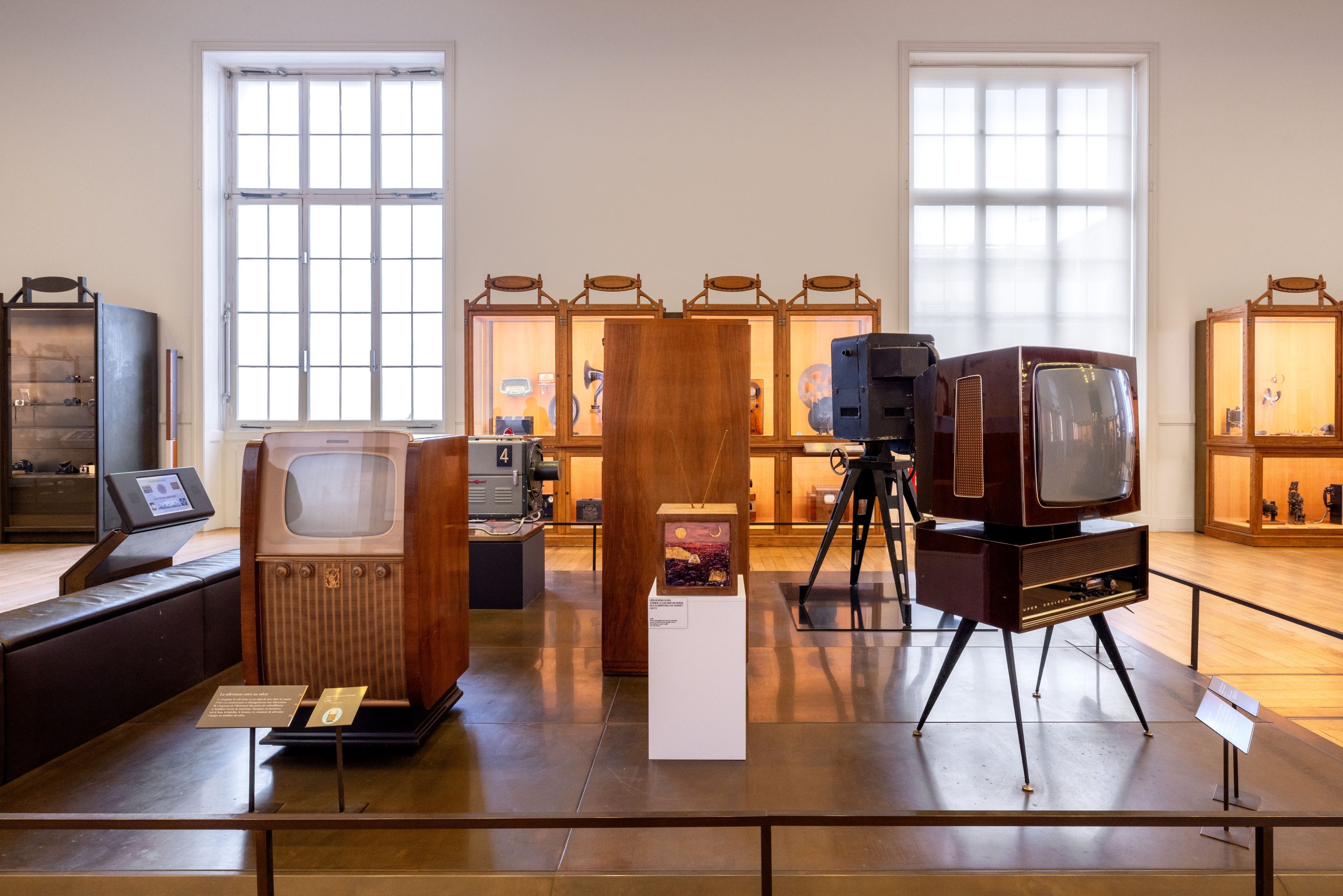
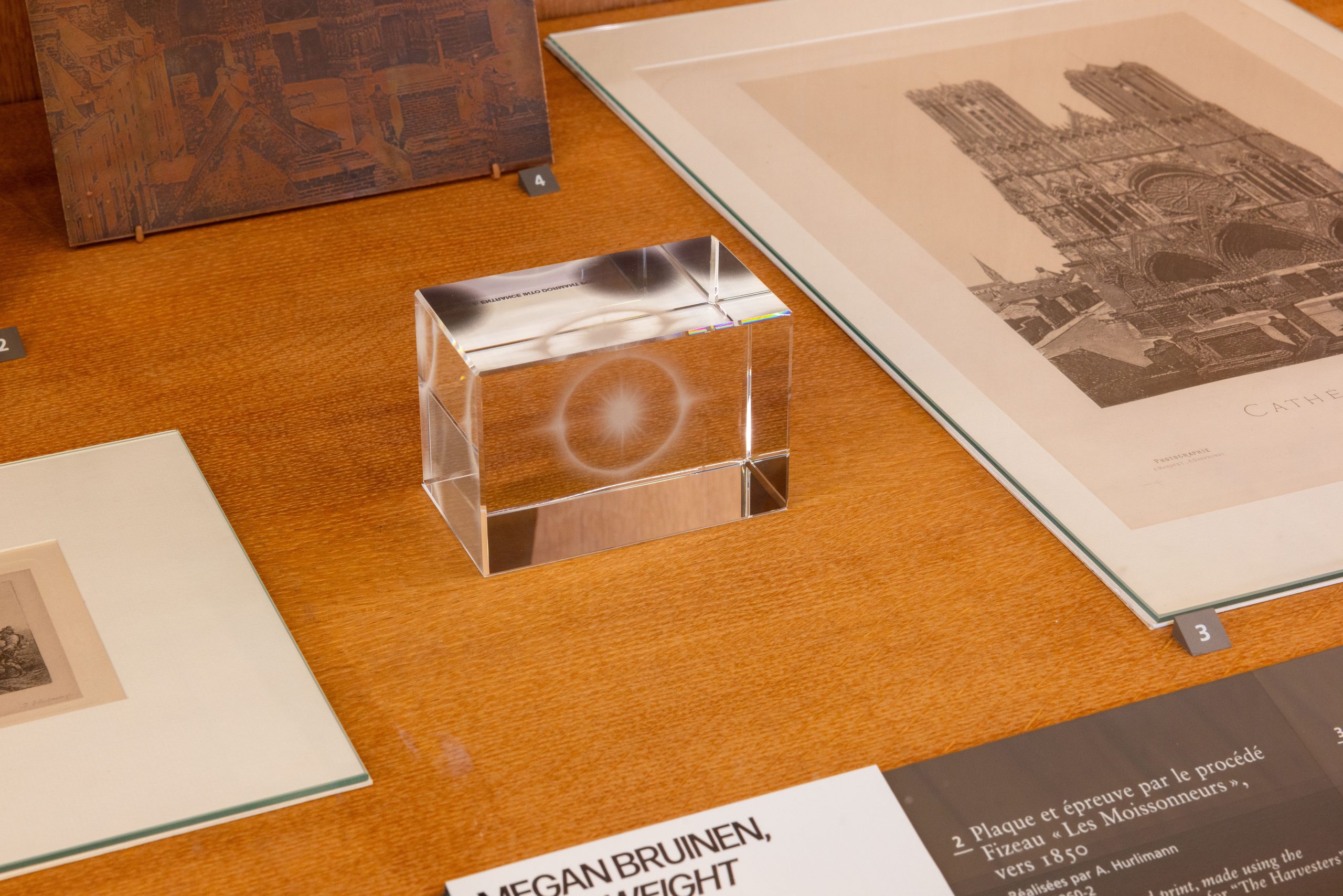
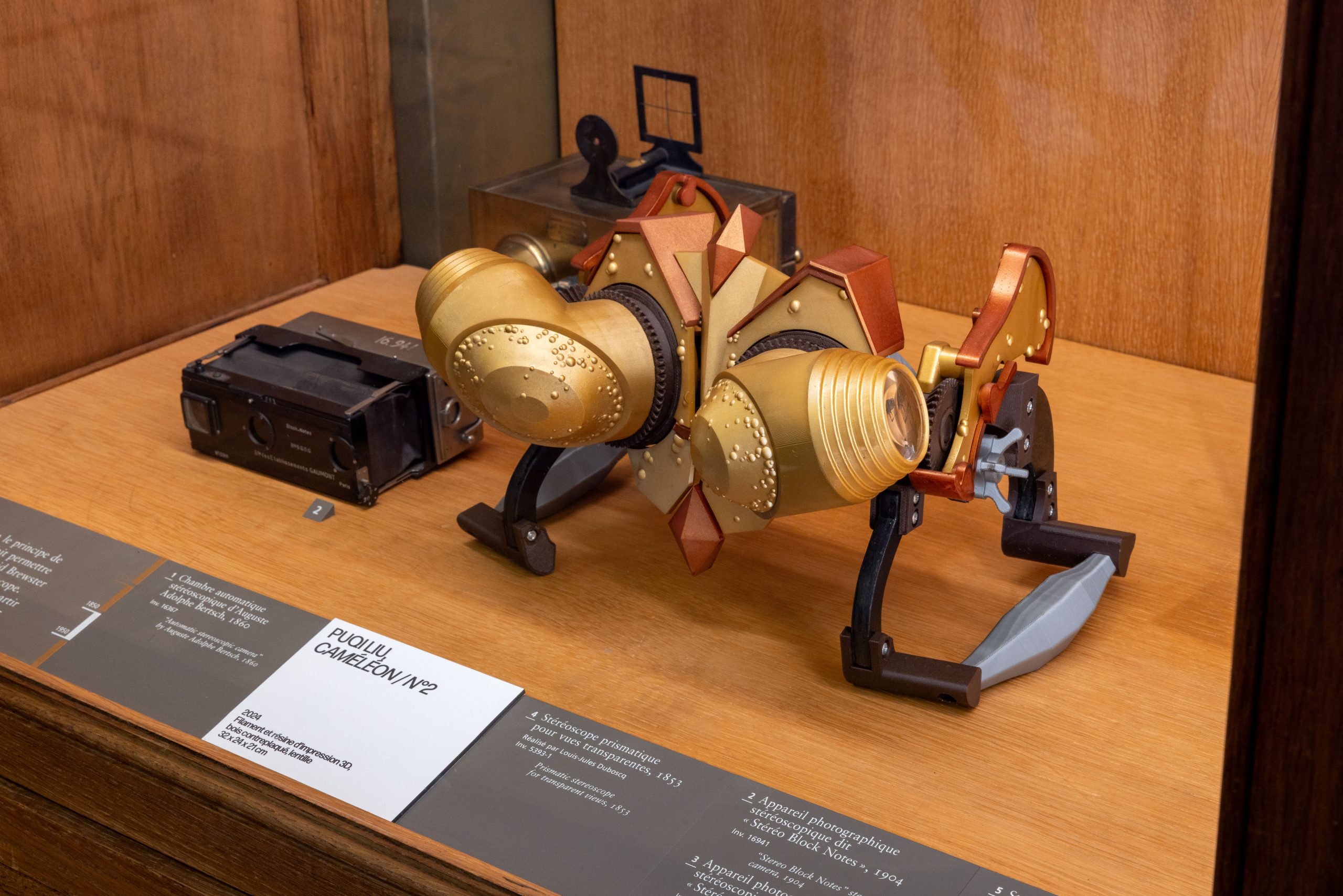
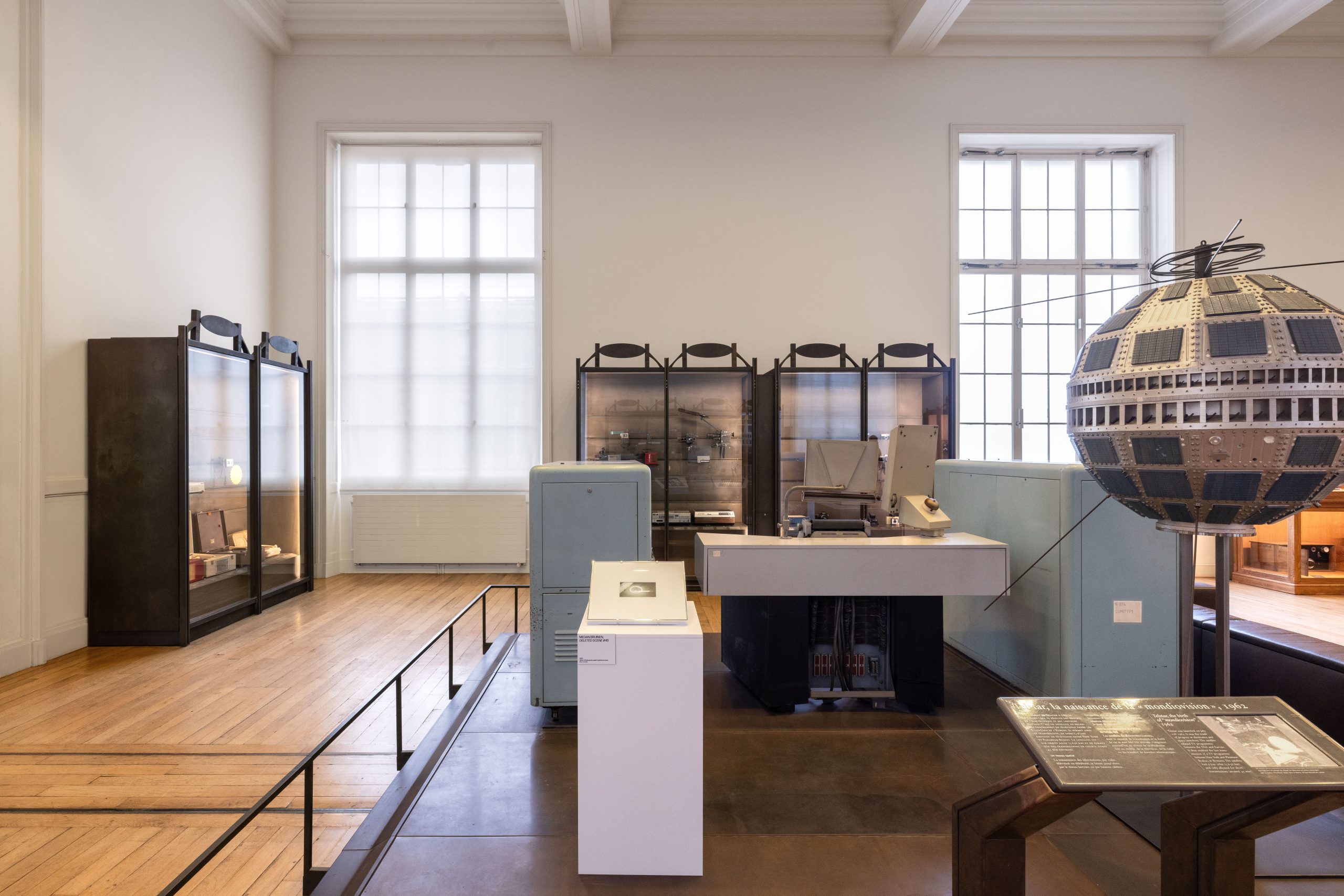
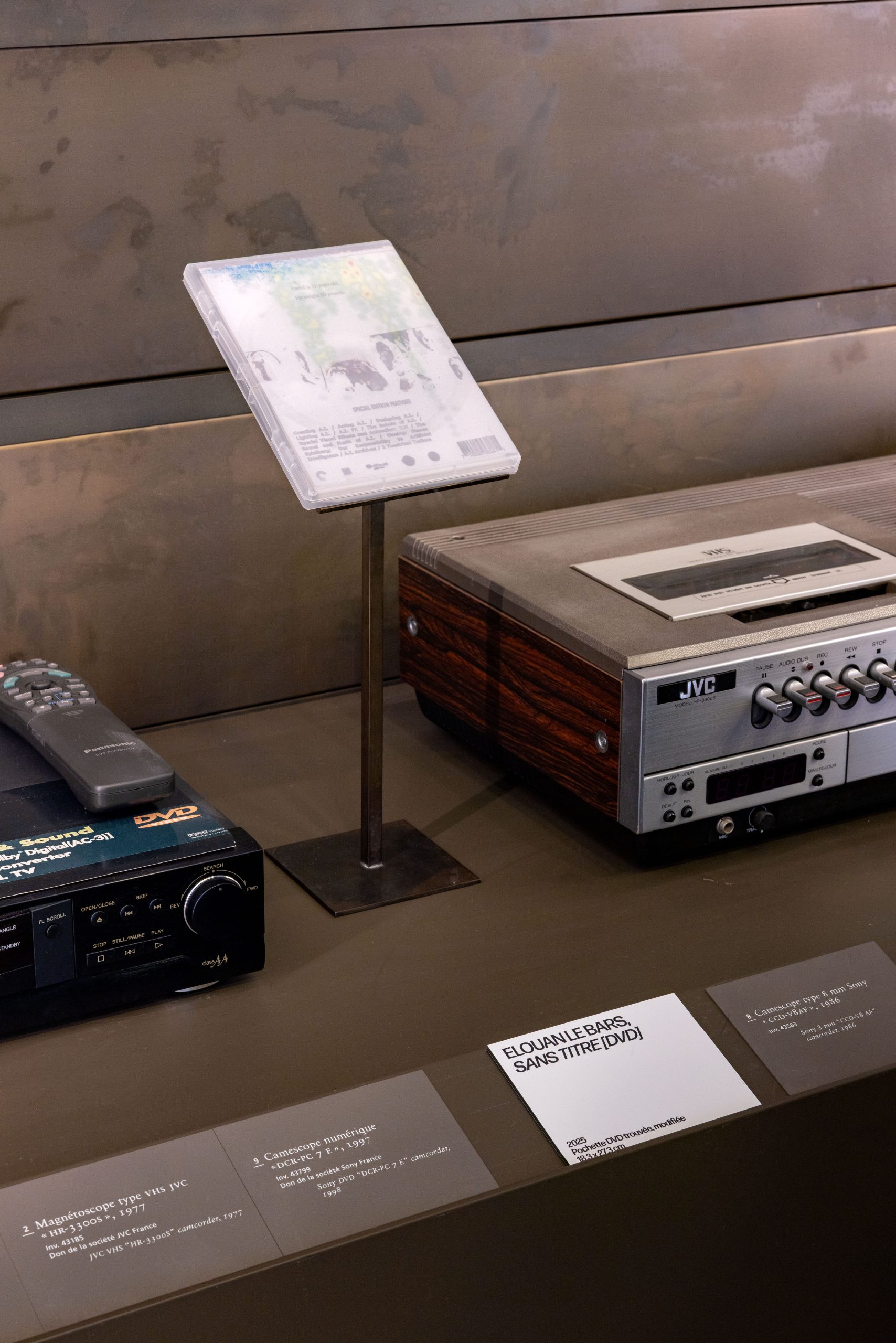
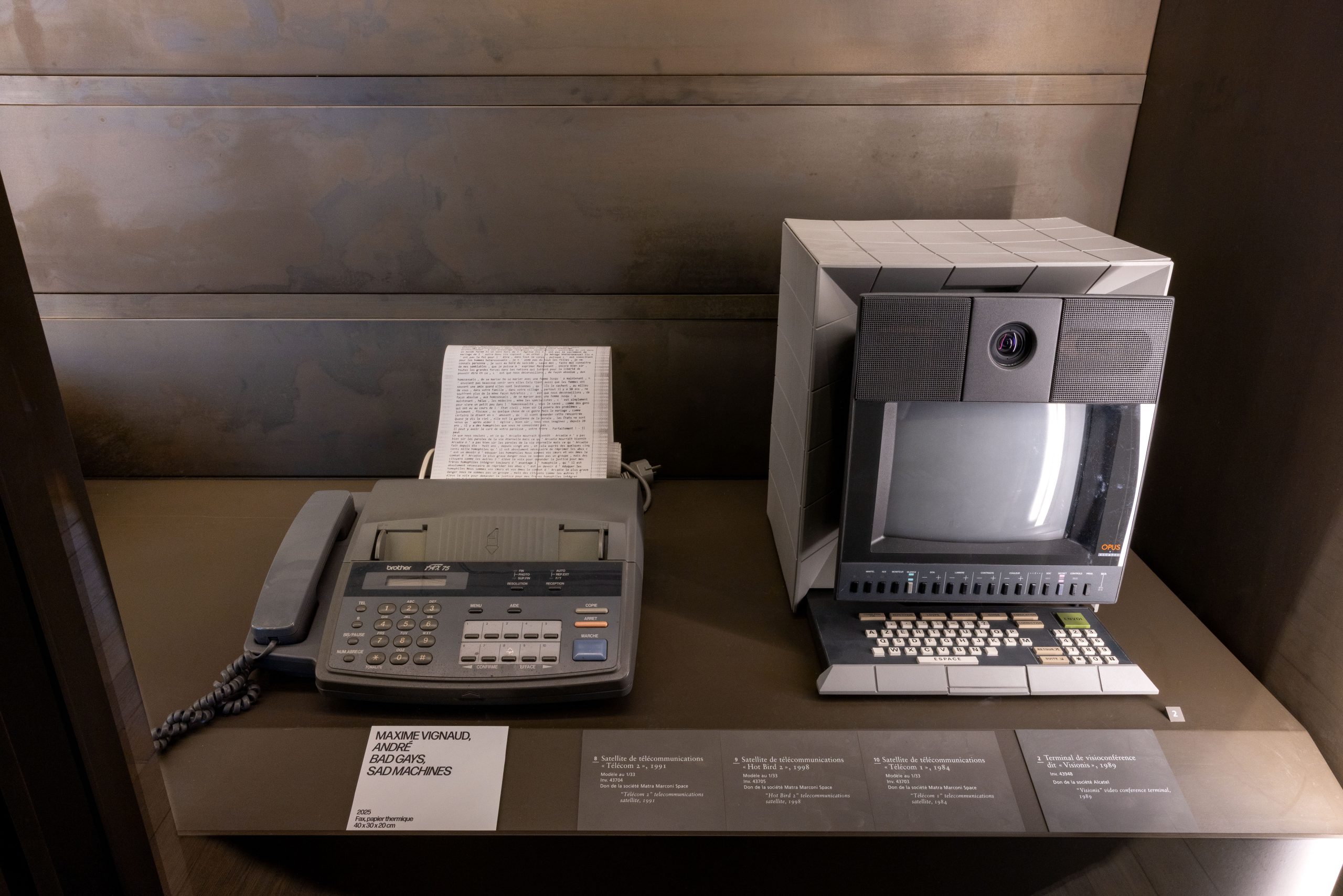
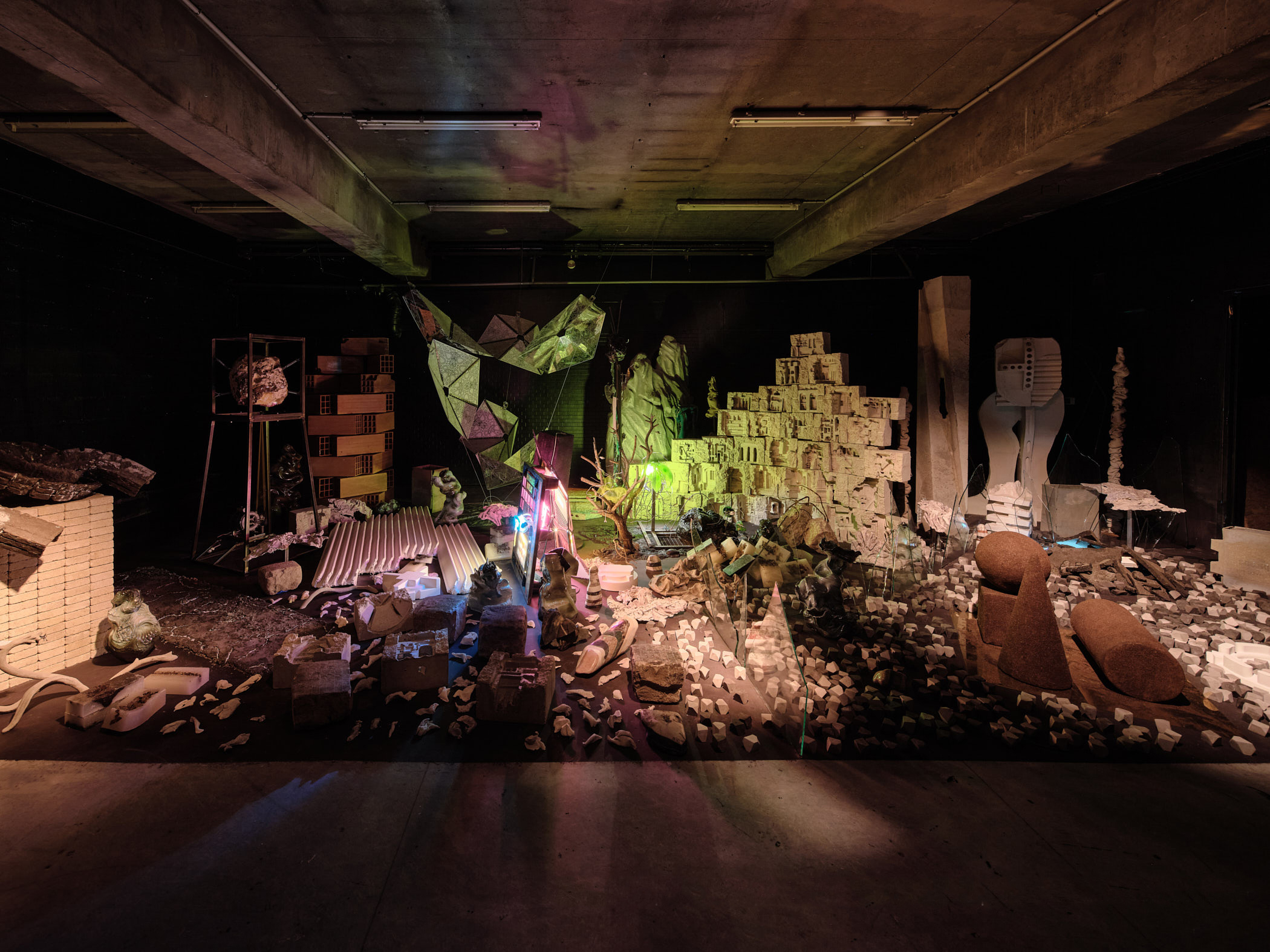
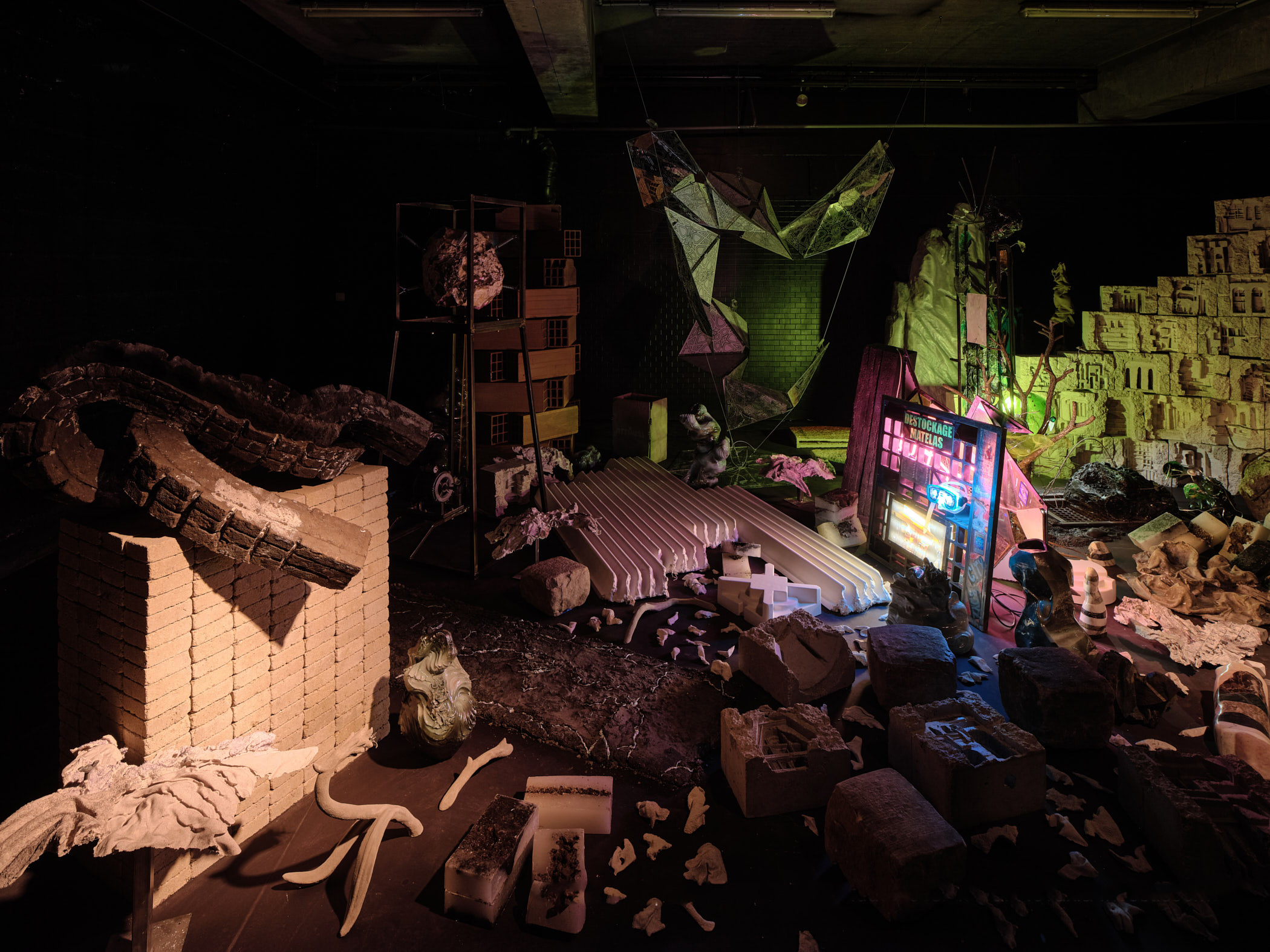
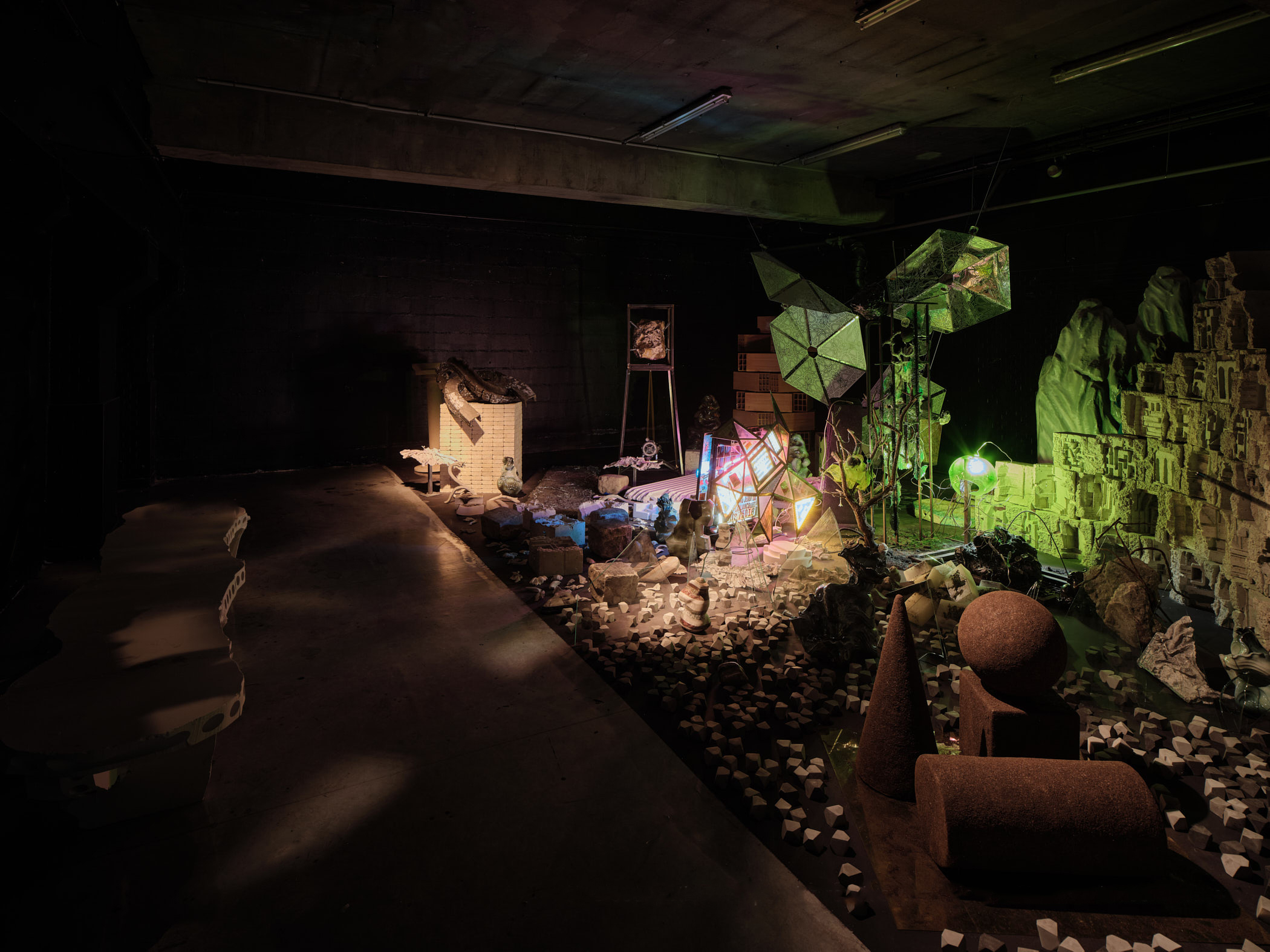
L’Atelier du désastre proposes a discreet intervention within the Scientific Instruments and Communication galleries of the Musée des Arts et Métiers.

What remains when the infrastructure of the modern world fails? Not through any single cause (solar flare, electromagnetic pulse, flood, war, pandemic, grid collapse) but through the simple, inevitable fact that complex systems break down. That the technologies we have come to treat as permanent are, in truth, profoundly fragile. As if this parenthesis in history might one day close. As if these tools could, after all, simply fail.

It is in this light that the Musée des Arts et Métiers reveals itself as something more than a temple of progress. It is, we believe, a latent workshop, a reservoir of accumulated knowledge preserved in material form, waiting. Its collections do not only document the history of human ingenuity; they hold within them the possibility of a future rebuild. The fax machine, the cathode ray tube, the mechanical press, the optical telegraph: objects that appear obsolete today might tomorrow become indispensable. In the aftermath of catastrophe, the museum ceases to be a site of contemplation and becomes one of survival, a place where society could find the tools to restart itself.

Our proposal inhabits this tension. A few low-tech, handcrafted, and quietly poetic works slip into the interstices of certain display cases, neither competing with the collection nor illustrating it, but allowing it to resonate differently, as if seen for the first time through the lens of necessity.

L’Atelier du désastre is, ultimately, an exercise in speculative care. By introducing works that are fragile, approximate, and deliberately unfinished, we ask what it means to make art in the shadow of potential collapse, and whether art itself might function as a form of preparedness. Not a solution, not a warning, but a way of staying present with uncertainty. Of honoring the specters that haunt every tool and every technique: the ghost of its possible disappearance, and the stubborn, perhaps unreasonable, hope of its return.

La Constellation de Monsieur S

Location
Galerie Eric Mouchet - Bruxelles
Dates
3 September - 1 November 2025
Artist(s)
Louise Assouly, Ella Bergmann-Michel, Louise Belin, Nelson Bourrec Carter, Juana Bustamante, Jeanne Champenois-Masset, Aliki Christoforou, Roxane Daguet, Kenny Dunkan, Romeo Gómez López, Angeline Guzman, Sarah Juin, Luca Nuvolone, Nelson Pernisco, Prune Perris, Giovanni Battista Piranesi, Florian Pugnaire, Louis-Cyprien Rials, Vivien Roubaud, Lola Roy-Cassayre, Justine Salamin, Dunya Savilova, Kevin-Ademola Sangosanya, tanz, Pierre Touré Cuq, Maxime Vignaud, Joseph Winckler
Press
Gwennaëlle Gribaumont in La Libre Belgique - Julia Stellman in Frankfürter Allgemeine Zeitung
Credits
GRAYSC

The Brussels gallery Eric Mouchet is home to a visitor of exceptional regularity. He seems never to leave the exhibition space. Yet few have ever caught a glimpse of him. His presence is of an absolute discretion, almost imperceptible to ordinary mortals, unless one possesses a certain gift.

Monsieur S is no ordinary visitor: he is made of neither flesh nor blood. « He is not malevolent, but he is bored » Ariane once confided during a visit to the gallery. The medium then shared a few details about him: his name and some fragments of his life story. Monsieur S is said to have lived during the first half of the twentieth century, as a trader in luxury goods. Elegant without ostentation, an aesthete, shy yet worldly, Monsieur S loved beautiful things.

If Monsieur S is bored in a gallery, perhaps an exhibition could provide some distraction. But what do ghosts dream of? What do those who no longer have bodies, yet have too much time, desire? In a world where everything is measured, archived, rendered explicable, the ghost is far more than an ethereal or frightening silhouette. It embodies what resists erasure, what escapes oblivion. The ghost becomes a marker of fault lines: in narratives, in bodies, in places. To entertain Monsieur S is to consider differently all these quiet survivals, and to make the exhibition not an answer, but a space of expression for everything that still seeks to manifest itself.

La Constellation de Monsieur Sis neither an exhibition about ghosts, nor an exhibition about death. It is organised rather like a kaleidoscope of ineffable presences. It explores what, in our era, continues to act without being fully named or acknowledged. This may take the form of the fragile beauty of ruins, a nostalgic attachment to imaginary architectures, or the infinity of the cosmos, that contemporary terra incognita towards which so many belief systems project their disembodied spirits.

But it is also a matter of digital ghosts: avatars without bodies yet not without power, haunting networks and discourses, sometimes with perfidy. Or of those silenced deaths, caused by the logic of late capitalism and erased by it. The final room, lastly, is devoted to rituals and the care of bodies, whether dead, living, or indeed both at once, as so many foreign bodies that cannot be explained despite every concerted effort by the sciences.

La Constellation de Monsieur S is a polyphony of silent voices, a collision of past absences, a sedimentation of discreet signs. This exhibition offers Monsieur S as many opportunities to exist, to manifest himself, or to be seen, provided one is willing to look for him. Ariane, the medium, was unequivocal: Monsieur S is not hostile. He thus comes to embody all that resists explanation, all that the gaze avoids, all that contemporary thought relegates to the margins. At a time when uncertainty structures the zeitgeist, when the anxiety of ambiguity coexists with an obsession for proof, Monsieur S reminds us that there will always be zones of opacity that no knowledge can fill.

One need not believe in ghosts to recognise the force of all that eludes the mind. It is enough to admit that certain presences act, disrupt, disturb. The exhibition seeks neither to demonstrate nor to convince: it opens a space for those who accept to doubt, to search without finding. Perhaps it is there, in this floating attention, in this fertile discomfort, that Monsieur S will finally find a little distraction, observing those who, standing before him, accept that they can no longer master everything.

Rire sur un volcan

Location
Poush
Dates
23 January - 15 March 2025
Co-curator(s)
lara Darrason, Alice Loumeau & Valentin Bansac (MATTERS. xyz), Mahsan Shams
Artist(s)
Cécile Beau, Fanny Béguély, Nina Berclaz, Ludwig Berger, Charlotte Charbonnel, Andrew Erdos & Shawn Murrey, Julia Gault, Mihai Grecu, Joana Hadjithomas & Khalil Joreige, Clara Imbert, Pauline Julier, Athanasius Kircher, Atsunobu Kohira, Sabine Mirlesse, Nelson Pernisco, Darta Sidere, Diana Vidrascu, Wiktoria
Credits
Grégory Copitet

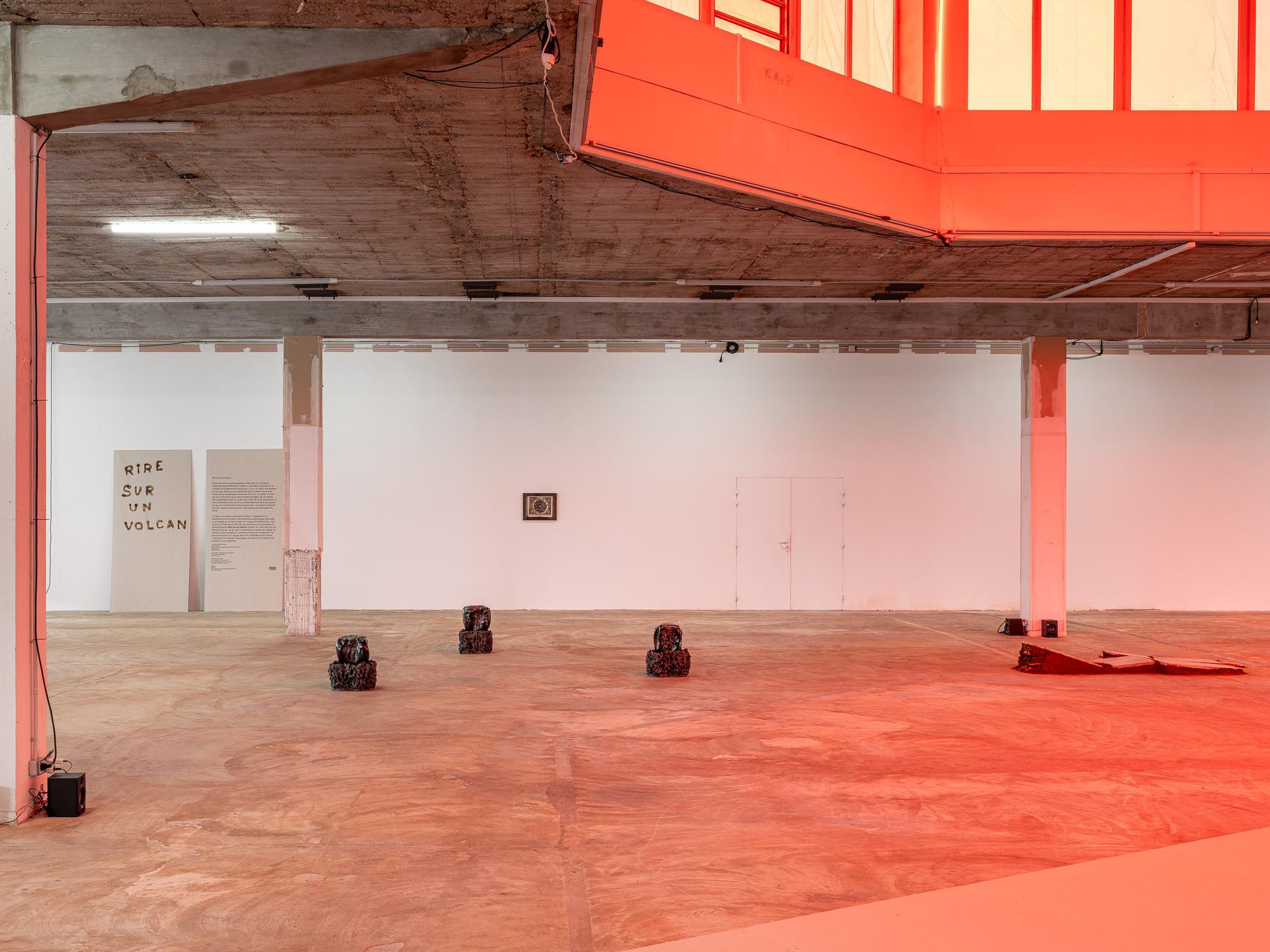
In her autobiographical memoir “My Mother Laughs”, artist and film director Chantal Akerman chronicles her daily life plagued by illness and the unraveling of a love story. She recounts that, during dinner, she was struck by a sudden burst of vitality, a “need to laugh in the midst of the impending catastrophe. Laughing on a volcano.” The premise of this exhibition sprouted from this cry of joy in the face of ominous predictions. Laughter is portrayed as a reaction of wonder at the power of fire, a reversal of power dynamics, an absurd stance in light of the disproportionate impact of our species on Earth’s systems. The figure of the volcano conjures up the imagination of an imminent collapse, while also embodying a sensual geological aesthetic and highlighting the fragility of human time. Like Athanasius Kircher’s “central fire” theory, which speculates on the insides of the globe, Laughing on a Volcano explores the materiality of these raw elements: volcanic rock, sand, clay, coal, limestone concretions and mineral voices. It embarks on a journey into the depths of mines, the intensity of a magnetic field, to the edge of a crater, or in contact with a meteorite.

Liquidation totale

Location
pal project
Dates
10 October - 10 November 2024
Artist(s)
Andreas Achenbach, Alexander Adriaenssen, Pieter Aertsen, Tadeusz Ajdukiewicz, Yvette Alde, Estela Alliaud, Emii Alrai, Jenny Alten, Joseph Anton, Benjamin Arnault, Attila Bagi, Hermann Baisch Inès Barcy, John Bare, Payton Barronian, Marco Basaiti, Yoan Beliard, Louise Belin, Jean Baptiste Belin de Fontenay, Bernardo Bellotto, Gabriel Belot, Andrea Belvedere Nicolaes Berchem, Pauli Bertholon, Raphaëlle Bertran Pinheiro, Pierre Bertrand, Giovanni Battista Bertucci I, René Edouard Blanc, Carl Blechen, Sophie Blet, Carlo Böcklin, Jan Bogumil Plersch, Mathieu Bonardet, André Bordeaux-le-Pecq, Sandro Boticelli, Francesco Botticini, François Boucher, Celia Boulesteix, Olga Boznańska, Richard Brakenburgh, Leonaert Bramer Christian Hilfgott Brand, Józef Brandt, Georges Braque, Paul Braudey, Yves Braye, Gillian Brett, Karel Breydel, Józef Brodowski II, Tanya Brodsky, Willem Pietersz Buytewech, Gaston Jules Louis Cagenat, Valentina Canseco, Nathan Carême, Vittore Carpaccio, Claire Carpot, Carl Gustav Carus, Armand Charnay, Józef Chełmoński, Nicki Cherry, Alexia Chevrollier, Adam Chmielowski, Pieter Claesz, Léon Cogniet, Anne-Florence Cointrau, Ilke Cop, Gonzales Coques, Jean-Baptiste Camille Corot, Antoine Coypel, Alix d’Anethan, Polidoro da Lanciano Rosa da Tivoli, Hugo Darnaut, Meyer de Haan, Jan Davidsz de Heem I, Delphine de la Roche, Cornelis de Vos, Emanuel de Witte, Hippolyte François Debon, Rolande Dechorain, Edgar Degas, Pietro degli Ingannati, André Marius Jules Delage, Roger Henri Delaporte, Georges Alfred Emile Delplanque, Paul Descelles, Félix Deschamps Mak, Leon Dołżycki, Natalia Domínguez, Adolf Dressler, Hans Dressler, Louis Jules Dumoulin, Jules Dupre, Albert Jules Édouard, Fritz Erler, Alexandre Espagnol, Clément Etienne, Robert Pierre Fachard Antonio Fernández Alvira, Maksymilian Ferning, Mariano Fetti, Anselm Feuerbach, Stefan Filipkiewicz, Dana Fiona-Armour, Govert Flinck, Albert Flocon, Henri Frachon, Ambrosius Francken I, Gérard François, Friedrich Frégevize, Lucian Freud, Jef Friboulet, Caspar David Friedrich, Ernst Fries, Bernhard Fries, Jan Fyt, Adriaen Gael, Pierre Gaillardot, Miguel Garcia, Vivancos, Laure Garcin, Germaine Gardey, Paul Gauguin, Michel Gemignani, François Gérard Wojciech Gerson, Marguerite Ghy-Lemm, Ignacy Gierdziejewski, Aleksander Gierymski Maksymilian Gierymski, Alfred Jules Giess, Luca Giordano, Luca Giordano, A. Gnasenapp, Arthur Golyakov, Romeo Gómez López, Ludivine Gonthier, Itamar Gov, Pierre-Adrien Graillon, Giovanni Francesco Grimaldi, Rolland Guilloteau, Michael Gumhold, Wiktor Gutowski, Rafał Hadziewicz, Willy Hamacher, Ruiji Han, Kim Hankyul, Lise Harlev, Hans Hartung, Bayo Hassan Bello, Albert Heckenhauer, Robert Heitz, Adolf Hengeler, Tristan Higginbotham, Eduard Hildebrandt, Isamu Hirakawa, Johana Hnízdilová, Meindert Hobbema, Anders Holen, Gerrit Willemsz Horst, Theo Huber, Eugène Marie Léonce Huc, Tanea Hynes, Inside Job (Ula Lucińska, Michał Knychaus), Eugène Louis Gabriel Isabey, Daniel Jablonski, Christian Jaccard, Laurent Jacquot-Defrance, Jean Baptiste Janisset, Georges Jeannin, Eduard Kaempffer, Anish Kapoor, Korab Karl, Eduard Kasparides, Edmond Kayser, Apolonius Kędzierski, Michael Klahr I, Tristan Klingsor, Alfons Knogl, Tadeusz Korzon, Juliusz Kossak, Wojciech Kossak, Franciszek Kostrzewski, Aleksander Kotsis, Gabrielle Kourdadzé, Roman Kramsztyk, Édouard Krug, Robert Carl Kummer, Adolf Kunkler, Teofil Kwiatkowski, Emmanuel Lagarrigue, Osa Lambert Scherdin, Michael Lancz, Emmanuel Lansyer, Pieter Lastman, Jean Jules Antoine Lecomte du Nouÿ, Maurice Legendre, Philippe Lelièvre, Stanisław Lentz Carl Friedrich Lessing, Rudolf Levy, Paul Linke, Fra Filippo Lippi, Leopold Löffler, Claude Lorrain, August Lucas, Adrian Ludwig Richter, Emil Lugo, André Magaña, Jean Denis Maillart, Hans Makart, Jacek Malczewski, Louis-Claude Mallebranche, Carly Mandel, Edouard Manet, Johann Manskirsch, Karla Marchesi, Louis André Margantin, Roland Mascart, Jan Matejko, Henri Matisse, Stanisław Matzke, Josep Maynou, Francisco Melo, Hendrik Willem Mesdag, Michelangelo, Joan Miró, Otto Modersohn, Claude Monet, Maurice Montet, Lou Motin, Bartolomé, Esteban Murillo, Masayuki Nagare, Yosi Negrín, Louis Neillot, Abraham Neumann, Lee Nevo, Erik Niedling, Reinier Nooms, Jean-Pierre Norblin de la Gourdaine, Jacques Noury, Gustav Olbricht, Jan Kazimierz Olpiński, Patrick Ostrowsky, Nicolas-Marie Ozanne, Francesco Pacelli, Georges Pacouil, Paolo Giovanni Panini, Józef Pankiewicz, Luce Paris-Hilsum, Fryderyk Pautsch, Pierre Peltier, Pier Maria Pennachi, Jonathan Pêpe, Pierre Père Lacour, Nelson Pernisco, Laurence Petrone, Pablo Picasso, Jonge Lange Pier Pietersz, Antoni Adam Piotrowski, Nicola Pisano, Władysław Podkowiński, Laura Põld, Nicolas Poussin, Valentine Prax, Rebeka Racz, Johann Anton Alban Ramboux, Józef Rapacki, Rayb, Josef Rebell, Noushin Redjaian, Odilon Redon, Johann Heinrich Carl Reinhold, Stefan Reiterer, Li Li Ren, René Renaud, Tabita Rézaire, Hubert Robert, Louis-Paul Robin, Raymond Rochette, Henryk Rodakowski, Auguste Rodin, Salomon Rombouts, Johann Heinrich Roos, James Rosati, Piera Rossi, Carl Anton Joseph Rottmann, Josep Royo, Jan Rubczak, Paul Rubens, Philipp Otto Runge, Charles Santoire de Varenne, Lassana Sarre, Giovanni Girolamo Savoldo, Caroline Schattling Villeval, Anton Schiffer, Karl Friedrich Schinkel, Wilhelm August Schirmer, Georg Philipp Schmitt, Heinrich Gustav Adolf Schmitz, Carl Schuch, Kristina Sedlerova Villanen, Roger Serpantié, Michel Serre, Maurice Serullaz, Finnegan Shannon, Henry Siemiradzki, Dennis Siering, Luca Signorelli, Paola Siri Renard, Yvonne Sjoested, Władysław Ślewiński, Frans Snyders, Gustav Adolph Spangenberg, Piotr Stachiewicz, Franz Steinfeld, January Suchodolski, Taavi Talve, David Teniers II, Włodzimierz Tetmajer, Rosa Tharrats, Katinka Theis, Jan Jerzy Thomschansky, Jacopo Tintoretto, Maurycy Trębacz, André Trèves, Edward Trojanowski, Lancelot, Théodore Turpin de Crissé, Léon Tutundjian, Henryk Uziembło, Sarah Valente, Adam Frans van der Meulen, Aert van der Neer, Jan van der Wils, Jan Josephsz. van Goyen, Mattheus van Helmont, Marinus van Reymerswaele, Jacob van Ruisdael, Dirck, Dircksz. van Santvoort, Herman van Swanewelt, Evita Vasiljeva, Pierre Vauthier, Philipp Veit, Rolande Vergé-Sarrat, Charlie Verot, Anthonie Verstraele, Jean Hégésippe Vetter, Pascal Vinardel, Eugène-Emmanuel Viollet-le-Duc, Zygmunt Vogel, Vincent Voillat, Peter von Cornelius, Joseph von Führich, Heinrich Maria von Hess, Karl von Marr, Ferdinand Johann von Olivier, Olivier Johann Martin von Rohden, Moritz Ludwig von Schwind, Anton Alexander von Werner, Alfred Wierusz-Kowalski, Adam Willaerts, Michael Willmann, Stanisław Witkiewicz, Adelbert Woelfl Karl Wohnlich, Witold Wojtkiewicz, Friedrich von Woldemar, Roger Worms, Marius Woulfart, Philip Wouwerman Leon Wyczółkowski, Stanisław Wyspiański, Marcin Zaleski, Stanisław Zawadzki, Elyn Zimmerman, Franciszek Żmurko
Press
Leopold Vassy in Quotidien de l'art
Credits
Romain Darnaud

The history of art is written by what the millennia have left us. Museum storerooms are packed with artefacts, objects and works that have survived uncertainties, turbulences and tragedies. Yet what of those that have failed to present themselves to our contemporary eyes? Stolen and never found, lost over the centuries, vandalised out of misunderstanding, or destroyed in a natural disaster, each missing work is significant in how we construct our own history.

Numerous researchers and academics have investigated these losses, always through a specific prism, such as iconoclastic revolutionary periods, destruction linked to colonisation, missing inventory numbers in public collections, or vandalism in the field of contemporary art. Unfortunately, there are few opportunities for this research to meet, confront and feed off each other, which is why we have developed the Oblivion Collection.

Oblivion Collection is an online archive that attempts to sketch out a history of art through what millennia have hidden from our view. If the adage teaches us that history is written by the victorious, Oblivion Collection offers the losers, the invisible, the disappeared, the chance to exist in a new form, and to rewrite their own history. Any attempt to write history is, by definition, flawed, which is why it is essential for this project to be collective and participatory, in order to multiply as many points of view and ways of gathering information as possible.

Oblivion Collection has no limits. Having no geographical or chronological restrictions allows us to turn this collection into the ultimate vault, the memorial to works that are supposed to be forgotten. Bringing together this collection of lost works means overcoming the taboo of losing works of art. Unfortunately, every institution, every artist and every collection has experienced the loss of a work of art. Yet very few people speak out publicly about these losses. Being part of the Oblivion Collection is not a sign of negligence; on the contrary, it is proof of total transparency in the administration of a collection.

By inviting researchers, thinkers, institutions, artists and individuals to enrich this collection, we hope to help rethink the way we write our shared narrative and reimagine our relationship with objects and images. We plan to publish an online database of over 10,000 records by the end of 2024. This database will be accessible online and editable by anyone, enabling visitors to rediscover many works of art thanks to the power of hypertext links. Several events will be organised to bring these lost works back to life.

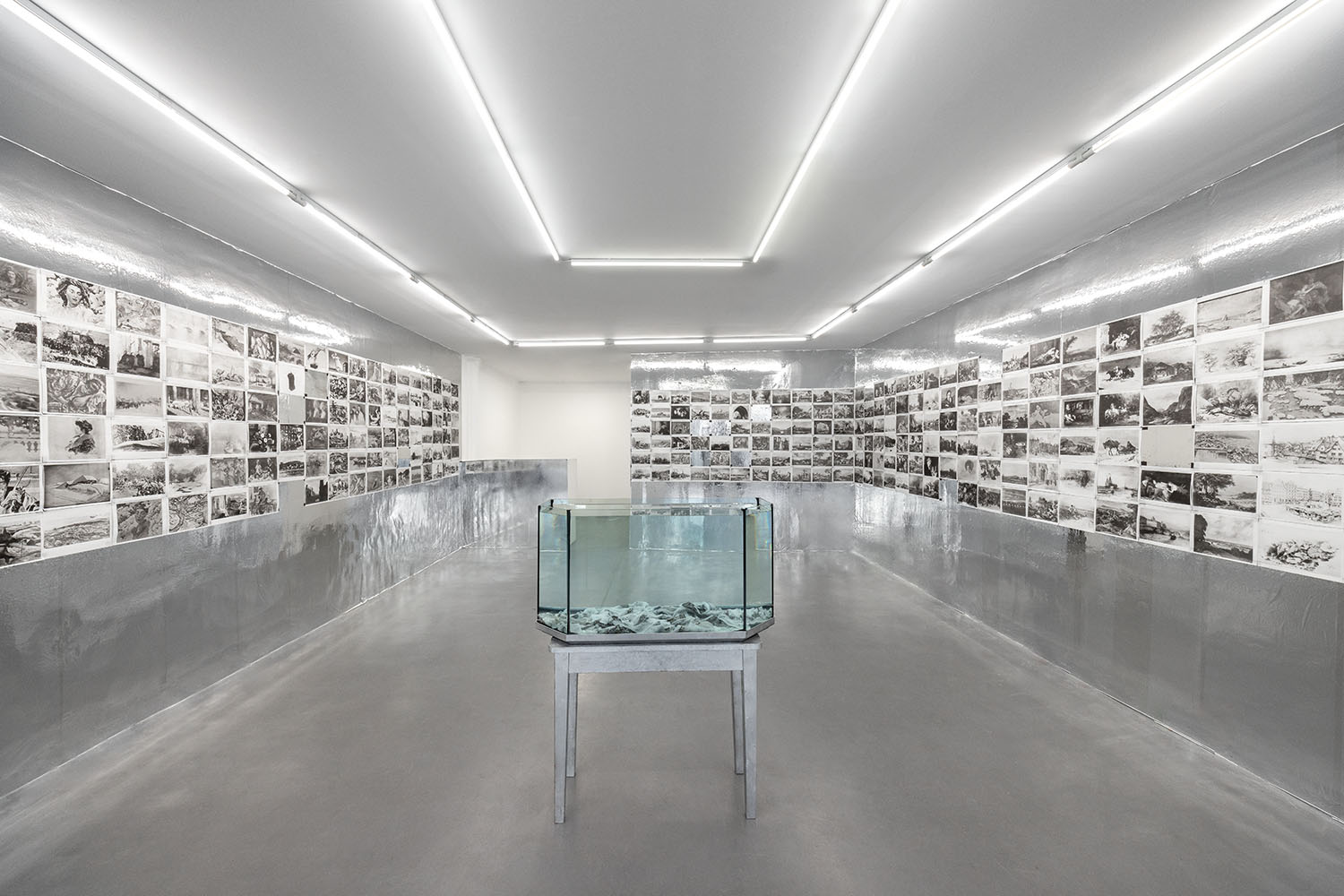
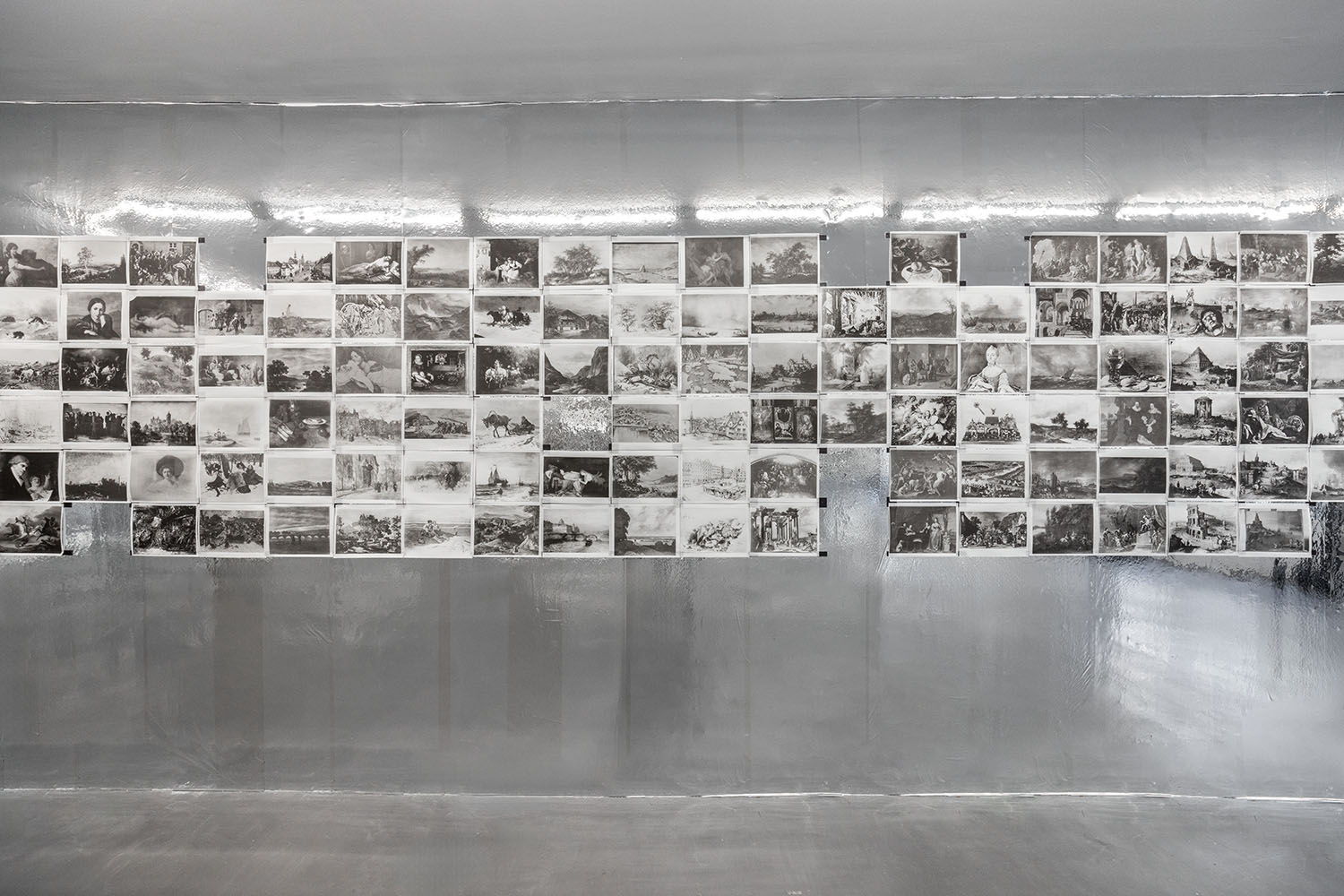
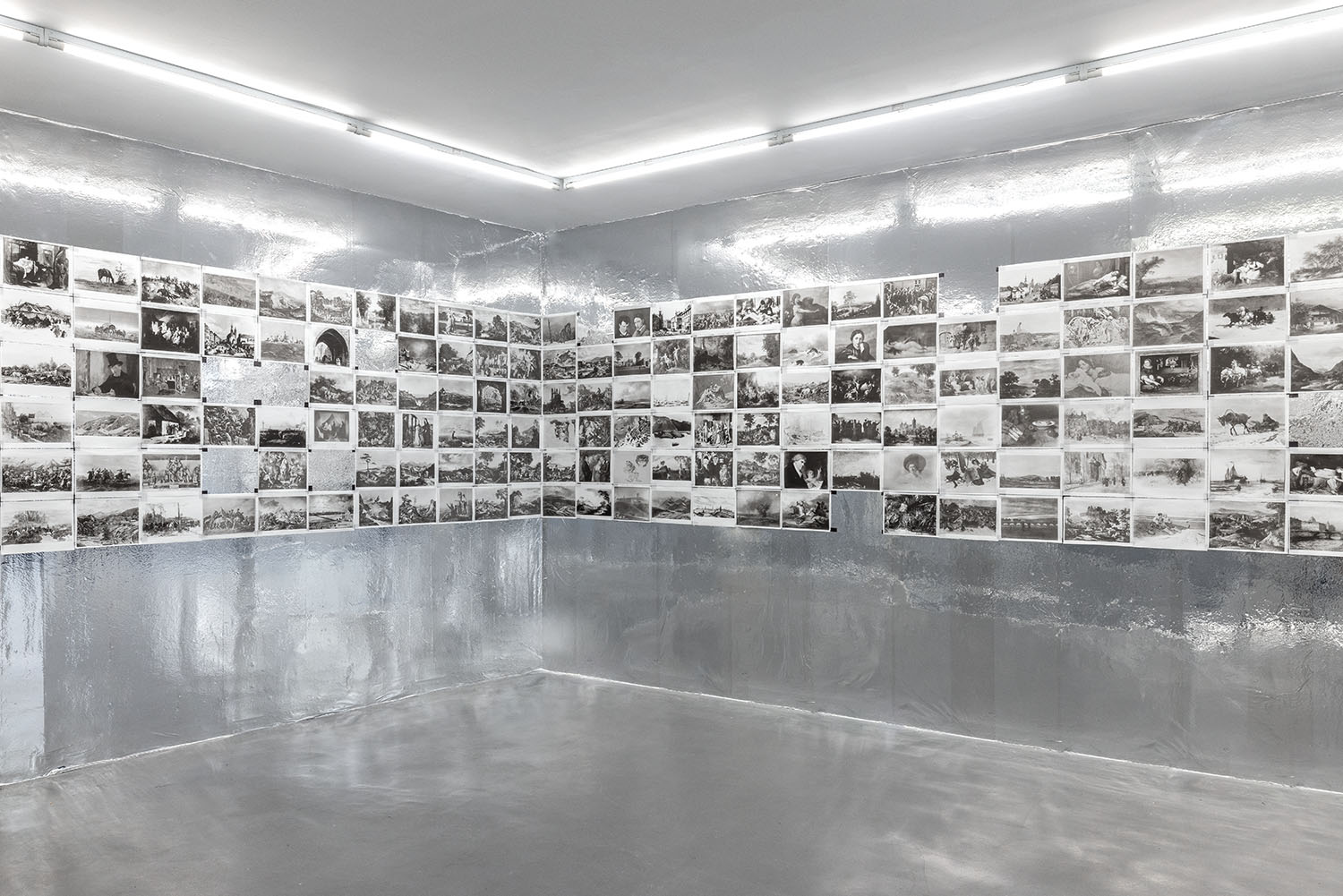
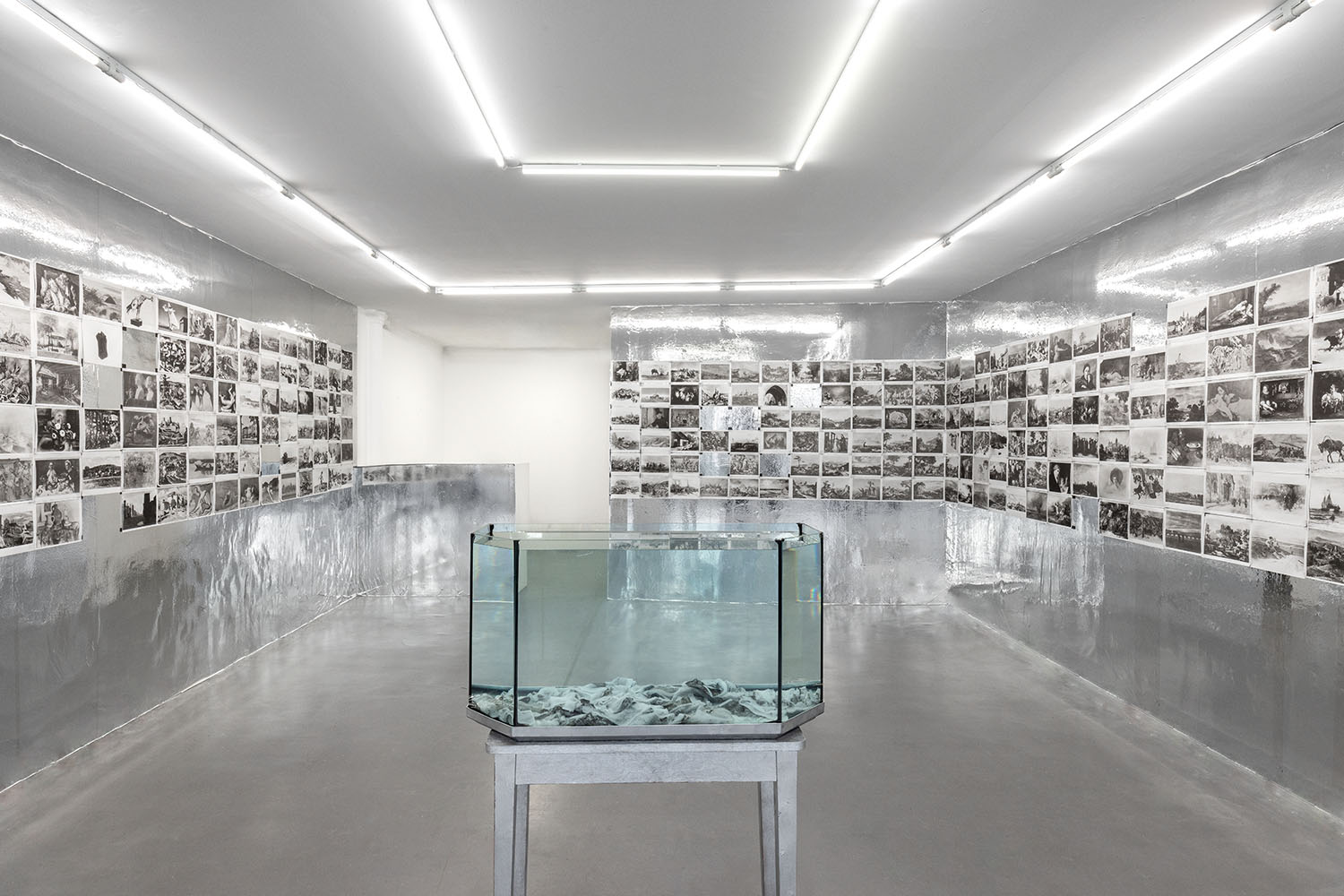
‘Liquidation Totale’ is the collective’s first exhibition. The 555 visuals of works of art that have now disappeared span more than a thousand years of artistic production. All these reproductions are sold for €100, in support of the collective. Every 90 minutes, a photographic trace is randomly selected. If it has been sold, it remains on the wall; if not, it is dissolved in a vat of water in the middle of the gallery. In this way, everyone becomes a curator of the exhibition, an accomplice to these disappearances, a reminder of our collective responsibility in the face of the loss of works of art that occurs, re-enacting the survivor’s bias that enabled the writing of history.

L’ombre des montagnes avance

Location
Le Sprinkler
Dates
25 May - 2 June 2024
Artist(s)
Lou Motin
Credits
Lou Motin

A few months ago, the International Union of Geological Sciences announced that we were not living in the Anthropocene. For this group of scientists in charge of delimiting geological eras, the imprint of human activity on the Earth system is taking place in a time that is far too short to be named specifically. However this long time, a troubled and uncertain future, is already here. It is foreshadowed in the works of artist Lou Motin. By hacking into the codes of contemporary archaeology and museography, he combines the present with the past. Lou Motin then takes advantage of these newly-created temporal interstices to slip in narratives, fictions and poetry, like so many clues proving that the stigmata of the activity of our industrial societies go far beyond the understanding of those who produced them.

Lou Motin’s works play with our perceptions, as in the ‘Fragments du Giec’ series. This collection of fragmentary industrial rocks, engraved with indecipherable series of 1s and 0s, is a binary translation of the latest IPCC report. By engraving this report in blocks of salvaged bricks, Lou Motin is safeguarding it for future generations, taking particular care to make it indecipherable for those who don’t have the same reading codes as computer systems. This report outlines the catastrophic situation facing our planet, with numerous sources, calculations and diagrams, and is undoubtedly one of the most important pieces of writing of our time. Unfortunately, not many people are interested in it. By engraving them in a seemingly hermetic alphabet, Lou Motin covers these pieces of wall with a veil of mystery, making them as attractive as a Rosetta Stone to decipher. Moreover, the IPCC report prophesies a coming “apocalypse”, a term that has never been so apt to characterise a body of work of art, since it means “unveiling; revelation” in ancient Greek.

A similar mechanism is at work in the ensemble ‘Question de point de vue’. These half-dozen directional signs, designed in-place for a park, are being previewed at ‘L’ombre des montagnes avance’. They foretell dark omens, an inescapable nuclear catastrophe. They sketch out a landscape to come, ravaged by the force of radioactivity unleashed by human domestication. A force that will sooner or later turn on those who try to manipulate it. Metal is the material of choice to withstand such a cataclysm over the long term, as if to prove to those who survive that we know the dangers we ourselves have created.

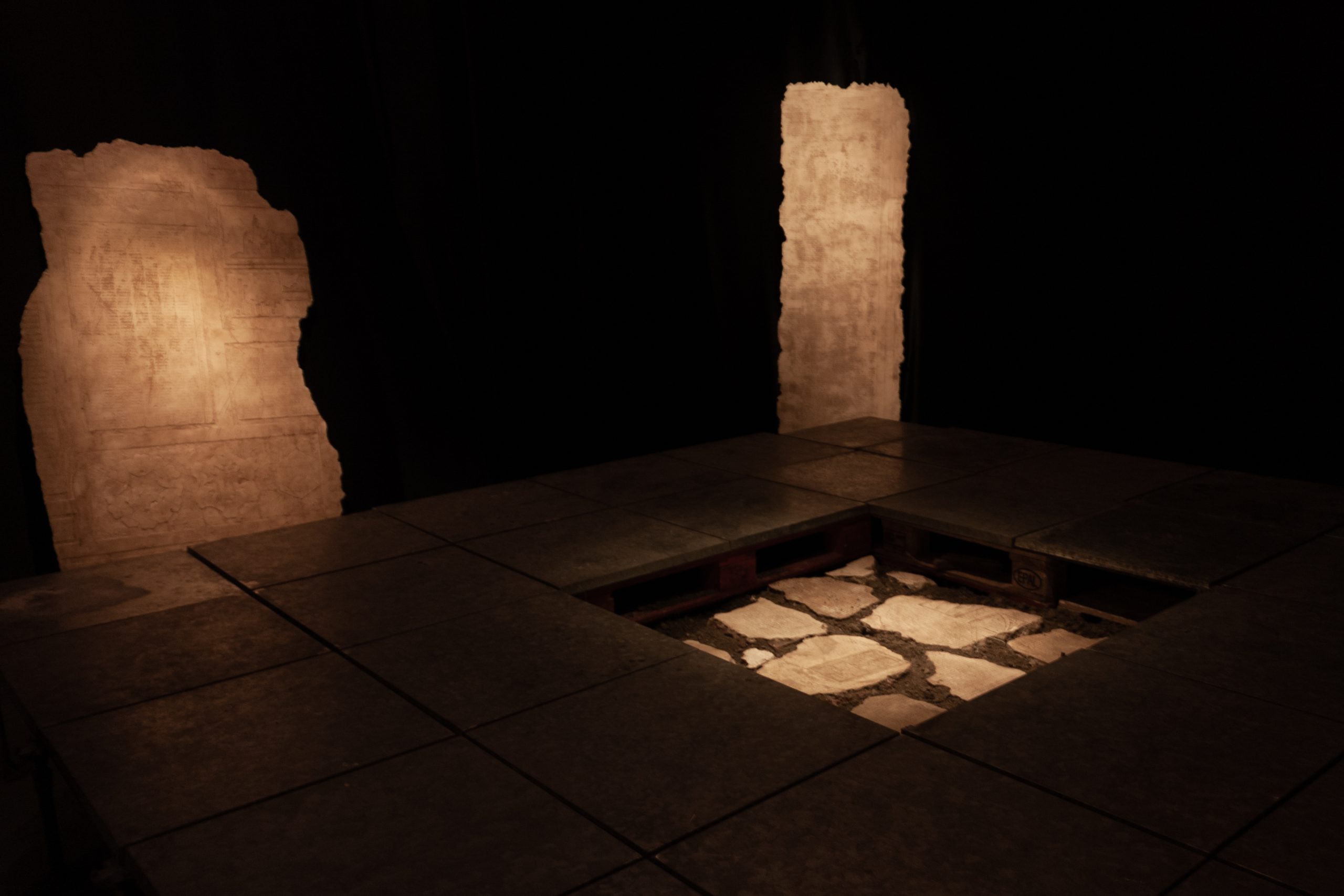
‘Fouilles’ is a work that is also aimed at future generations. The artist stages an archaeological dig revealing the scars formed by the millions of kilometres of asphalt roads criss-crossing the surface of planet Earth. Almost 250kg of artificial rock is surgically cut into an almost perfect square. On some of these slabs, Lou Motin has inscribed a random alphabet that is impossible to decipher. These tarry traces will survive for millions more years, and there will probably not be many people left to put them into any kind of context. These stigmata of our deadly industrialisation, evidence of a crime that is not yet complete, can be read as the coming epilogue to the history of humanity: an end, a fall, that will know no readers.

‘L’ombre des montagnes avance’ is an exhibition made up of a rocky amalgam of lithic works produced by Lou Motin in recent years. A dark environment from which the human figure is systematically absent, but whose trace is omnipresent, a stratigraphy that heralds our doom destiny. The spirit of our times is marked by uncertainty. Between the fall of the Soviet empire and that scheduled for the American empire, the systemic disturbances caused by human activity, and the crumbling of our Western democracies, everything reminds us of our ephemerality. Rome wasn’t built in a day, but it didn’t fall overnight. Some of its remains are still standing. This exhibition celebrates the mineral traces that will remain long after our passage on Earth, and as the philosopher Ibn Khaldun said as long ago as the 14th century: ‘When empires allow themselves to grow old, and the day falls, the shadow of the mountains move forward’.

Carte grise Carte blanche

Location
ENSAD Nancy
Artist(s)
Baptiste Thiebaut Jacquel, Marvin Lad, Jeanne Maugenre, Chloé Mufraggi, Gauvain Pedoni, Nathan Riquet, Salomé Rzepecki, Nan Zhang
Credits
Jeanne Maugenre

In art school, life is punctuated by assignments in response to a set of instructions. This is generally an opportunity for students to explore new practices or consolidate existing ones. The instructions take on the role of constraints that need to be overcome in order to explore the visual arts in greater depth. When they leave school, these exercises become known as ‘open calls’ or ‘brief’, with increasingly complex rules and obligations. The aim remains the same: to free oneself from a rigid context in order to generate a unique system of thought, form and aesthetic. Many projects are conceived according to a precise protocol, but if they are not selected, they will have little chance of coming to fruition for obvious reasons of space, time, budget or skills.

But is that any reason to put them away in a drawer, out of sight? In 2006, a group of curators led by Hans-Ulrich Obrist set up the Agency of Unrealized Projects to collect as many unfinished manuals of stillborn works as possible. In this agency, these compiled projects have no other horizon than to be frozen at the stage of hypothesis. Yet there are a multitude of ways to bring an idea to life. Time, financial and technical constraints are often imaginary blinkers placed on the skulls of those who rush headlong into a single direction, without looking at all the others open to them. To break down these mental barriers, it can take many years to achieve a new balance, to carry out preparatory research brimming over with repentance, and to engage in endless discussions that are as fascinating as they are stimulating.

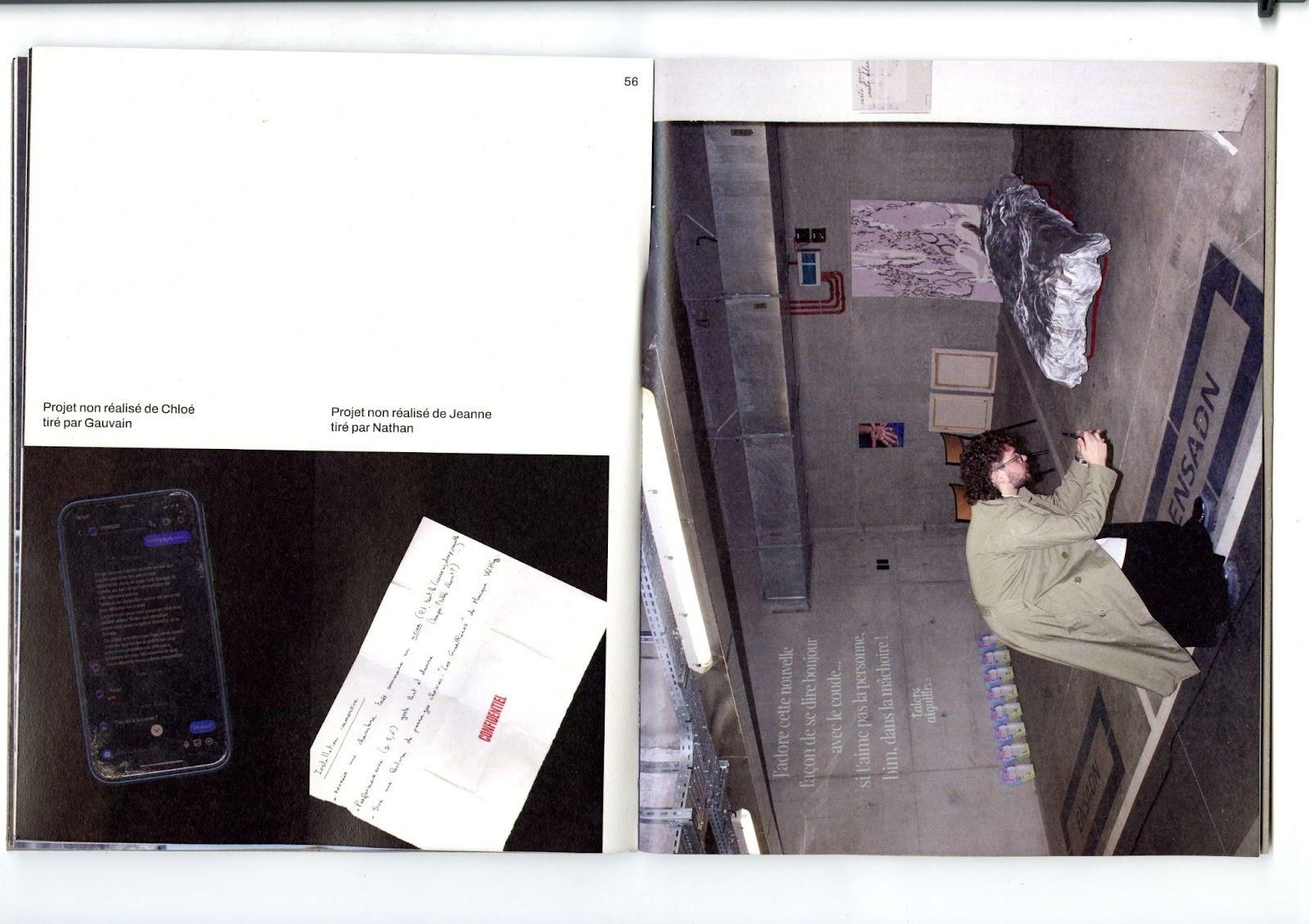
‘Carte grise, carte blanche’ was born of the desire to produce an exhibition made up of liberated and liberating constraints. 4th and 5th year students were invited to write down on a sheet of paper any information they might find useful about a project they had not been able to complete. The scribbled sheets were then thrown into a bag and randomly picked by the same group of students. Each student was given an unfinished project by one of their classmates, with the aim of realising it. The aim was not to reproduce as it stood the lost thought of a fellow student, but rather to take advantage of a new perspective, a different practice or simply a re-imagined context to produce something new. In this way, everyone became one of those ‘laboratory rats who have to construct the labyrinth from which they propose to emerge’, as Raymond Queneau, one of the founding members of OuLiPo, put it.

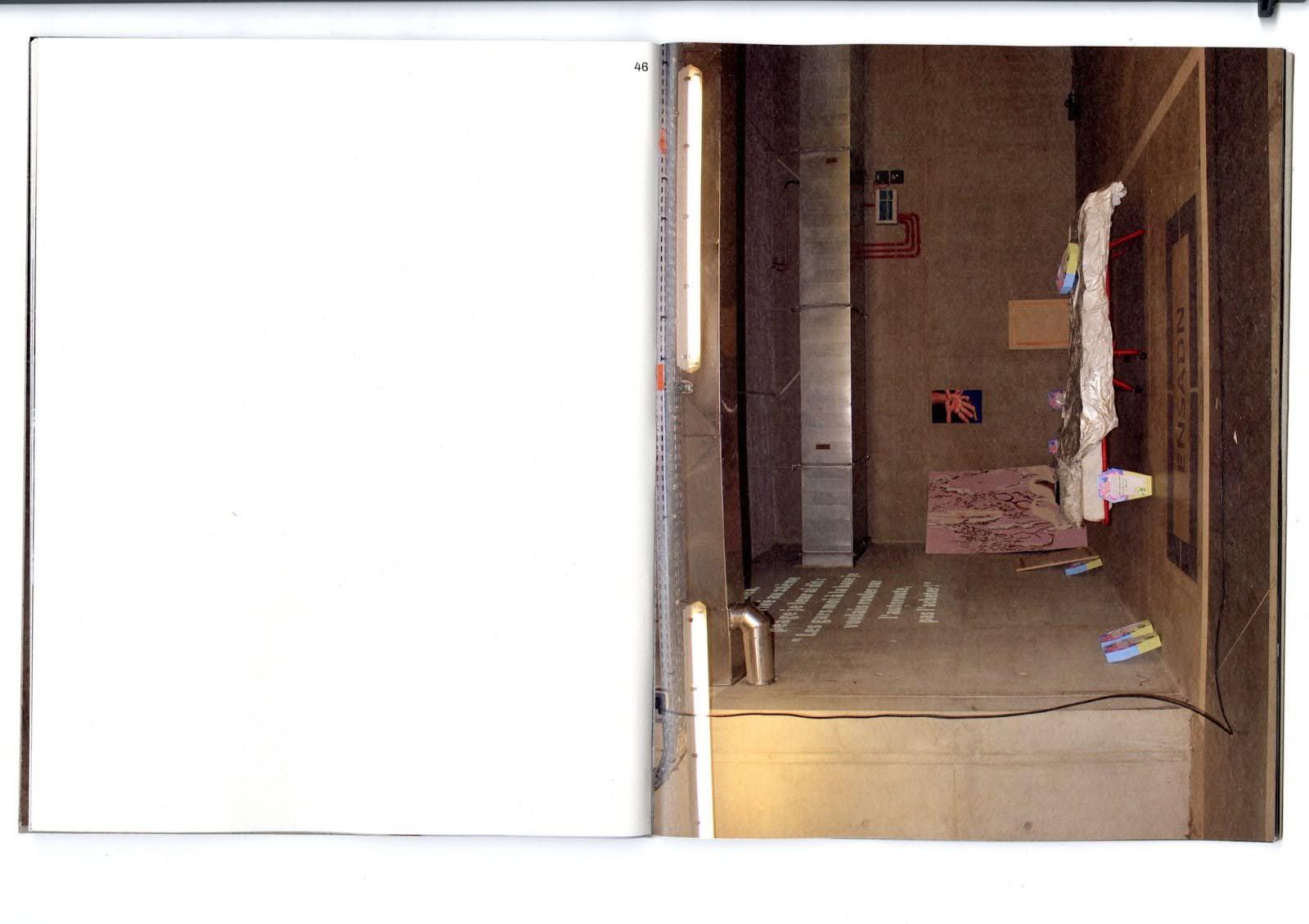
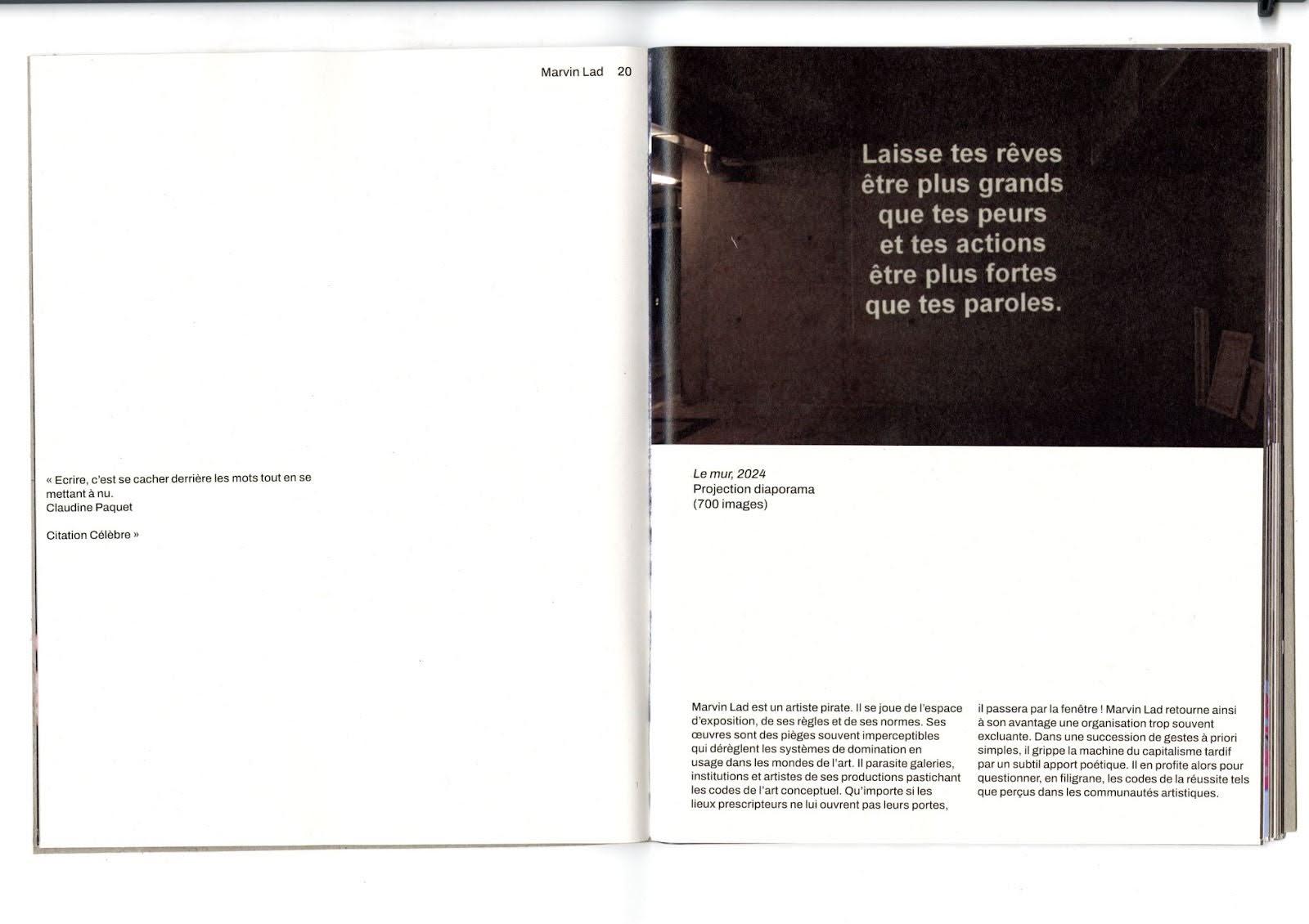
So what should we do with these newly produced works? An exhibition is still the most appropriate format, but for a project like this, the white cube is a resplendent bore. It was quickly agreed that it was necessary to extract ourselves from it. However, it was imperative that the school administration could accept this emancipation, ruling out any urban escapade. This new constraint led to the idea of exploring a part of the school that was still largely unexplored by students: the car park. It’s not possible to invite the public there? Whatever, a closed exhibition will be organised before being documented. The exhibition will take place in the pages of a publication, in this case the one you are holding in your hands. An exhibition that can be visited by as many people as possible, at any time of day.

And why limit ourselves to a single exhibition? So the students, working alone or in pairs, created 6 displays in the most intuitive way possible. Each of these combinations was documented in photos. These run through the pages that follow. The works produced, as well as the protocol sheets of paper, can also be found throughout the pages of this edition. A brief paragraph written by the students on their feelings about this project and another presenting their research can also be read on the pages to come.

Certainly, every work, every exhibition, every project is a succession of more or less explicit constraints, which then materialise in a never-ending litany of technical complications. ‘Carte grise, carte blanche’, however, was a departure from this precept. The extreme motivation of the students, their strong mutual affinity and their ability to follow their instincts were undoubtedly no strangers to this success. In 5 days over the course of two months, they managed to write protocols, use them to produce new works, hang them together, take photos of them, lay out, print and shape over 80 editions at the school’s workshops. These 5 days were intense and overflowing! A succession of sparks, like so many buzzes from a polyphonic beehive, an innovative emulation was activated by the team, in an economy of means, resources and scales, reminding us that there is always a possibility to be creative when one has an idea.

BAD EMS

Location
Galerie Romero Paprocki
Artist(s)
Alexandre Bavard
Credits
Galerie Romero Paprocki

Alexandre Bavard spent last year in residency at Schloss Balmoral in Bad Ems. This period of reflection enabled him to continue his study of the upheavals that have shaken French society for several years now, with recent social unrest demonstrating the flaws in our contemporary democracies. Alexandre Bavard travelled then to Athens to carry out a very personal investigation into the traces of democracy. In the course of his “investigation” – a term which, in ancient Greek, shares the same etymology as the word “History” – the artist realised that the questions that run through our societies today have always been present in European civilisations.

Bad ems can thus be read as a sequel to the BRAV project carried out in 2023 at the Tick Tack gallery (Antwerp), in which Alexandre Bavard pitted supposed chivalric honour against the hypothetical republican spirit of the police. Bad ems takes as its starting point the myth of Antigone, the Greek heroine who defies the law to try and give her brother a decent burial. This striking injustice inspired him to think about updating the myth through theatre, in line with his previous works. This exhibition is like a set waiting to be activated by actors.

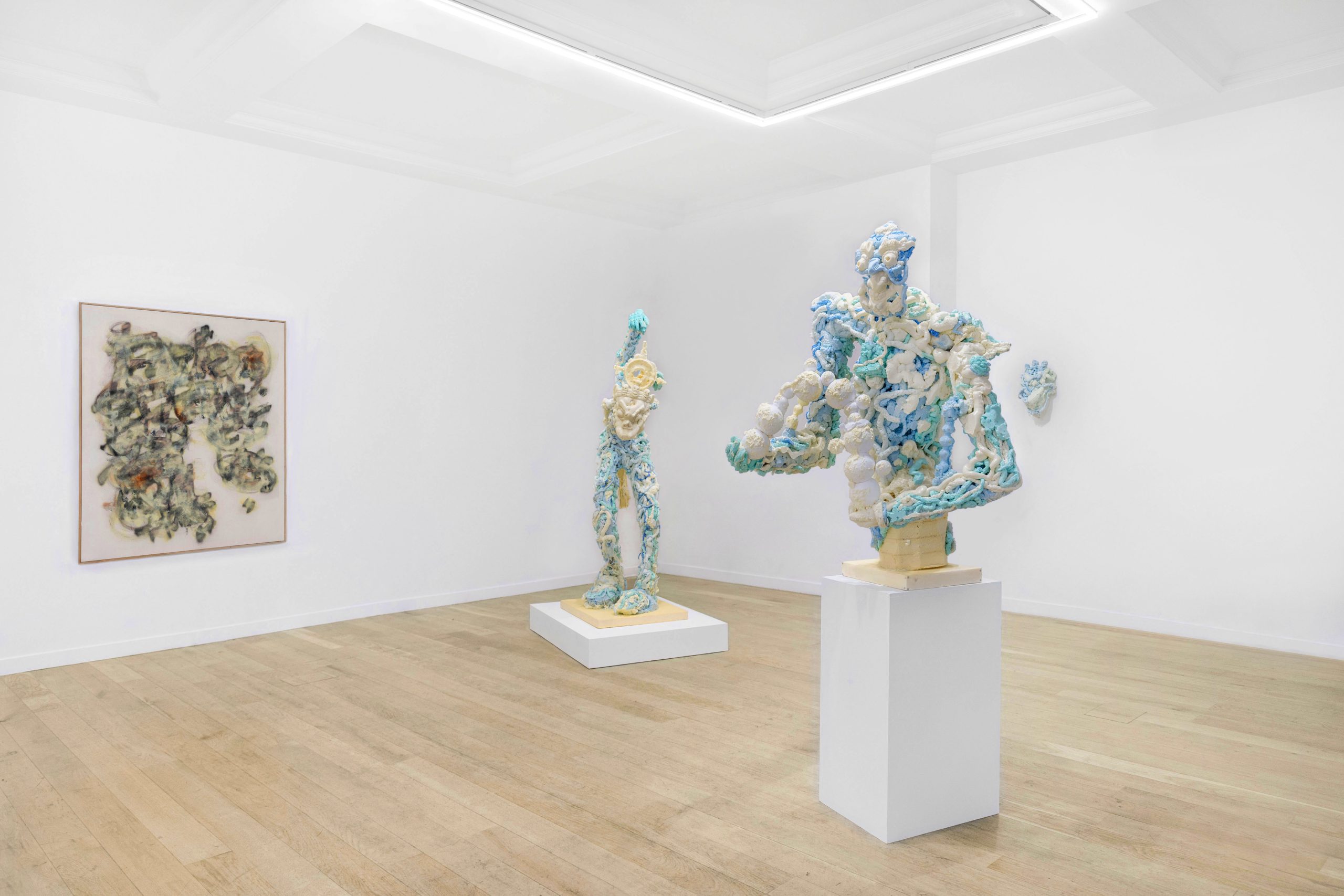
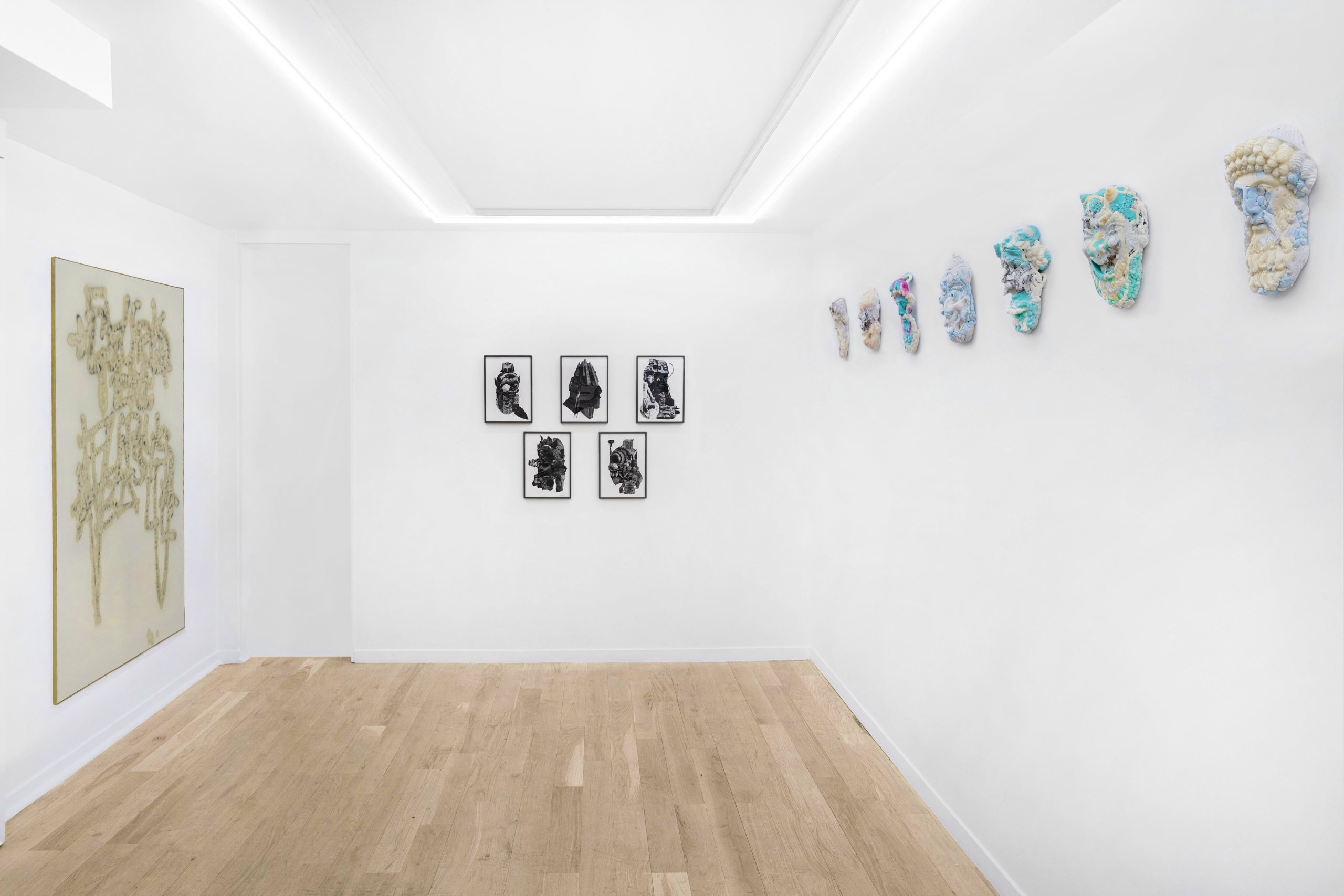
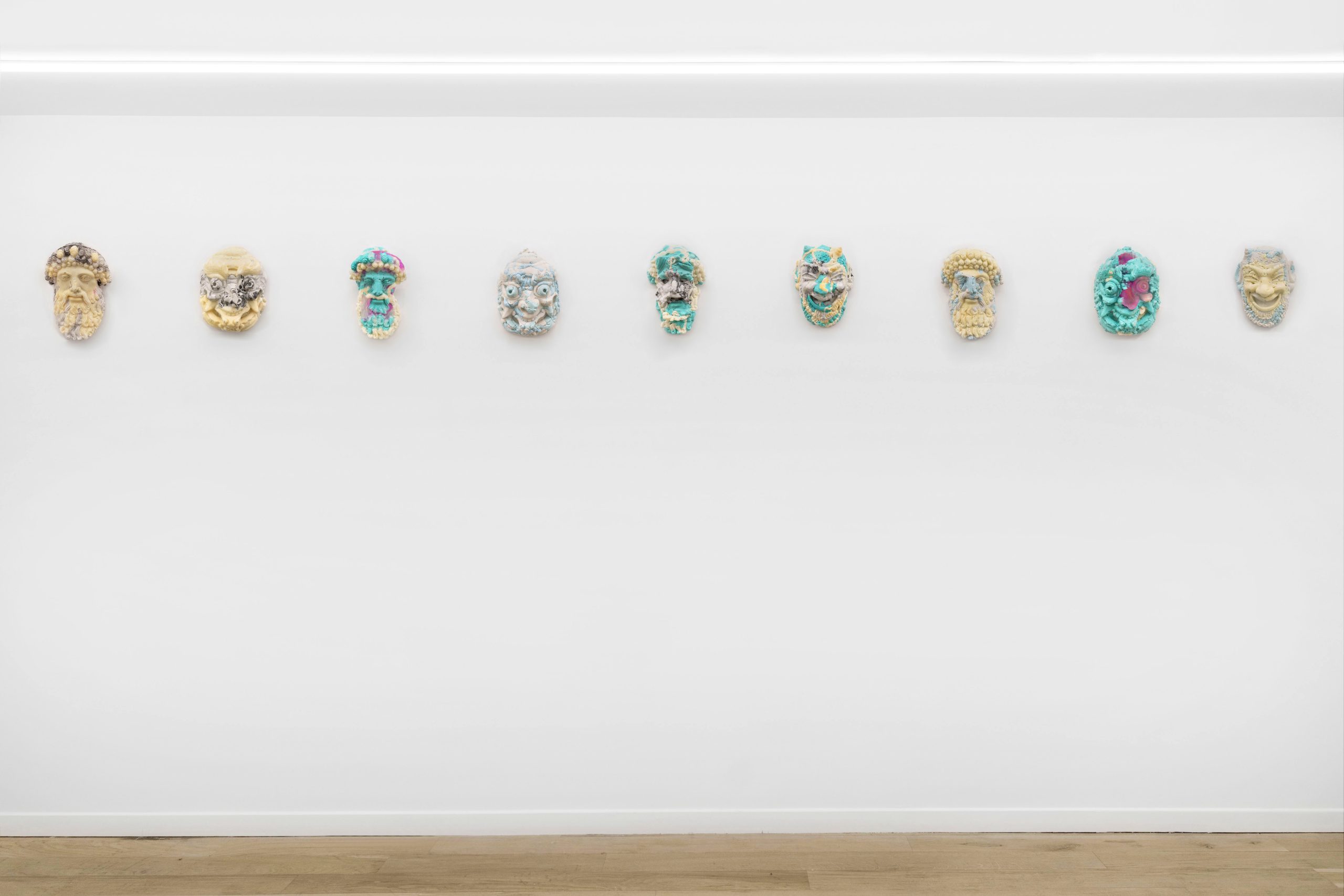
Drawing on numerous references from the ancient world and urban cultures, Alexandre Bavard questions the writing of history, the making of myths and the construction of contemporary heroic figures. He draws on the imaginary world of ancient masks to remix it with a kaleidoscope of references, figures and memories. In producing this procession of portraits, like so many immemorial heroes ready to inhabit a stage, the artist deploys a multitude of expressive faces on the gallery walls. It is undoubtedly an opportunity to recall the good words of Friedrich Nietzsche, for whom: ‘Wisdom is what the solitary man whispers to himself in the public square’. These masks can in turn be used to adorn the two headless flayers roaming the exhibition. They are the archetypal men and women who have been crushed by an oppressive system. Freed from their skin, the membrane that separates their spirit from the world, these chimeras become all the closer to ourselves.

Drawing on numerous references from the ancient world and urban cultures, Alexandre Bavard questions the writing of history, the making of myths and the construction of contemporary heroic figures. He draws on the imaginary world of ancient masks to remix it with a kaleidoscope of references, figures and memories. In producing this procession of portraits, like so many immemorial heroes ready to inhabit a stage, the artist deploys a multitude of expressive faces on the gallery walls. It is undoubtedly an opportunity to recall the good words of Friedrich Nietzsche, for whom: ‘Wisdom is what the solitary man whispers to himself in the public square’. These masks can in turn be used to adorn the two headless flayers roaming the exhibition. They are the archetypal men and women who have been crushed by an oppressive system. Freed from their skin, the membrane that separates their spirit from the world, these chimeras become all the closer to ourselves.

To understand Alexandre Bavard’s research, we need to look at his unique production system, a system that can be summed up by the formula: ‘gleaning, collage, moulding, copying’. A process that can be repeated ad infinitum to produce a finished work. In the course of his reading, travels and peregrinations, the artist has built up a large corpus of documents, including iconographic collections, historical references and cheap antique reproductions. His preparatory research begins with a careful selection of certain images, which he assembles instinctively. Some of these are then chosen to be produced in three dimensions, in an amalgam of salvaged forms. If the volumes are judged to be satisfactory, they are mass-produced in several materials so that they can be recomposed, reassembled and reworked once again. Moulds that produce copies facilitate the loss of information between the original and the final result, yet Alexandre Bavard never ceases to add new references drawn from multiple time-spaces so that he can juxtapose them and rework them again and again, creating a personal cosmogony.

Shaping (in your head)

Location
Poush
Dates
12 January - 17 February 2024
Artist(s)
Estèla Alliaud, Marcel Broodthaers, Io Burgard, Ágnes Denes, Deborah Fischer, Henri Frachon, Romain Gandolphe, Ángela Jiménez Durán, Livia Johann, On Kawara, Rob Pruitt, Claude Rutault
Credits
Romain Darnaud

Apex

Location
Secret location
Co-curator(s)
Romain Vicari
Artist(s)
Borris Arouimi, Valentin Begarin, Célia Boulesteix, Clara Duflot, Charlotte Henninger, Malone, Matthias Odin
Credits
Adrien Thibault

Since the great explosion, we’ve lost track of time. What’s the point of trying to count the years, when it’s impossible to tell day from night? The seasons are lost in a continuum of cold colors and dark temperatures. The origin of the great explosion is unknown to us. Some say it was an instant nuclear war between now-forgotten powers, while others speak of divine punishment or extraterrestrial attack. Whatever the explanation, it won’t change our situation.

What we know for sure is that the Earth shook for long minutes as the sky lit up with thousands of flashes of lightning before giving way to this cloud of grey dust. Some died instantly, others agonized for days, their skin rapidly falling to shreds. These early deaths were the luckiest of all, because they didn’t have to survive. They didn’t have to destroy in order to tinker, to abandon in order to move forward, to kill in order to live. We’re dying a much slower death, condemned to wander and glean what we can from the ruins of late capitalism. Above all, we have to live with the memory of everything we’ll never experience again, of all those faces we’ll never see again.

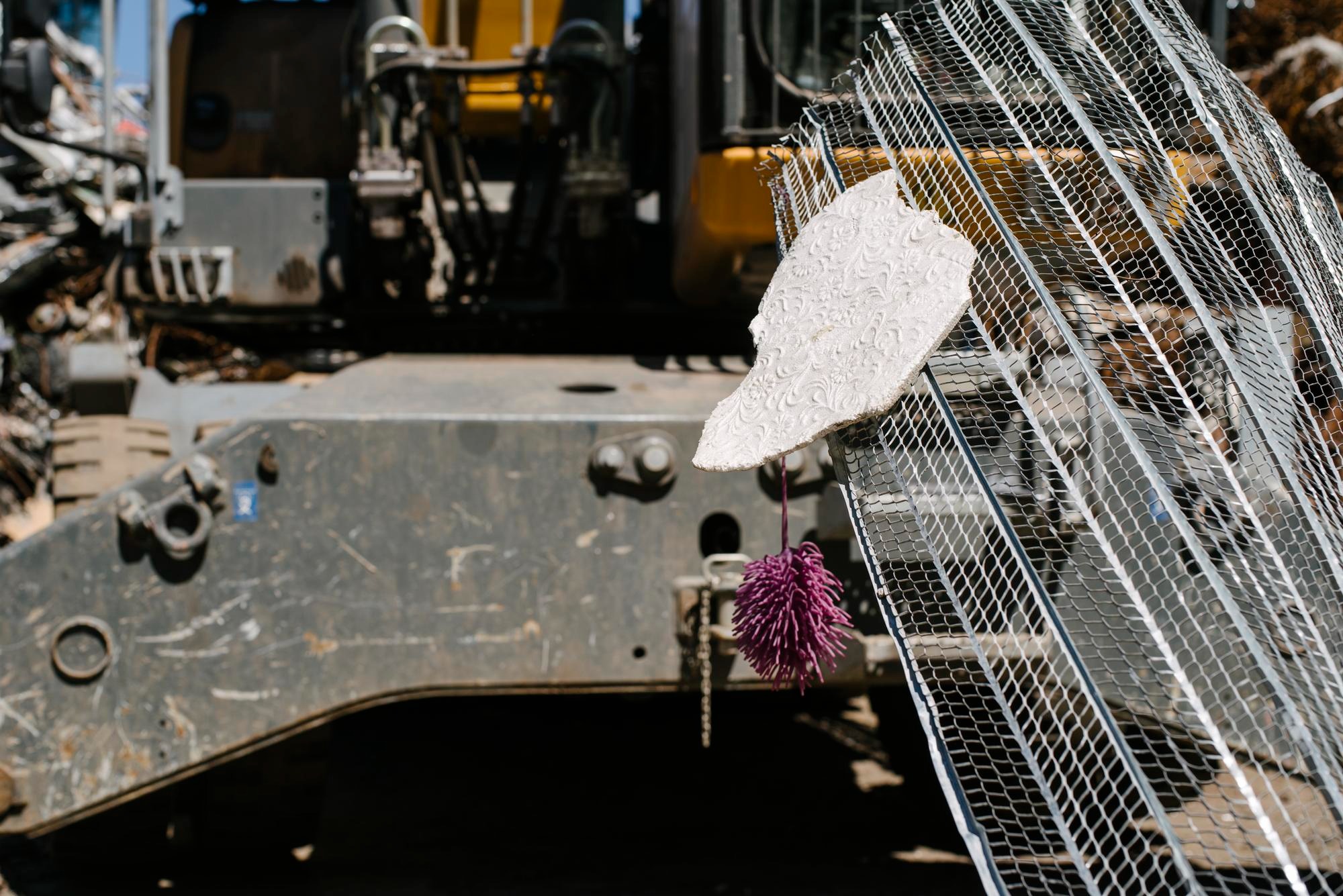
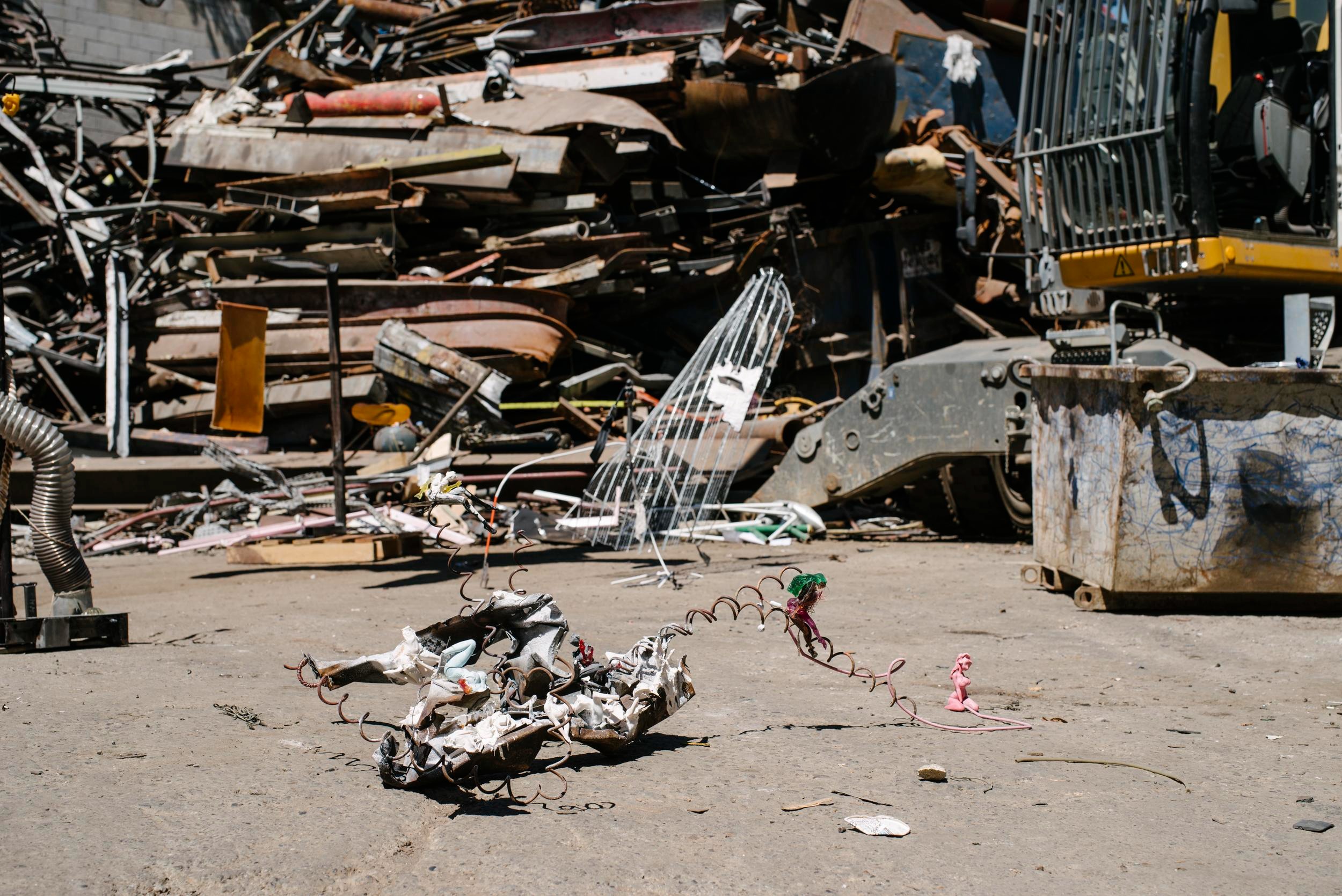
To protect ourselves from the day that never ends and the vampires that inhabit it, we’ve taken refuge in what seems to have been a scrap metal shop. Metal is an essential protection against the invisible evil that gnaws at our skin and reddens our eyes, an evil that burns us slowly. In this heap of useless metal, in this clatter of sheet metal and garbage, we are sheltered from the dangers of the world. No prowlers come to disturb us in this filthy gloom. Away from the chaos, we build the outline of a new universe, the genesis of a future that others will write for us, hybrid forms between a civilization to come and one that is no more.

In this scrap metal dealer who is no more, we are reminded that we are the waste products of a system that has failed to renew itself, we are the sick outgrowth of a common error, we are the haggard residues of machines that no longer work. This metal that protects us today is the same metal that led to our downfall. Before the Great Explosion, we extracted ores from the bowels of the Earth, smelted them and mixed them with others. We had machines for everything and anything, polluting our environment. One day, long before the big explosion, we were told that the Earth had nothing left to offer us, so economic crises, pandemics and wars began.

Ring Ring Ring

Location
pal project
Dates
14 October - 10 November 2023
Artist(s)
Zarouhie Abdalian, Carla Adra, Haseeb Ahmed, Cesar Akli Kaci, Emii Alrai, Xavier Antin, Dana-Fiona Armour, Sasha Auerbakh, Adam Bateman, Alexandre Bavard, Cécile Beau, Yoan Beliard, Louise Belin, Théophile Blandet, Max Blotas, Celia Boulesteix, Max Brück, Gillian Brett, Stéphanie Brossard, Nathan Carême, Leonel Castañeda Galeano, Charlotte Charbonnel, Celia Coette, Caroline Corbasson, Marlon de Azambuja, Georgia Dickie, Marcin Dudek, Riley Duncan, Morgane Ely, Frederik Exner, Antonio Fernández Alvira, Arthur Francietta, Julia Gault, Tania Gheerbrant, Marina Glez. Guerreiro, Jules Goliath, Arthur Golyakov, Romeo Gómez López, Laura Gozlan, Collectif Grapain, Ruiji Han, Kim Hankyul, Jingfang Hao, Tristan Higginbotham, Anders Holen, Ádám Horváth, Silas Inoue, Ellande Jaureguiberry, Gvantsa Jishkariani, Ilya Kabakov, Paul Kajander, On Kawara, Monika Emmanuelle Kazi, Koen Kloosterhuis, Alfons Knogl, Lennart Lahuis, André Magaña, Jenine Marsh, Josep Maynou, Matisse Mesnil, Maya Minder, Anita Molinero, Mikelis Murnieks, Louise Mutrel, Naomi Nakazato, Yosi Negrín, Lee Nevo, Matthias Odin, Francesco Pacelli, Angyvir Padilla, Emma Passera, Jonathan Pêpe, Nelson Pernisco, Emma Pidré, Valentina Pini, Laura Põld, Manon Pretto, Yoel Pytowski, Andy Rankin, Antoine Renard, Vivien Roubaud, Kévin Rouillard, Sofía Salazar Rosales, Janne Schimmel, Kristina Sedlerova Villanen, Ding Shiwei, Dennis Sierig, Paola Siri Renard, Anna Solal, Jura Shust, Laurence Sturla, Shinuk Suh, Katinka Theis, Sarah Valente, Evita Vasiljeva, Capucine Vever, Romain Vicari, Iolo Walker, Xolo Cuintle
Press
Maïlys Celeux-Lanval for beauxarts.com, Julie Chaizemartin in Quotidien de l’art #2706, Donnia Ghezlane-Lala for konbini.com
Credits
Romain Darnaud

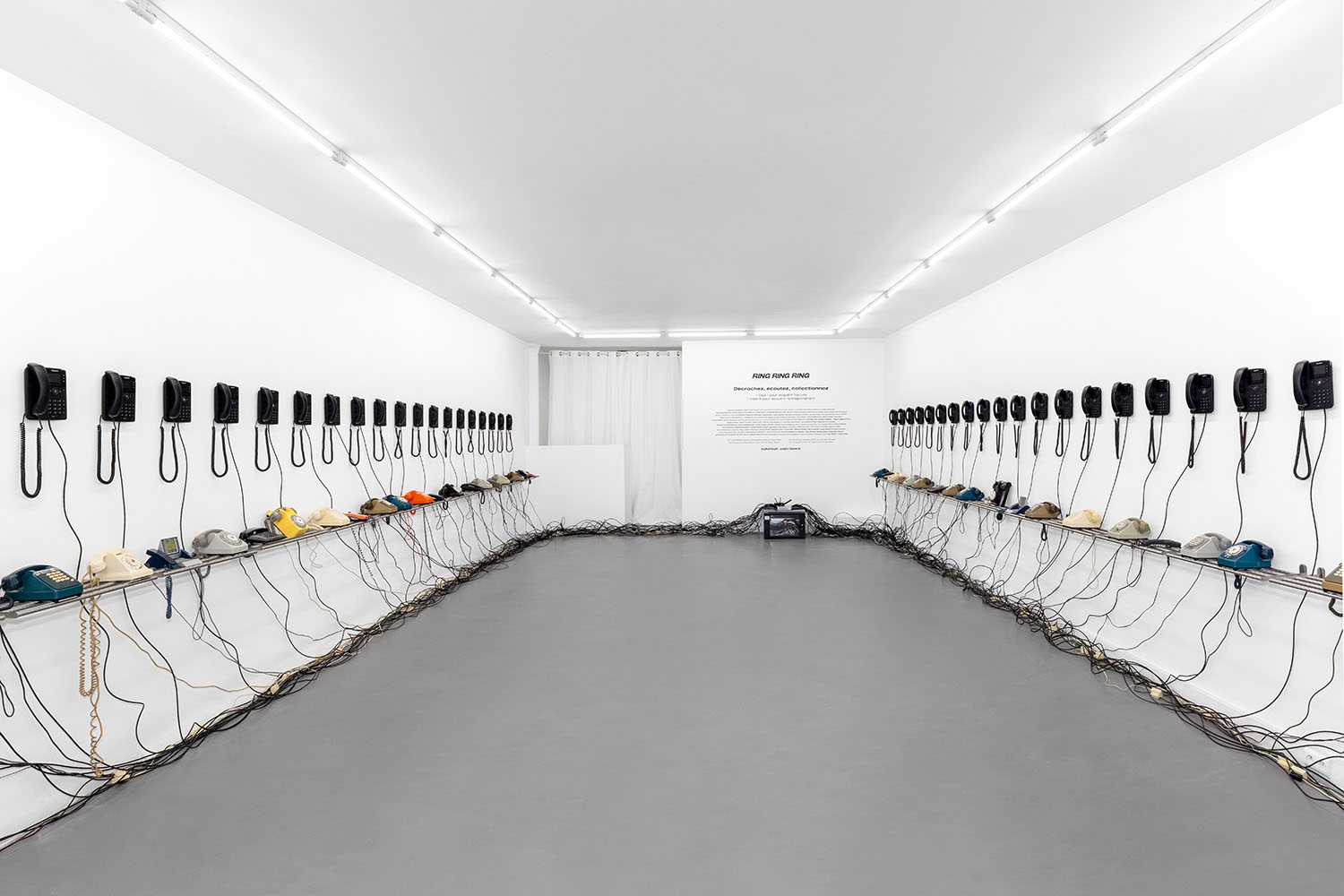
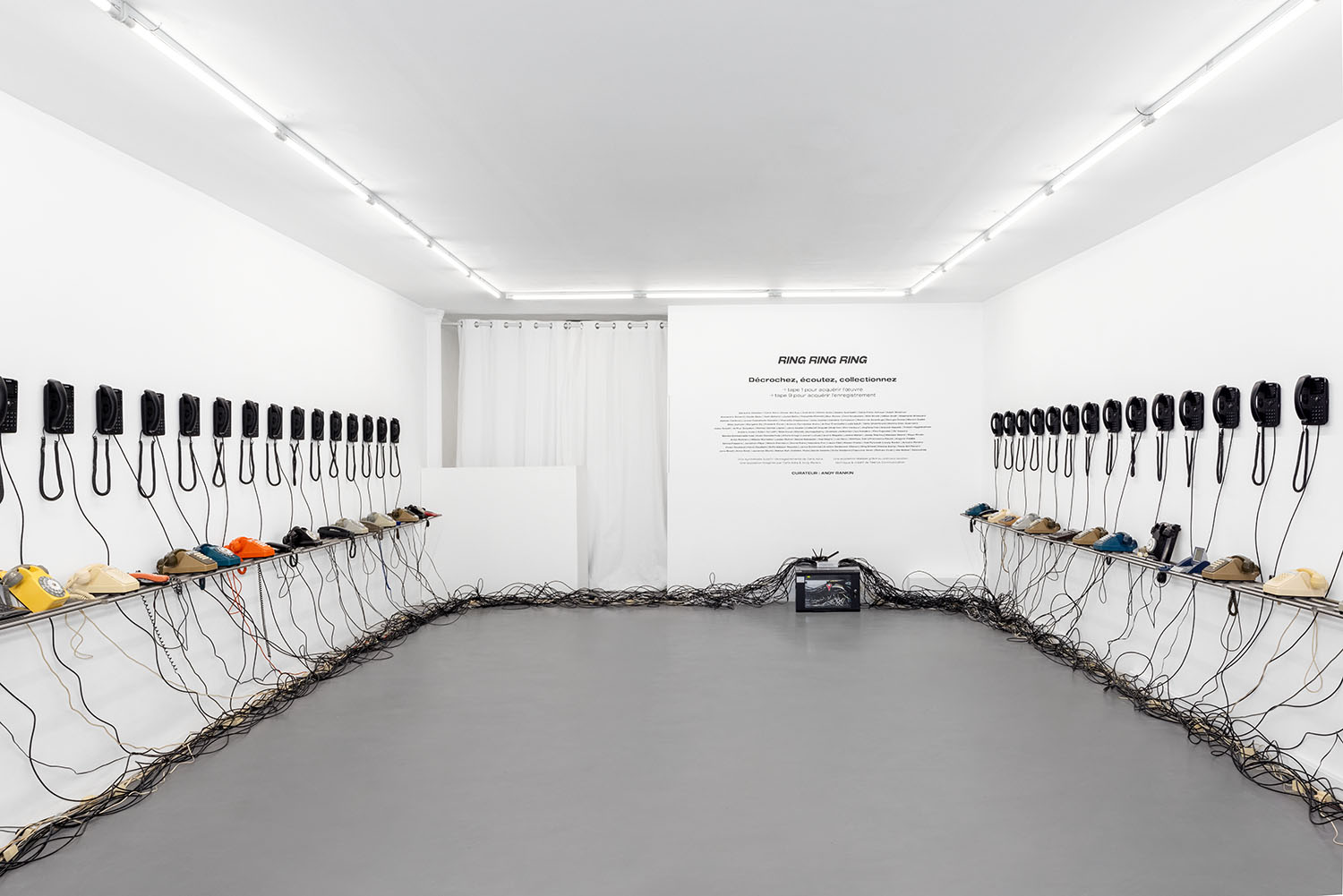
Ring Ring Ring is an exhibition where there is nothing to see, but everything to hear.

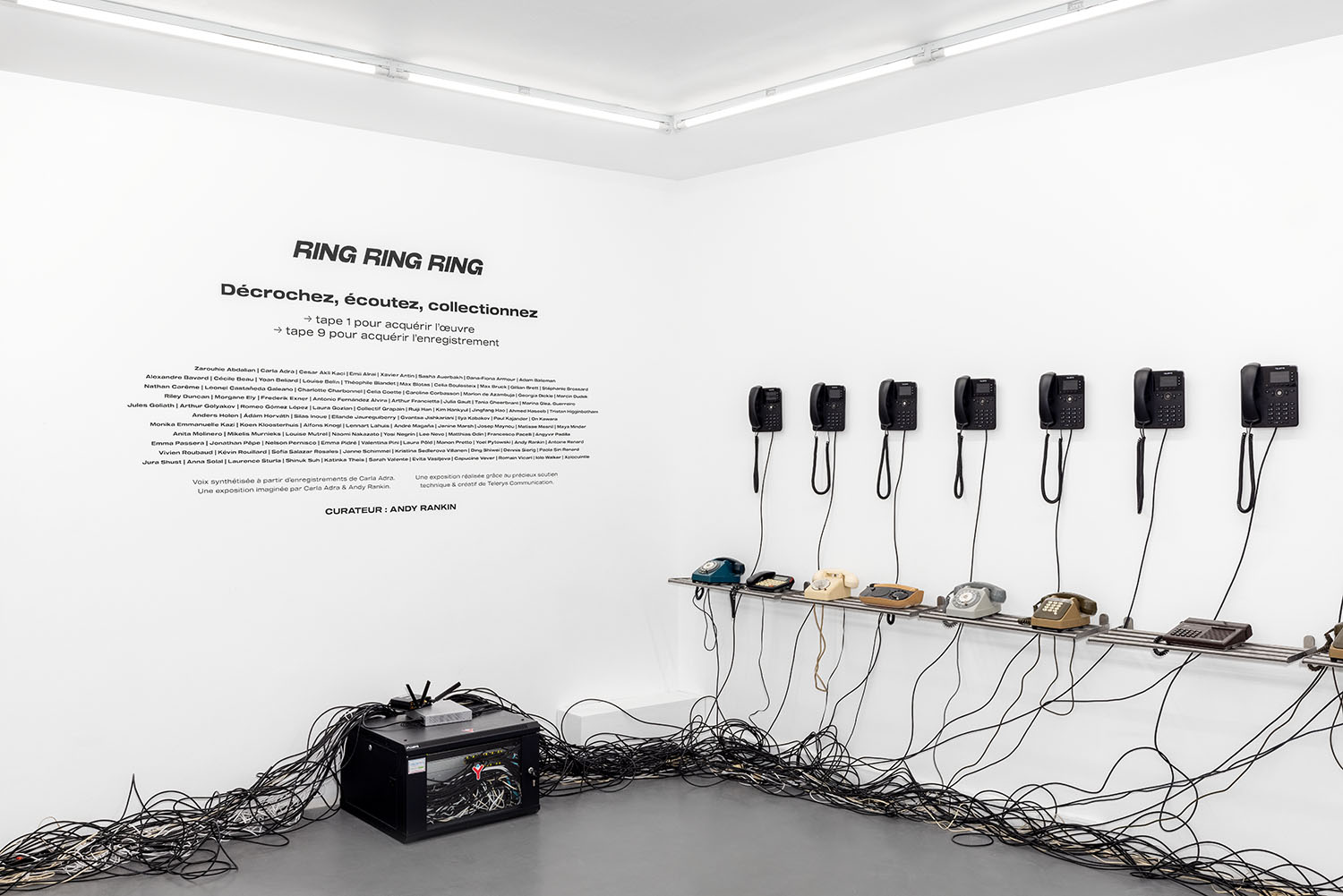
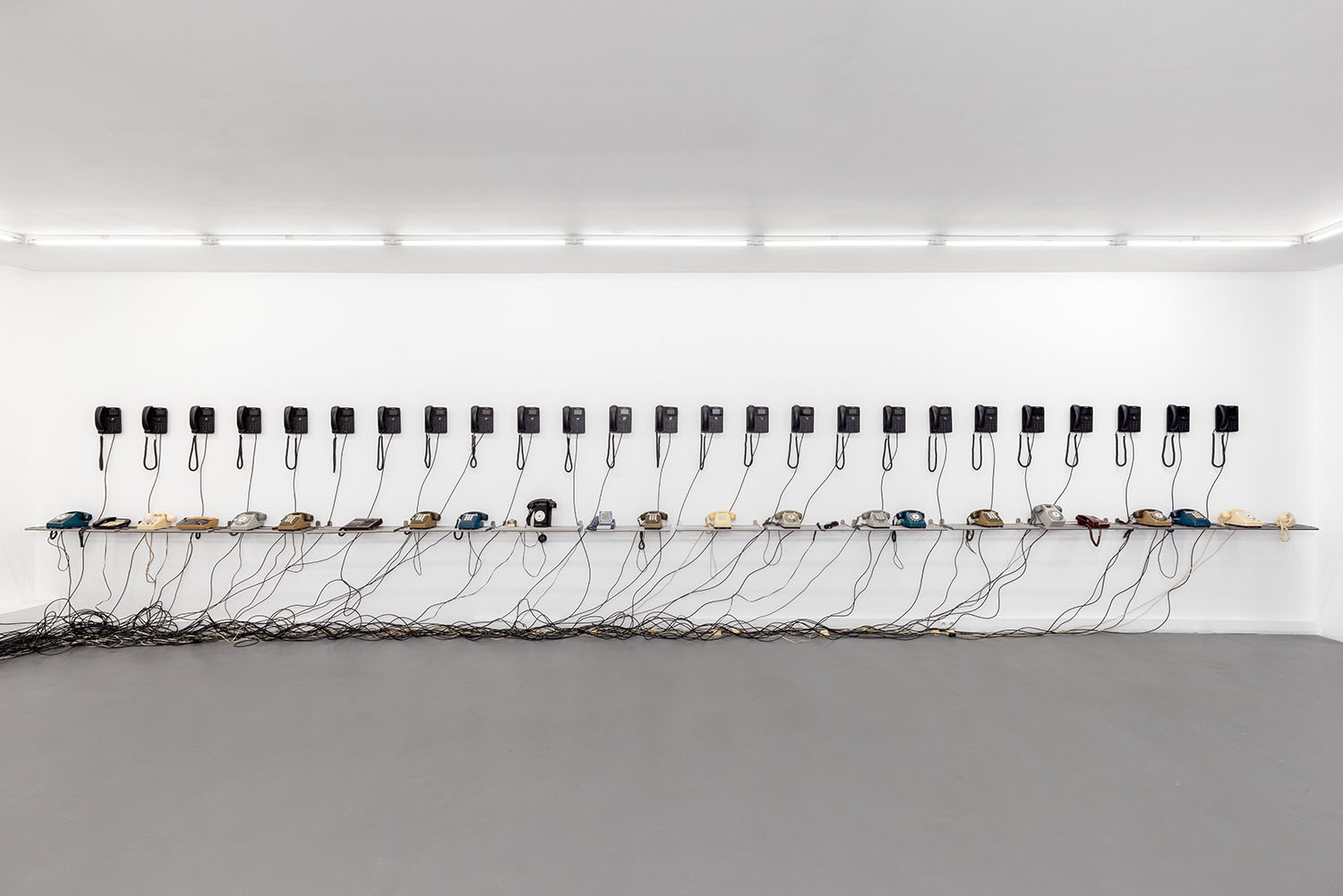
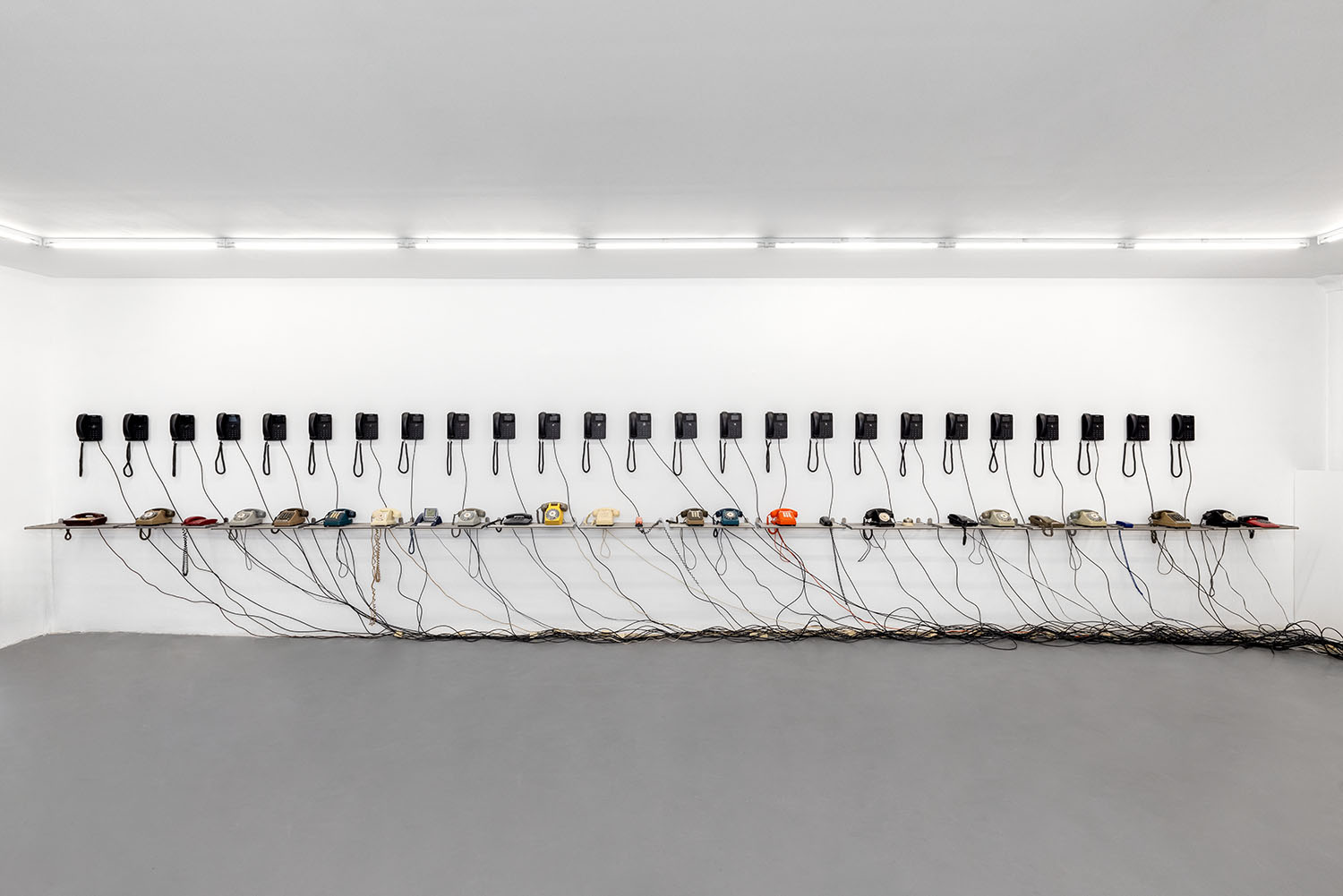
This experimental format brings together 100 artists and 100 phones, but no artworks are displayed in PAL Project. The phones ring randomly, allowing visitors to listen to descriptions of the dedicated artworks. The text was written by curator Andy Rankin and read by a synthesized voice using recordings of artist Carla Adra’s voice. After listening to the recording, one simply needs to press a specific key on the phone to be connected with the gallery owners for the acquisition of the artwork or its description. The audio file is a duplicable multiple until the moment the phone stops ringing, which happens as soon as the artwork is sold. To encourage a listening time conducive to stimulating the imagination, the artwork’s title or the name of the artist who created it is not revealed. This uncertainty is heightened by the fact that it is impossible to know when the phone will ring, or even if it will ring again. This unique listening experience with inevitably incomplete descriptions gives rise to a curious sense of urgency. It prompts the question of what we truly retain from a work of art: is it what we see, what we are told, or what is recounted to us? This exhibition is an exploration of the spread of rumors and the birth of legends.

Ring Ring Ring is an exhibition where there is nothing to see, but everything to imagine.

Ring Ring Ring was made possible thanks to the valuable technical and creative support from Telerys Communication.

Hystérie de l’éternité

Location
Le Gallo
Dates
18 February - 04 March 2022
Artist(s)
Irene de las Estrellas Abello, Mounir Ayache, Thomas Ballouhey, Marion Bocquet-Appel, Celia Boulesteix, Cloe Brochard, Alexia Chevrollier, Javier Carro Temboury, Boris Chouvellon, Alexandre Erre, Pierre Gaignard, Jules Galais, Julia Gault, Jules Goliath, Paul Gounon Juan Gugger, Cesar Akli Kaci, Prosper Legault, Margaux Lelièvre, Vincent Lemaire, Miguel Miceli, Zoé Moineaud, Esteban Neveu Ponce, Celia Nkala, Nelson Pernisco, Manon Pretto, Olivier Sévère, Anna Tomaszewski, Capucine Vever, Romain Vicari, Vincent Voillat, Xolo Cuintle
Press
Alexie Demayer for France Inter, Manon Schaefle for Badtothebone
Credits
Novaxia Investissements

Hystérie de l’éternité is the first opus of the cycle of disasters. The cycle of disasters is a stream of exhibitions taking place in a world without humans. Each edition presents a panorama of a planet Earth that has been deserted for a long time, a planet on which cataclysms continue to occur. This world, convinced that it will defy our view by imagining us extinct, will continue to experience what we now refer to as « disasters », such as earthquakes, floods or radiation.

The extinction of humanity is more than ever relevant. If the headlines alert us daily to the dangers that await us, no one can guess which scenario will finally become the ultimate one ever written. The cycle of disasters focuses on terrible events which, for once, do not cause any victims. Perhaps we should take this as an opportunity to contemplate the artificial entropies, to meditate on the magic of randomness, to experience the dramaturgy of the sublime.

« The sun itself seems ephemeral to me in this hysteria of eternity. » *

E. Cioran

Within the scientific community, the process of demystifying earthquakes is currently in consensus. The earth’s shell is divided into several plates, which are themselves subject to an incredible amount of pressure from the earth’s entrails. This dozen of tectonic plates are embedded in an impossible puzzle whose pieces are in constant drift, confrontation and opposition. In this theater of eternity, each oscillation of the scenario ends up being played out sooner or later. The plates thus draw a work which will never be finished, a kind of composition of continents in perpetual evolution. A permanent work that endlessly shapes the planet, its mountains and deserts. A succession of a billion human lives would not be enough to enjoy the overall spectacle of this lithic mosaic, because the process is so slow that it is almost impossible to perceive it.

However it sometimes happens that a few seconds release a terrible shock wave. The duel between two plates will have designated no winner, the unbearable pressure stored up is released in a landslide. In a clatter of dust, the inert is suddenly taken by rumbling spasms, a fatal waltz of blurred pixels. Unstable, unpredictable, implacable pulsation, pulsation of a cataclysm which seems never to stop, lost in a time which pretends to dilate. This frenetic force generates an entropic explosion, a constellation whose stars fall randomly, in an amalgam of matter and time. When the Earth shivers, humanity shakes with it. In a flash, the palaces mix with space, the cemeteries carry their remains, hopes waver as if to better rebound. From the clatter of sheet metal and asphalt, a surreal collage of a world that will never be rebuilt again is born. The surface of the globe is riddled with gaping wounds, offering to whoever will see it, a disrupted sedimentation of sentiments.

*Emile Cioran in The Book of Lures – 1992

Avalanche

Location
pal project
Dates
12 June - 25 September 2021
Co-curator(s)
Nelson Pernisco
Artist(s)
Mounir Ayache, Thomas Ballouhey, Ranti Bam, Ivana Basic, Alexandre Bavard, Cécile Beau, Vincent Beaurin, Bianca Bondi, Bruno Botella, Matthieu Boucherit, Simon Boudvin, Cécile Bouffard, Deborah Bowmann, Gillian Brett, Jeanne Briand, Charlotte Charbonnel, Baptiste Charneux, Gaëlle Choisne, Boris Chouvellon, Pierre Clement, Cindy Coutant, Paul Créange, Wolf Cuyvers, Louis D’Anjou, Nicolas Daubanes, Laurence De Leersnyder, Alain Declercq, Dejode & lacombe, Quentin Derouet, Lucie Douriaud, François Dufeil, Sara Favriau, Ferruel & Guedon, Hervé Fischer, Deborah Fischer, Nicolas Floc’h, Karsten Födinger, Pierre Gaignard, Vincent Ganivet, Anne-Valérie Gasc, Julia Gault, Paul Gounon, Laura Gozlan, Juan Gugger, Cyrielle Gulacsy, Matthieu Haberard, Antonin Hako, Charlotte Janis, Jean-Baptiste Janisset, Jeschkelanger, Youri Johnson, Fabian Knecht, Roy Kohnke-Jehl, Lucas Kroeff, Yvannoé Kruger, Emmanuel Lagarrigue, Pauline Lecerf, Louis Le Kim, Anaïs Lelièvre, Vincent Lemaire, Ra’anan Lévy, Marie Limoujoux, Guillaume Linard Osorio, Vincent Lo Brutto, François Malingrey, Leonard Martin, Vincent Mauger, La Méditerranée, Benoit Ménard, Adrien Menu, Marie-Claire Messouma, Léa Mestres, Enzo Mianes, Juliette Minchin, Anita Molinero, Gabriel Moraes Aquino, mountaincutters, Louise Mutrel, Marie-Luce Nadal, Antoine Nessi, None Futbol Club, Nefeli Papadimouli, Pierre Pauze, Jonathan Pepe, Nelson Pernisco, Boryana Petkova, Benoît Piéron, Margot Pietri, Benoit Pype, Andy Rankin, Delphine Reist, Antoine Renard, Mateo Revillo, Vivien Roubaud, Salim Santa Lucia, Nico Sauer, Ugo Schiavi, Olivier Sévère, Buhlebezwe Siwani, Cédric Teisseire, Anna Ternon, Maxime Testu, Thomas Teurlai, Simon Thiou, Laurent Tixador, Anna Tomaszewski, Pauline Toyer, Victor Vaysse, Romain Vicari, Vincent Voillat
Press
Nicolas Ungemuth for Figaro Magazine #23889

Julie Ackermann for Beaux Arts Magazine, Margot Gremillon for maze, Hervé Fischer for arthebdomedia, Manon Schaefle for Badtothebone, Projets Media
Credits
Romain Darnaud

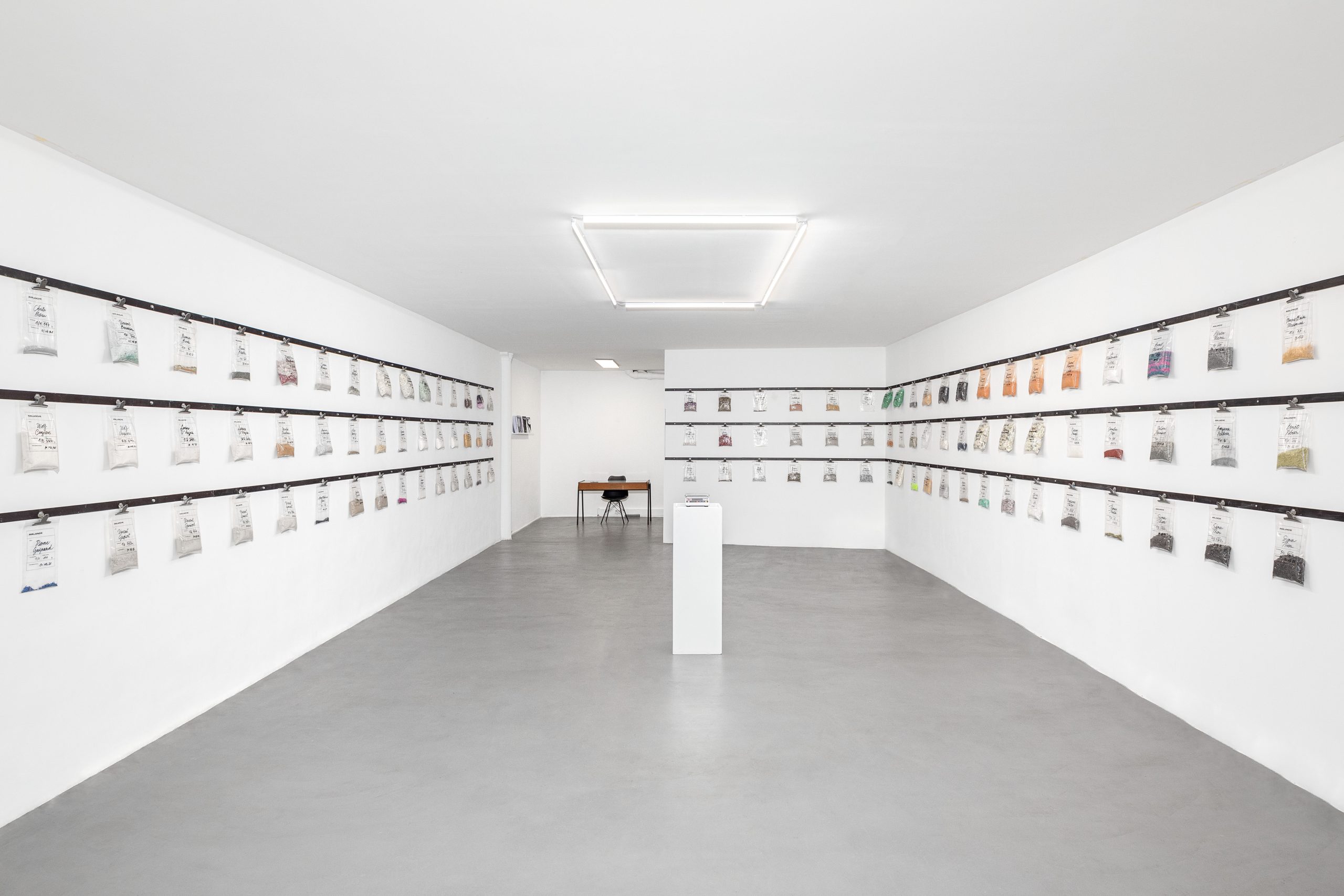
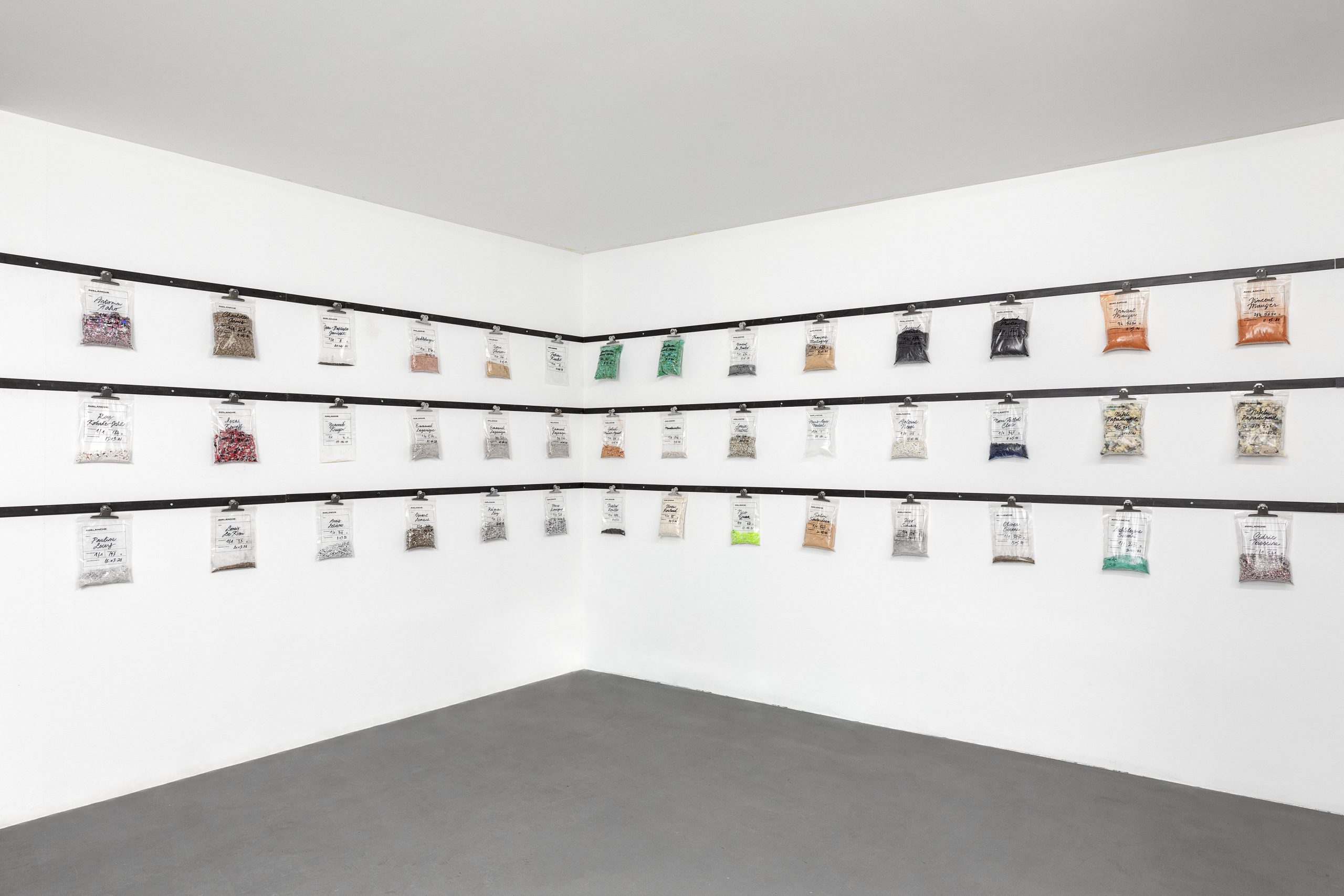
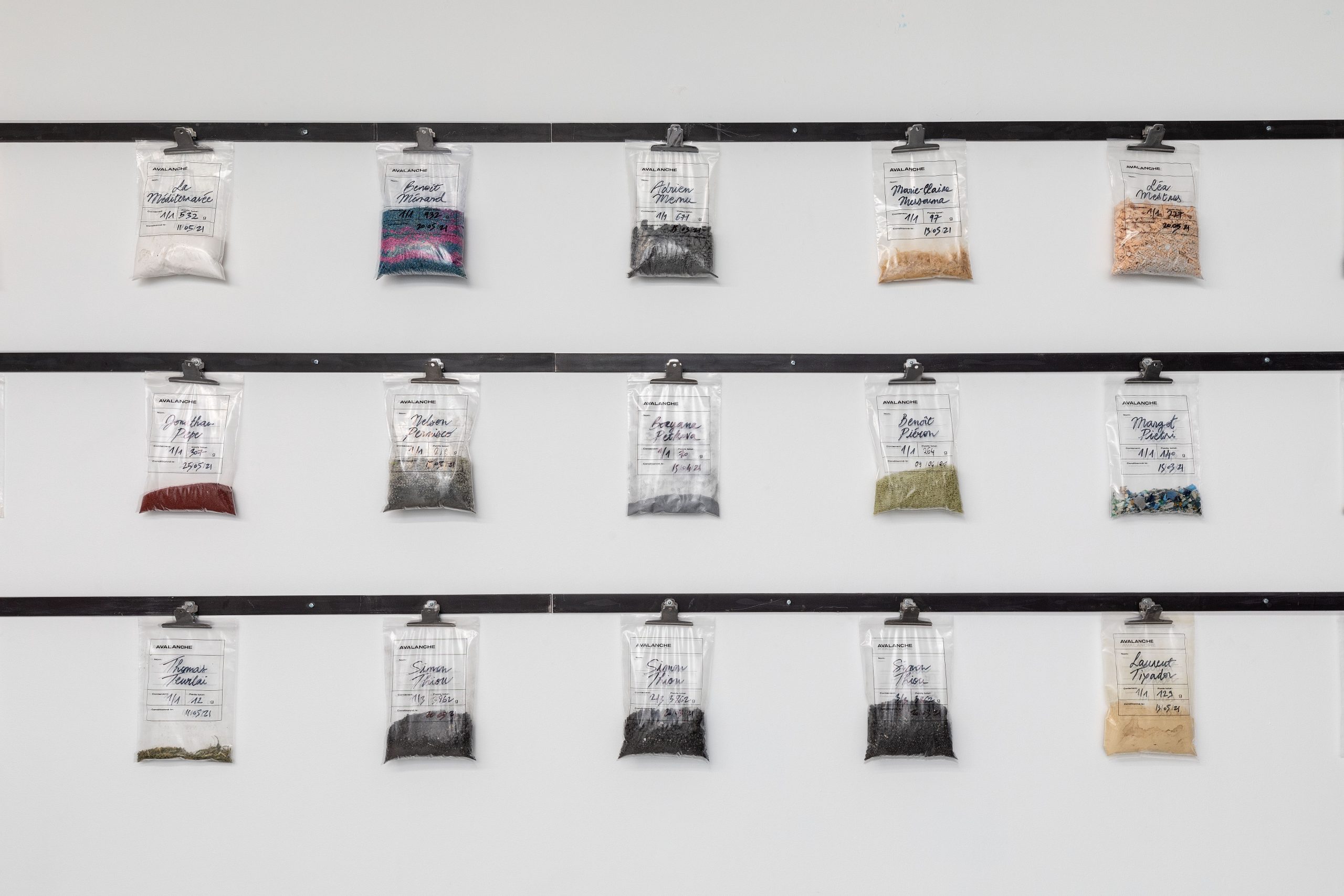
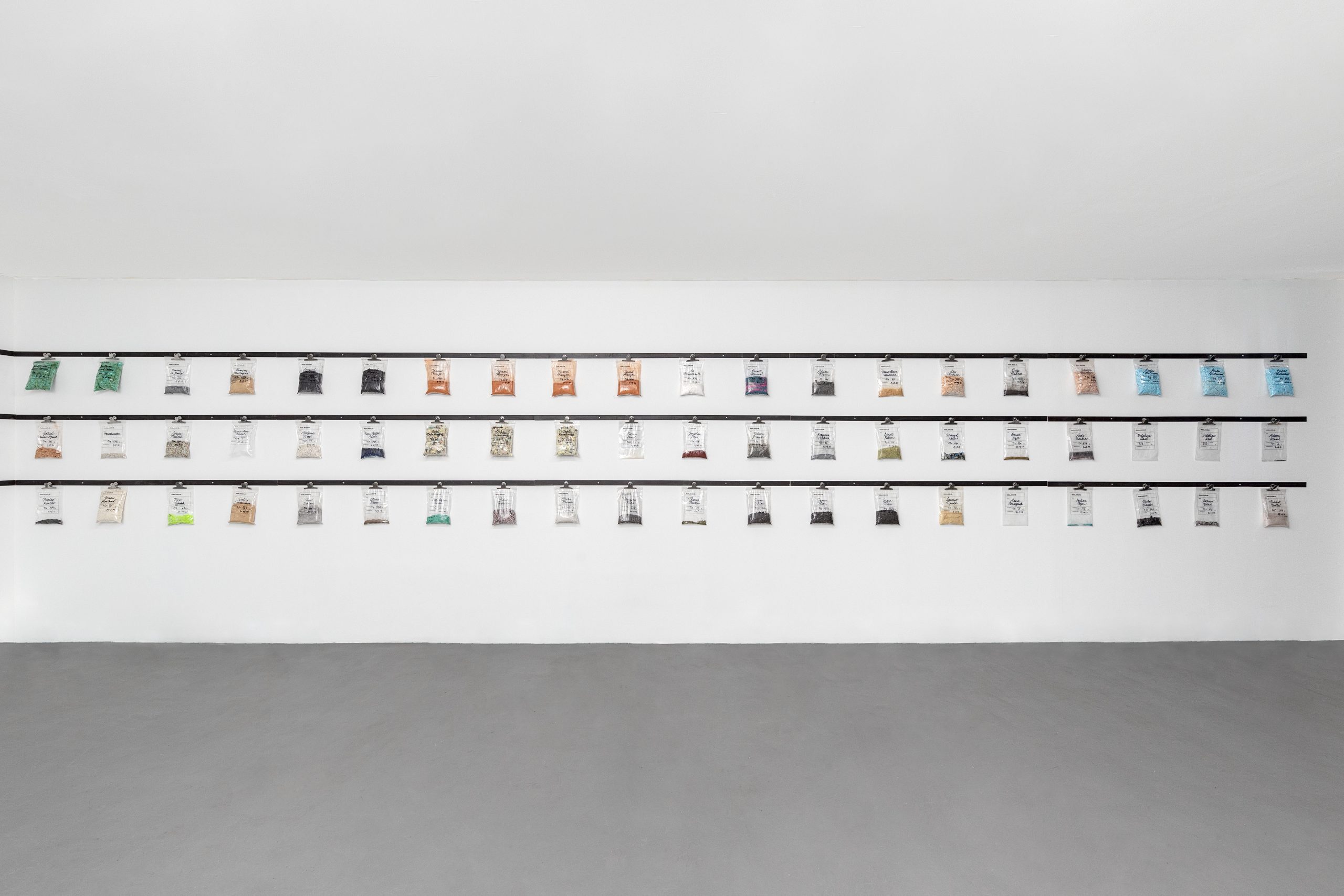
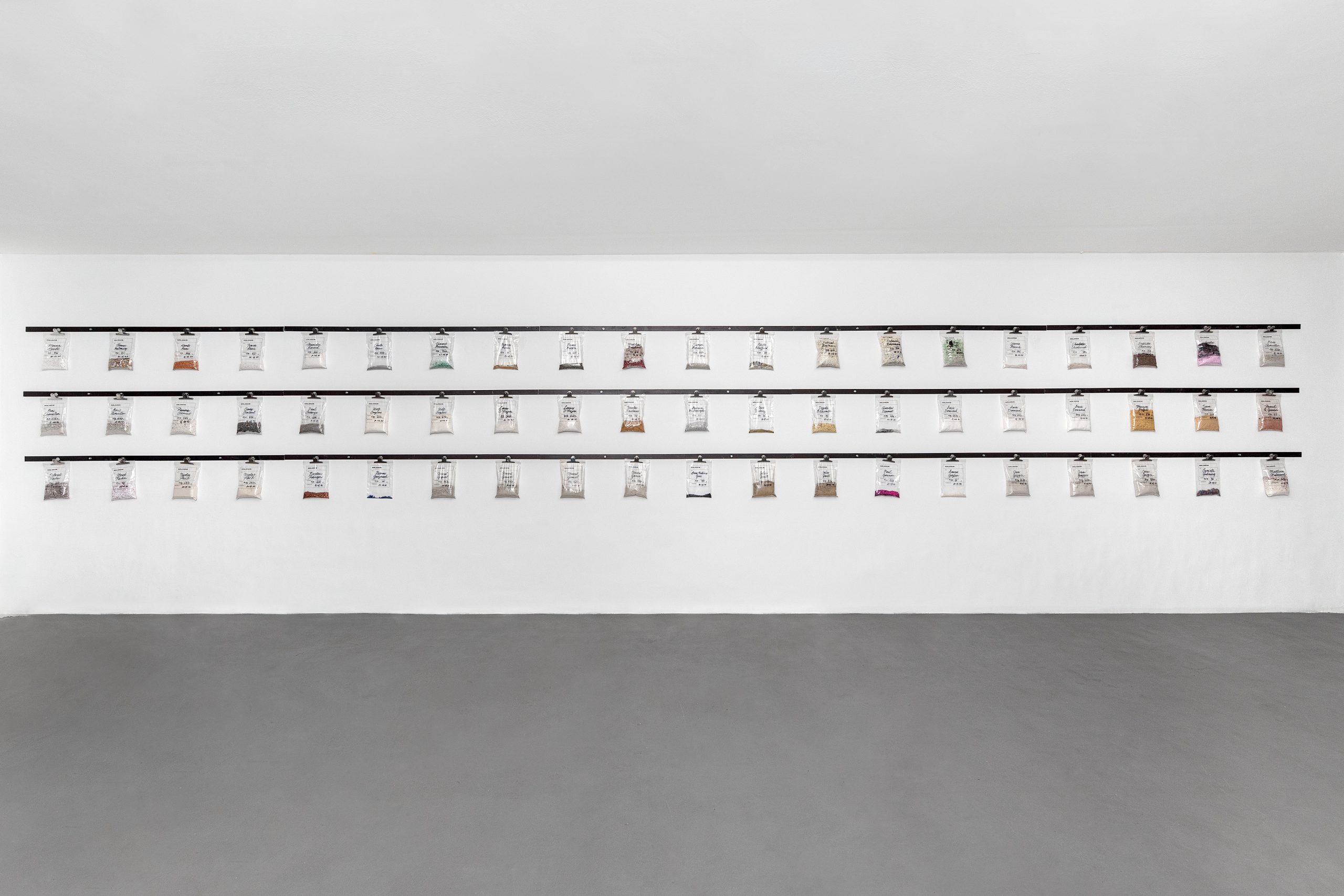
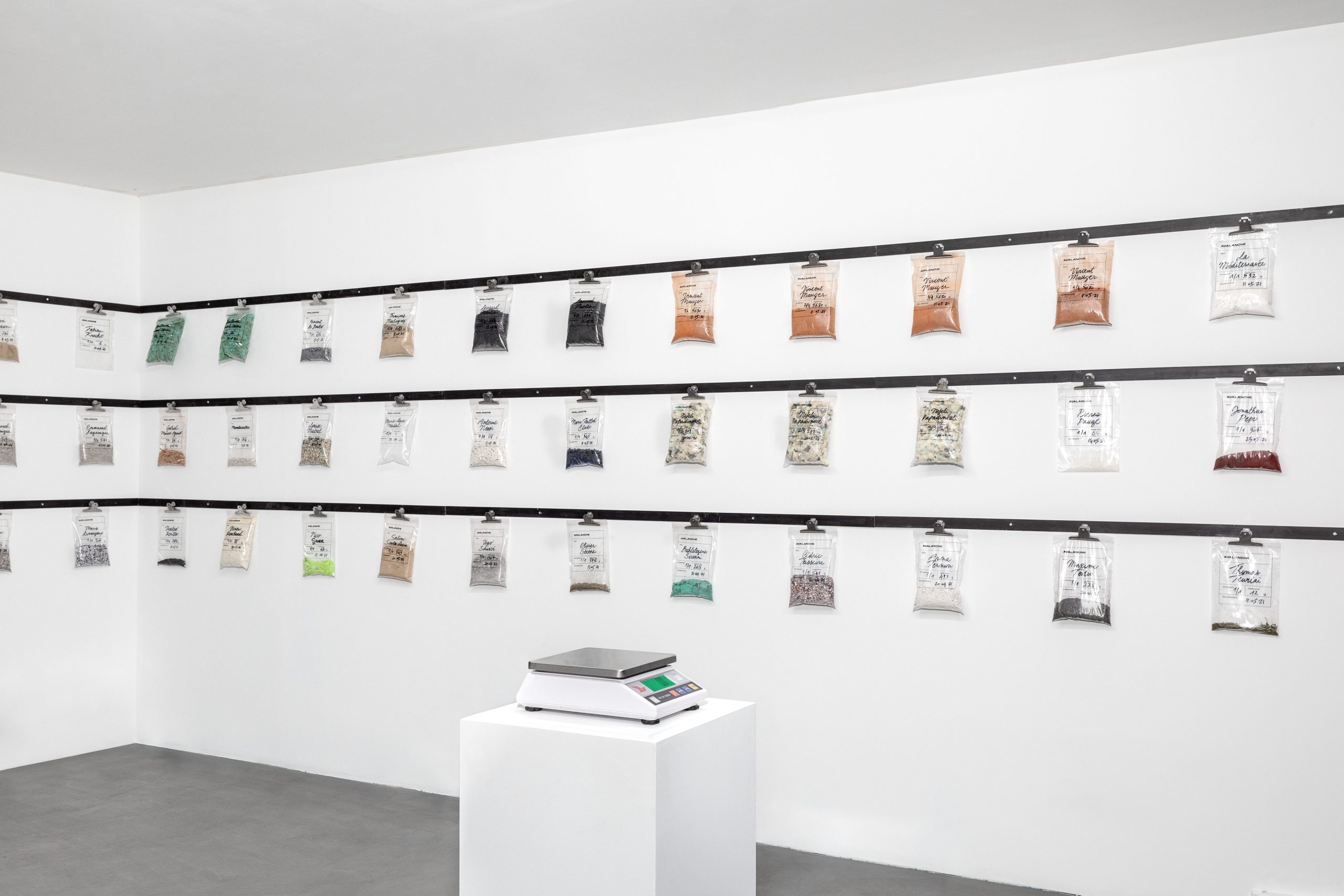
The atoms that make up the universe agglomerate, dissociate and reconcile with force. Long before the idea of time and matter, the universe was born of an explosion into nothingness, and it will exhaust itself in a rip of every conceivable energy. Between the big bang and the big rip, galaxies, planets and stars are born, only to be extinguished in a burst of light and particles. Crystals, grains and dust don’t care whether they’re liquid, gaseous or plasma, because they’re what shapes immensity. Like these particles, no one is capable of observing the totality of the picture they compose. Like a broken screen, the pixels of matter sometimes produce inconsistencies that science will never be able to explain. Dark matter » or « antimatter » are just titles that change at the whim of disproved theories. Only the vacuum, which constitutes the essence of what we know, remains unchanging. It is the void that allows matter to exist. Its existence, which we might think is merely a marker of absence, allows the universe to expand, planets to flourish and particles to twirl.

Rome, Paris and Athens have been inhabited by murmurs, songs and cries for millennia. Their incessant rumbling is in fact much older than the cultures that keep them alive. Temples may still decay, cemeteries may still be pulverized, cities still hum. Over the centuries, the inhabitants of these cities have dismantled walls, palaces and sanctuaries brick by brick to rebuild new ones. Traces of the past interweave with the forms of today, in an amalgam of memory, in a conglomerate of recollections. The layers of time are so intertwined that it’s difficult to distinguish between them. In a blur of sand and dust, ruins mingle with buildings before being devoured by dust and oblivion. Cities are sandcastles that are finally completed when their ultimate inhabitant is silence. Only the stones remain. When the myths are gone, the mysteries blossom, the enigma thickens. Stumbling against ancient ruins doesn’t make us fall in time, but rather in the face of our own vanity. Every civilization has its downfall. Tomorrow’s ruins are already built, because we live in them.

Erosion is a natural phenomenon. The elements touch, marry and destroy each other in an eternal struggle, the outcome of which is dust. Erosion is an unstable communion of elements. A kind of elective affinity of a perpetually unfinished earth composition. A silent, unchanging force, erosion flattens mountains, dries up oceans and blows the wind out of tornadoes. A sandstorm formed from the backwash of waves attacks the telluric mechanics that upend the Earth. In infinite exhaustion, water, earth and air combine in particle. This battle is so slow that it prevents humanity from observing it, a temporality far removed from our mortal perspective. Indeed, human fire is the last, if not the last, fighter to enter the arena. It scatters the planet with chemical and oxidized constructions in the throes of decay, participating in the erosive alchemy. Intensive cultivation, giving way to urban ruins, and the countless artificial effusions that gorge the planet, pulverize the elements. An inordinate pressure that frantically accentuates the alteration of the planetary structure, reminding us of our fatal human destiny: « Remember that you were born dust and that you will return to dust ».

Shrimps Society

Location
Cité Internationale des Arts
Dates
11 January 2021
Co-curator(s)
Mamadou Diakité
Artist(s)
César Bardoux
Press
Duuu Radio
Credits
César Bardoux

PREAMBLE

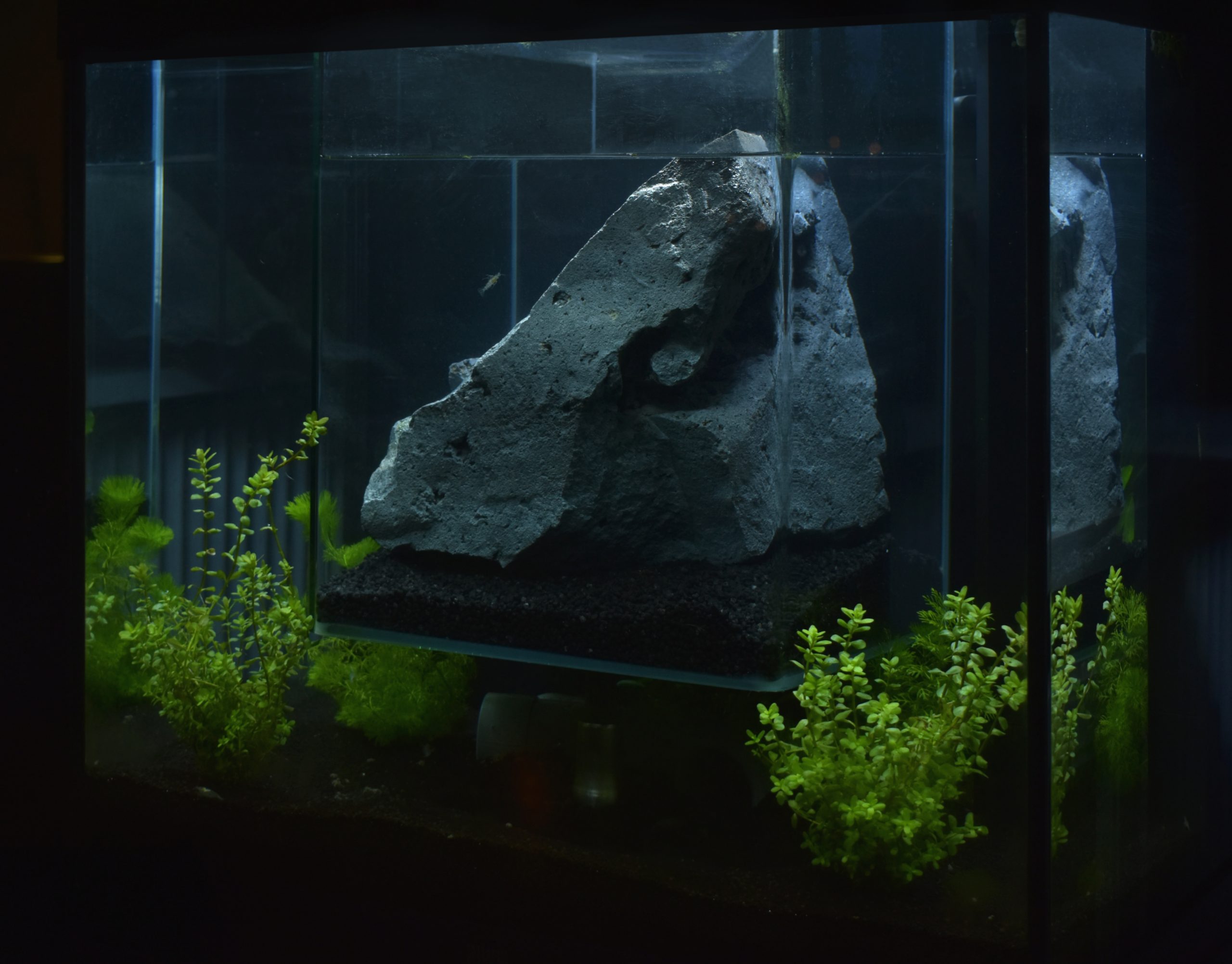
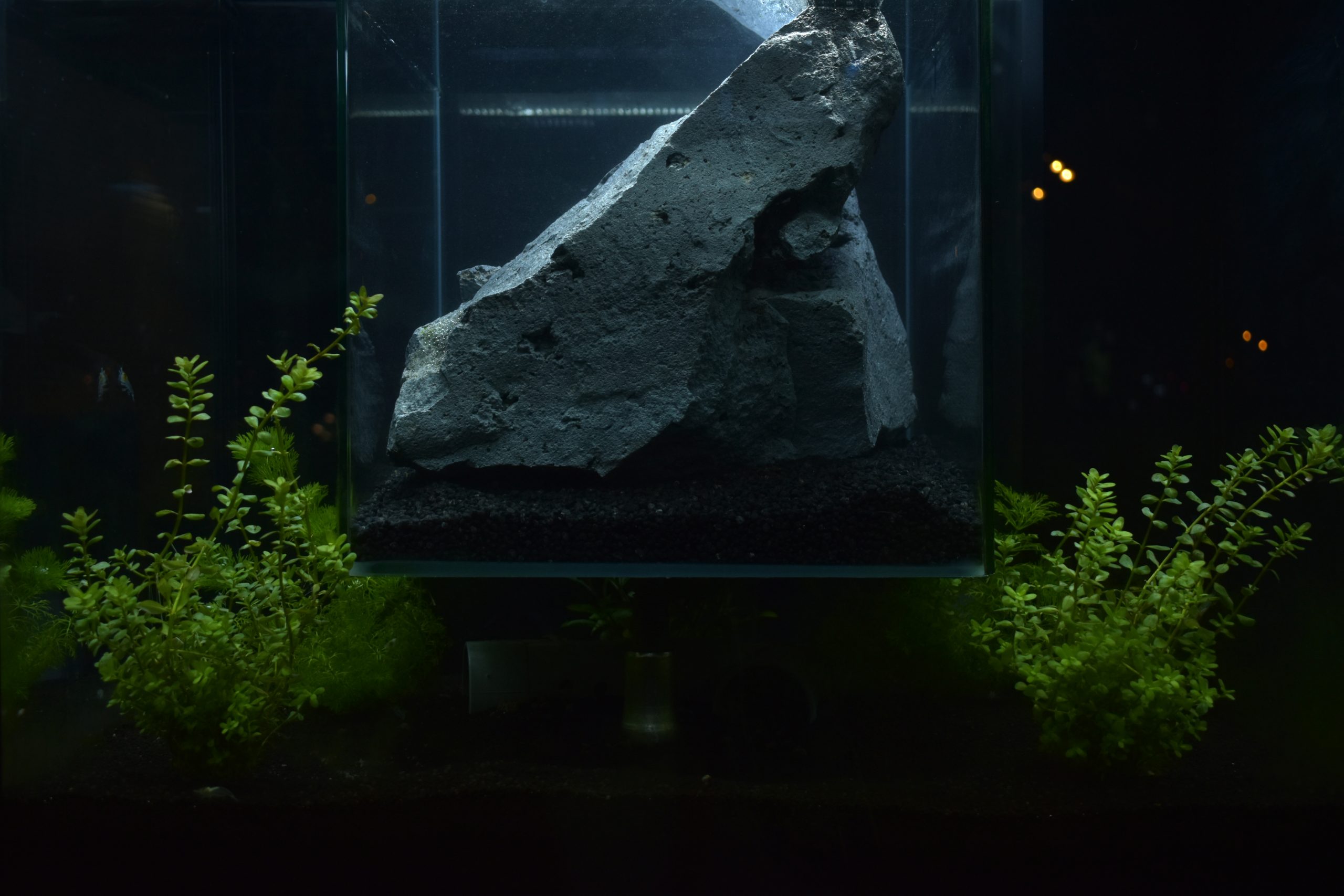
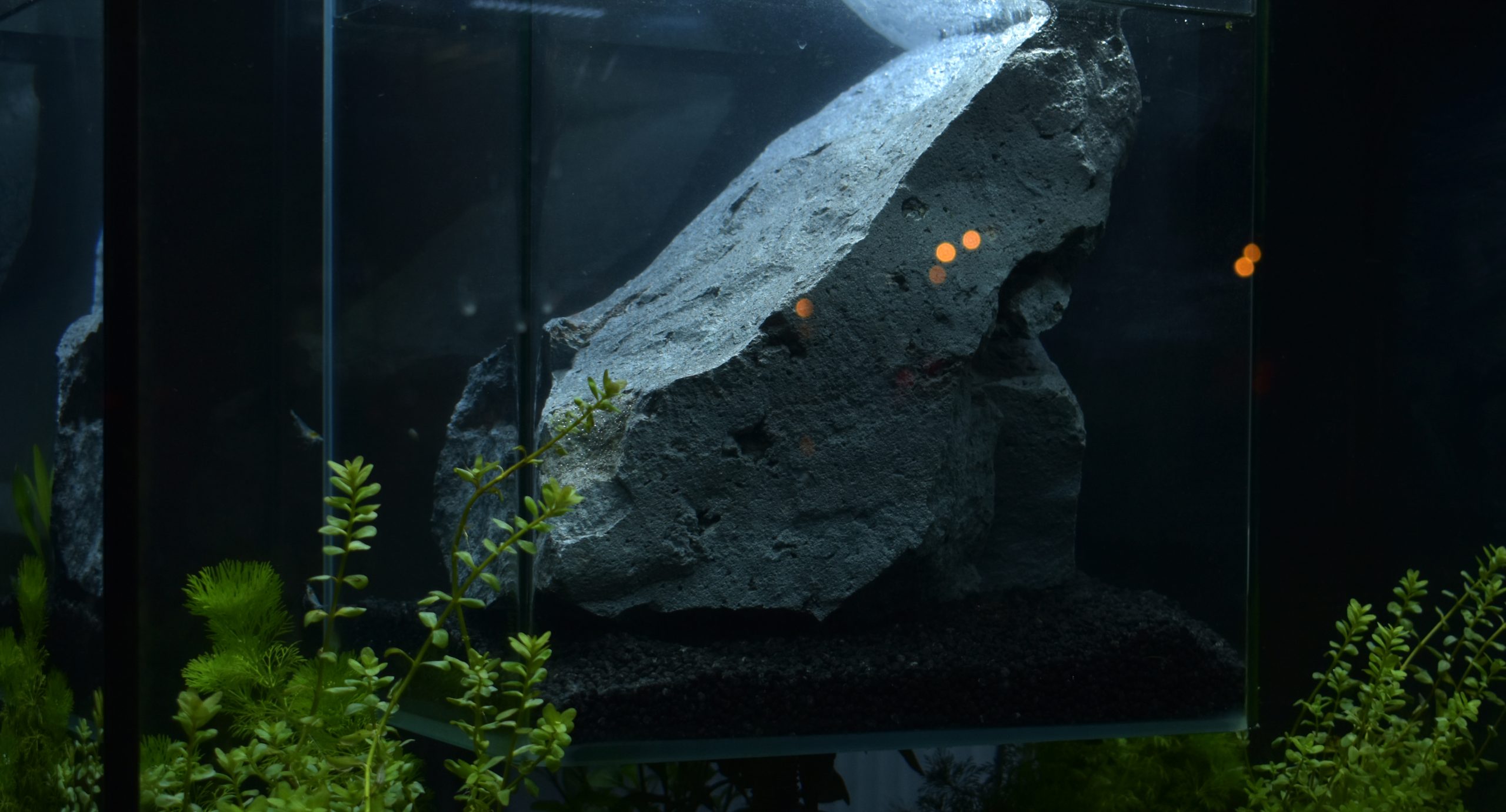
We, the shrimp inhabitants of the aquarium currently located at 48.85428, 2.35688 declare the creation of the Shrimps Society nation on this 31st day of January 2021.

Shrimps Society is a self-governing group of shrimp that recognizes the right of each and every shrimp to live in elegance and complete freedom. This Constitution specifies the conditions under which our group is organized.

Article 1

Shrimps Society is a space which allows each of its inhabitants to enjoy all known pleasures, without detriment to the pleasure or freedom of its other inhabitants.

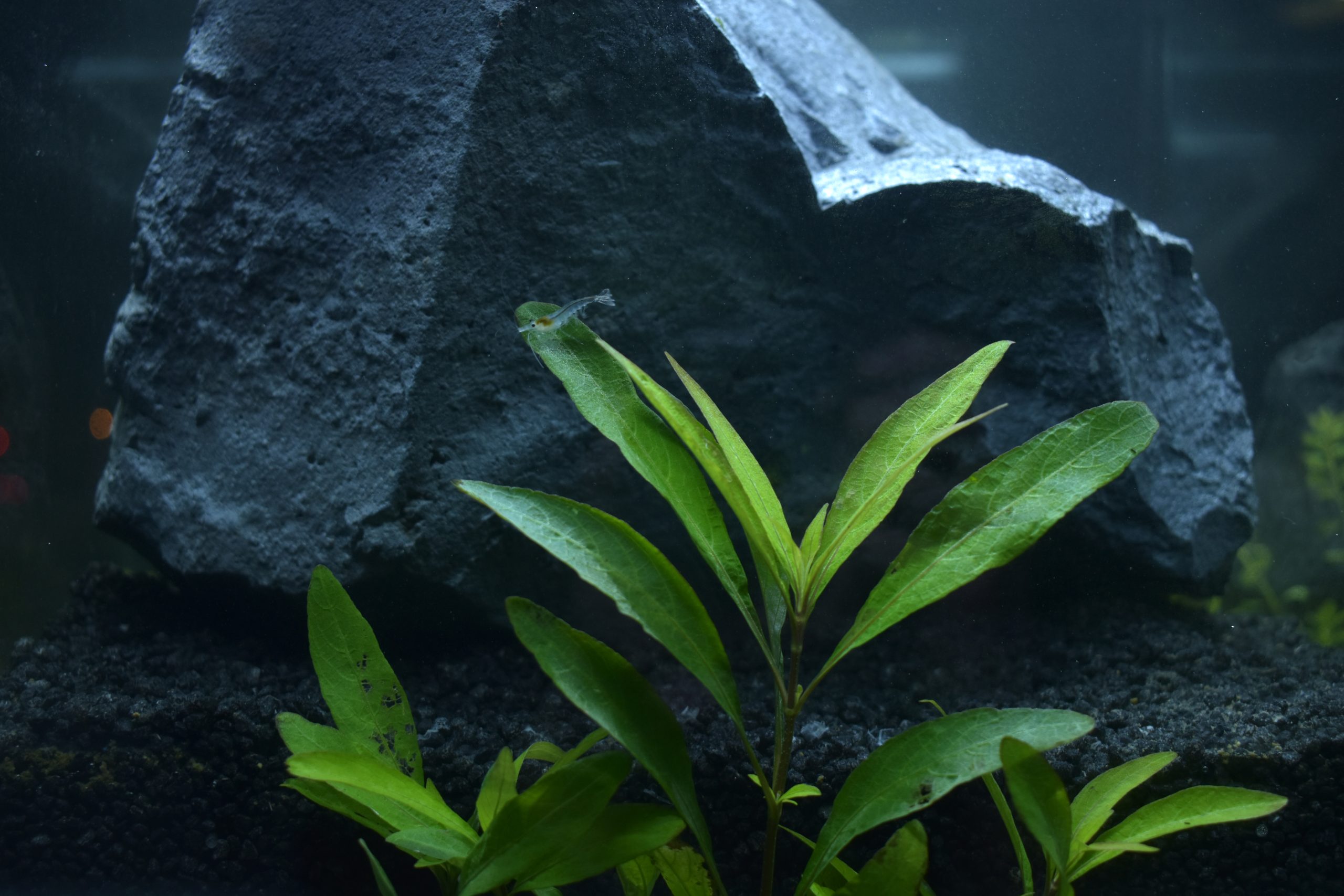
Citizens of this nation are all White Pearl shrimp placed by the human hand, known as the right of the sea. Citizenship is also available by birthright to children of Shrimps Society shrimp.

For safety reasons, it is impossible to welcome any other living creature into this nation. To avoid the risk of extinction of their society, the White Pearls live apart from other living creatures.

An exception is made for plants within the Shrimps Society, which also have legal personality and the right to citizenship.

Article 2

In its 61x41x58cm tub, national sovereignty belongs directly to the inhabitants of the Shrimps Society.

Total freedom reigns. Every citizen obeys his or her own rules and commands. The law resides in self-government, in which each citizen has his or her own legal code. Thus, the Shrimps Society is based on the operation of multiple sovereignties, taking into account the government of each citizen.

No one person or entity can claim to exercise this sovereignty.

Article 3

By their very nature, which obliges them to organize the different levels of their lives as a group, the citizens of the Shrimps Society agree to respect and protect their fellow man. Everyone is naturally good.

Article 4

All forms of work are abolished. Because it’s not necessary for their survival, the idea of physically transforming their environment doesn’t exist.

Common things are for everyone’s free use. Private property does not exist.

The idea of physical creation and manual labor can only have a divine or external origin.

Article 5

Within the Shrimps Society, rights are the same for all, regardless of sex, shape, color, swimming style, feeding habits, political administrations, personal hobbies or artistic interests. This applies as much to the White Pearls as to the plants with which they share their ecosystem.

In this way, all cultures are taken into account and accepted as they are. This knowledge, which defines the norms and ways of life of each shrimp within the Shrimps Society (as mentioned at the beginning of Article 5), is personal and therefore ephemeral. As such, they are renewed as many times as there are living beings in the Society.

Article 6

The Shrimps Society has neither an army nor a police force. Which sets the stage for a perfect utopia.

The nation forbids itself to wage war.

The nation is founded on the values of peace and tolerance. Citizens may not be pursued, sought after, arrested, detained or tried.

Article 7

Group life ensures the regular functioning of cohesion and the continuity of the State.

These interrelationships make all shrimp naturally empathetic.

Citizens move in groups of ten. In turn, one shrimp takes the reins and steers the collective movement. This organization, necessary to their survival, brings each shrimp together on a daily basis. Movement groups are established randomly and remain for a short time (3-4 days).

Article 8

This union makes it possible for shrimp to carry out their most important daily activities: eating and leisure.

Pleasure, elegance and refinement are the sole goals of the people of this utopia.

Citizens value their appearance and place a premium on aesthetics, the only element that gives meaning to their lives.

Article 9

The nation receives assistance from humans.

The day-to-day activities of the Shrimps Society are made possible by the collaboration of human shrimps. This relationship is established to enable them to expand their leisure, culture and elegance.

In exchange, the Shrimps Society agrees to give humans the keys to their utopia.

Article 10

Reports are made on condition that foreign nations recognize and agree to the constitution of the Shrimps Society.

Solar Bodies

Location
Musée d'Orsay
Dates
21 June 2018
Co-curator(s)
Diamètre
Artist(s)
Daiga Grantina, Pakui Hardware (Neringa Cerniauskaite and Ugnius Gelguda), Young Girl Reading Group (Dorota Gawęda and Eglė Kulbokaitė)
Press
Julie Ackermann for Les Inrocks, Tzvetnik.online
Credits
Diamètre

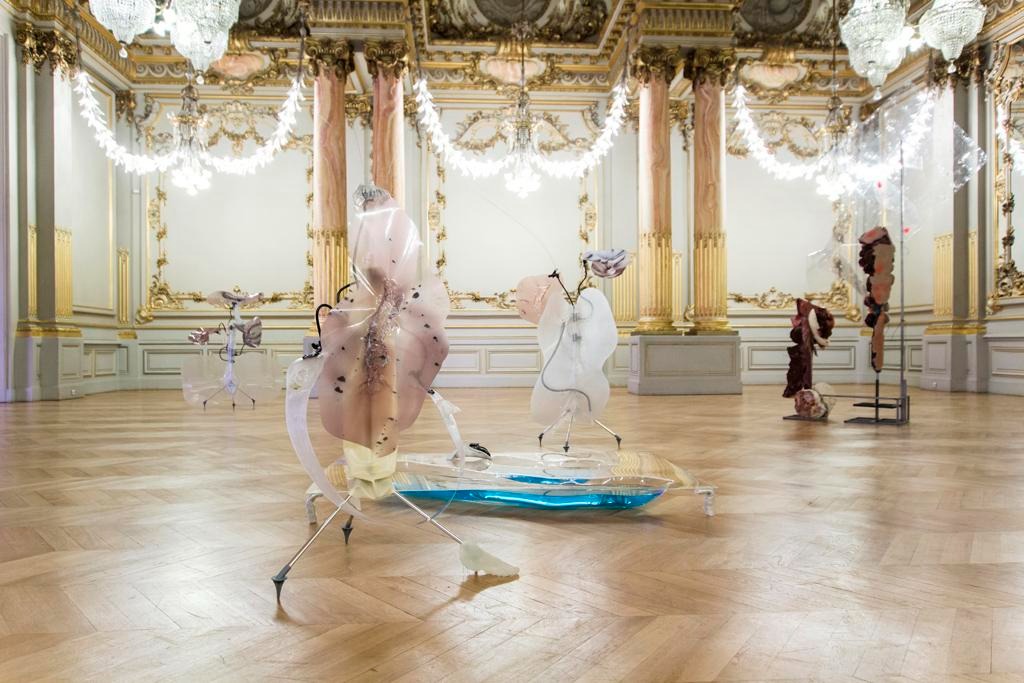
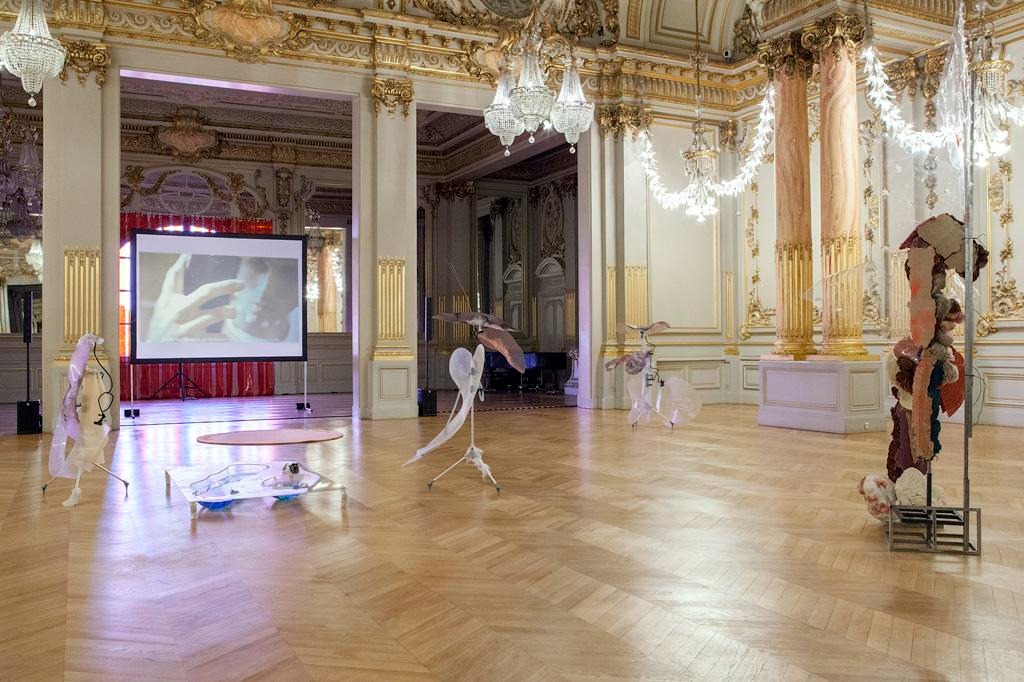
A contemporary counterpoint to Baltic symbolism.

The summer solstice is a key moment of earthly breathing, an instant to become aware of the cosmos that surrounds us and of bodies that inhabit it.
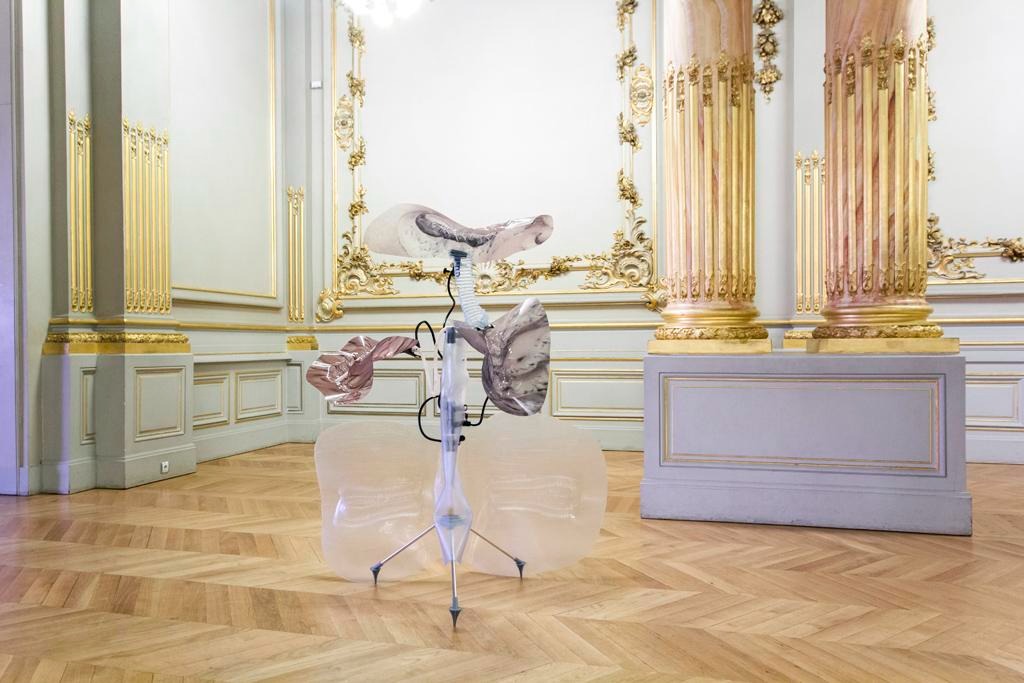
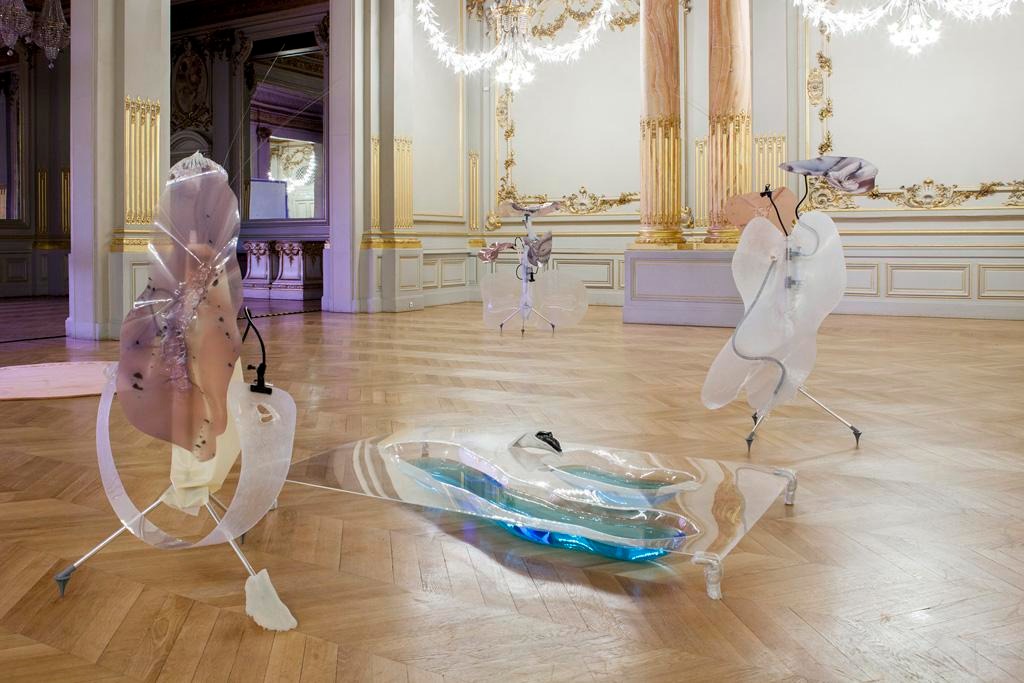
Through a majority of newly produced works, the opulent ballroom of Musée d’Orsay becomes a dance floor for solar bodies. Choreographed by three artists from the Baltic scene, the space is punctuated by Pakui Hardware’s biomorphic devices, Daiga Grantina’s anthropomorphic landscape, and a video on body heat by Young Girl Reading. The all project is connected by Norman Orro’s atomic graphic design.

Although the invited artists are not directly inspired by the Symbolism of their predecessors, they nevertheless share a certain “subjective distortion” advocated by Jean Moréas in his “Manifesto of Symbolism” in 1886. Matter expands as much as time, which is apprehended in all its complexities. In a moment that seems to be as pivotal as troubling as the turn of the last century, the artists embrace a similar equivocal relation to their time; a sceptical attraction for a world where the division between nature and culture disappears, where human and non-human intertwine, synthetic and organic become one. But, far from the construction of a national identity supported by Baltic artists at the dawn of 20th century, the creators of SOLAR BODIES embody a fluid and moving identity, as elusive as the flames that spring from all sides during this solstice celebration.

A project organized by Ø for Musée d’Orsay. As part of the solstice celebration, parallel event of the exhibition “Wild souls. Symbolism in the Baltic States”

RESUME

Selected Exhibitions

2025 – Un soleil à peine voilé

Galerie de l’Académie des Beaux-arts
Louise Belin, Megan Bruinen, Liên Hoàng-Xuân, Elouan Le Bars, Puqi Liu, Mathieu Sauvat, Anne Swaenepoël, Maxime Vignaud

2025 – Bullshit job

Centre Wallonie-Bruxelles
Ayla Aktan, Renaud Artaban & Alexandre Barbé, Ugo Ballara, Joséphine Berthou, Clémentine Blaison Vandenhende, Elie Bolard, Clara Bougon, Jingdi Cao, Sophia Dieckschaefer, Editions Burn Aout, Evangeline Font, Reem Hasanin, Ruoxi Jin, Lune Jusseau & Tom Rambaud, Elouan Le Bars, Fañch Le Bos, Rémi Lecussan, Raphaël Maman, Raphaël Massart & Matthias Odin, Sara Noun, Clarisse Pillard, Manon Torné-Sistero, Marcos Uriondo, Maxime Vignaud, Winju, W.I.P. Collective, Daniel Zduniuk, Kylian Zeggane
co-curator : Manon Klein

2025 – La constellation de Monsieur S

Galerie Eric Mouchet (Bruxelles)
Louise Assouly, Ella Bergmann-Michel, Louise Belin, Nelson Bourrec Carter, Juana Bustamante, Jeanne Champenois-Masset, Aliki Christoforou, Roxane Daguet, Kenny Dunkan, Romeo Gómez López, Angeline Guzman, Sarah Juin, Luca Nuvolone, Nelson Pernisco, Prune Perris, Giovanni Battista Piranesi, Florian Pugnaire, Louis-Cyprien Rials, Vivien Roubaud, Lola Roy-Cassayre, Justine Salamin, Dunya Savilova, Kevin-Ademola Sangosanya, tanz, Pierre Touré Cuq, Maxime Vignaud, Joseph Winckler

2025 – Symbiosium 2_Cosmologies Spéculatives

Centre Wallonie-Bruxelles
Annabelle Guetatra, Antoine Bertin, Charlotte Charbonnel, Christophe Monchalin, Damien Fragnon, Diana Policarpo, Elsa Guillaume, Esther Denis, Florian Pugnaire, France Cadet, Frederik de Wilde, Hermine Bourdin, Hicham Berrada, Jonathan Pêpe, Josefina Paz, Julien Maire, Kasia Molga, Laure Winants, Mélanie Vincent, Mélodie Blaison, Michel Jocaille, Nicolás Lamas, Nova Materia, Paul Duncombe, Robertina Šebjanič, Sabine Mirlesse, Stéfane Perraud & Aram Kebabdjian, Valentin Gillet, Valentin Vert, Vincent Voillat, Yoel Pytowski
co-curators : Stéphanie Pécourt, Christopher Yggdre

2025 – Rire sur un volcan

Poush
Cécile Beau, Fanny Béguély, Nina Berclaz, Ludwig Berger, Charlotte Charbonnel, Andrew Erdos & Shawn Murrey, Julia Gault, Mihai Grecu, Joana Hadjithomas & Khalil Joreige, Clara Imbert, Pauline Julier, Athanasius Kircher, Atsunobu Kohira, Sabine Mirlesse, Nelson Pernisco, Darta Sidere, Diana Vidrascu, Wiktoria
co-curators : Clara Darrason, Mahsan Shams, Alice Loumeau & Valentin Bansac

2024 – BAD EMS

Romero Paprocki
Alexandre Bavard

2024 – Liquidation totale

pal project
Explore the full list of 324 exhibited artists above

2024 – Nos abstractions sensibles

Poush
Xavier Benony, Ode Bernard, Michel Blazy, Etienne Bossut, Nicolas Boulard, Joël Ducorroy, Valentin Guillon, Tami Notsani, Ritual Inhabitual, Stéphanie Solinas, Emmanuelle Villard

2024 – Shaping (in your head)

Poush
Estèla Alliaud, Marcel Broodthaers, Io Burgard, Ágnes Denes, Deborah Fischer, Henri Frachon, Romain Gandolphe, Ángela Jiménez Durán, Livia Johann, On Kawara, Rob Pruitt, Claude Rutault

2024 – L’ombre des montagnes avance

Le Sprinkler
Lou Motin

2024 – Carte grise carte blanche

ENSAD Nancy
Baptiste Thiebaut Jacquel, Marvin Lad, Jeanne Maugenre, Chloé Mufraggi, Gauvain Pedoni, Nathan Riquet, Salomé Rzepecki, Nan Zhang

2023 – Variation II

193 Gallery
Valentina Canseco, Gorgone la Prince

2023 – Il n’y a pas de roman

Grand Garage Haussmann
Alexandre Fandard, Niko Garnier

2023 – 14,5 milliards d’années

Centre Wallonie-Bruxelles
Francis Alÿs, Jessica Bardsley, Michel Blazy, Claude Caelain, Edith Dekyndt, Jérôme Cognet, Francesco Jodice, Hans Op de Beeck, Olivier Sévère, Julie Vacher

2023 – 1816 : The Year Without Summer

Art Genève
Hugo Avigo, Taisiia Cherkasova, Caroline Corbasson, Morgan Courtois, Faye Formisano, Nika Kutateladze, Clara Rivault, Anna Saint Pierre, Jesse Wallace, Xolo Cuintle
co-curator : Yvannoe Krüger

2023 – Ring Ring Ring

pal project
Zarouhie Abdalian, Carla Adra, Haseeb Ahmed, Cesar Akli Kaci, Emii Alrai, Xavier Antin, Dana-Fiona Armour, Sasha Auerbakh, Adam Bateman, Alexandre Bavard, Cécile Beau, Yoan Beliard, Louise Belin, Théophile Blandet, Max Blotas, Celia Boulesteix, Max Brück, Gillian Brett, Stéphanie Brossard, Nathan Carême, Leonel Castañeda Galeano, Charlotte Charbonnel, Celia Coette, Caroline Corbasson, Marlon de Azambuja, Georgia Dickie, Marcin Dudek, Riley Duncan, Morgane Ely, Frederik Exner, Antonio Fernández Alvira, Arthur Francietta, Julia Gault, Tania Gheerbrant, Marina Glez. Guerreiro, Jules Goliath, Arthur Golyakov, Romeo Gómez López, Laura Gozlan, Collectif Grapain, Ruiji Han, Kim Hankyul, Jingfang Hao, Tristan Higginbotham, Anders Holen, Ádám Horváth, Silas Inoue, Ellande Jaureguiberry, Gvantsa Jishkariani, Ilya Kabakov, Paul Kajander, On Kawara, Monika Emmanuelle Kazi, Koen Kloosterhuis, Alfons Knogl, Lennart Lahuis, André Magaña, Jenine Marsh, Josep Maynou, Matisse Mesnil, Maya Minder, Anita Molinero, Mikelis Murnieks, Louise Mutrel, Naomi Nakazato, Yosi Negrín, Lee Nevo, Matthias Odin, Francesco Pacelli, Angyvir Padilla, Emma Passera, Jonathan Pêpe, Nelson Pernisco, Emma Pidré, Valentina Pini, Laura Põld, Manon Pretto, Yoel Pytowski, Andy Rankin, Antoine Renard, Vivien Roubaud, Kévin Rouillard, Sofía Salazar Rosales, Janne Schimmel, Kristina Sedlerova Villanen, Ding Shiwei, Dennis Sierig, Paola Siri Renard, Anna Solal, Jura Shust, Laurence Sturla, Shinuk Suh, Katinka Theis, Sarah Valente, Evita Vasiljeva, Capucine Vever, Romain Vicari, Iolo Walker, Xolo Cuintle

2022 – APEX

Keiv
Borris Arouimi, Valentin Begarin, Célia Boulesteix, Clara Duflot, Charlotte Henninger, Malone, Matthias Odin, Capucine Vever, Romain Vicari, Vincent Voillat, Xolo Cuintle

2022 – There will never be a beautiful suicide

pal project
Annabelle Agbo Godeau, César Bardoux, Jimmy Beauquesne, Louise Belin, Abdelhak Benallou, Diane Benoit du Rey, Mathias Bensimon, Raphaëlle Bertran Pinheiro, Pauline Bertholon, Marie Boyer, Cyril Debon, Gaspard Girard d’Albissin, Ludivine Gonthier, Antonin Hako, Julien Heintz, Augustin Katz, Oleg de la Morinerie, Louis Le Kim, Antoine Leisure, Simon Leroux, Marco Mastropieri, Samir Mougas, Raphaël-Bachir Osman, Kim Ouddane Munn, Brieuc Remy, Pedro Ruxa, Lassana Sarre, Ugo Sebastiao, Siam, Lisa Signorini, Louis Somveille, Thomas Vergne, Charlie Verot, Pedro Ventura Matos, Gaspar Willmann


2022 – Le Cycle des Désastres : Hystérie de l’éternité

Le Gallo
Irene de las Estrellas Abello, Mounir Ayache, Thomas Ballouhey, Marion Bocquet-Appel, Celia Boulesteix, Cloe Brochard, Alexia Chevrollier, Javier Carro Temboury, Boris Chouvellon, Alexandre Erre, Pierre Gaignard, Jules Galais, Julia Gault, Jules Goliath, Paul Gounon, Juan Gugger, Cesar Akli Kaci, Prosper Legault, Margaux Lelièvre, Vincent Lemaire, Miguel Miceli, Zoé Moineaud, Esteban Neveu Ponce, Celia Nkala, Nelson Pernisco, Manon Pretto, Olivier Sévère, Anna Tomaszewski, Capucine Vever, Romain Vicari, Vincent Voillat, Xolocuintle

2021 – To exhibit in case of emergency

Cité Internationale des Arts
Carla Adra, Asareh Akasheh, Ranti Bam, Cécile Bouffard, Kamil Bouzoubaa Grivel, Alessandra Carosi, Anna Ceipe, Magali Dougoud, Elif Erkan, Nicolas Faubert, Clément Fourment, Juan Gugger, Nathalie Harb, Charlotte Heninger, Cedrick Isham, Daniel Jablonski, Ellande Jaureguiberry, Mathilde Lavenne, Mathias Leonard, Natalia Lopez & Abraham Poincheval, Domitille Martin, Léonard Martin & Elvire Caillon, Gabriel Moraes Aquino, Samir Mougas, Nefeli Papadimouli, Benoît Piéron, Margot Piétri, Camille Pradon, Baptiste Rabichon, Ghizlane Sahli, Buhlebezwe Siwani, Kristoffer Stefan, Katarzyna Wiesiołek, Миша Завальный

2021 – Avalanche

pal project
Mounir Ayache, Thomas Ballouhey, Ranti Bam, Ivana Basic, Alexandre Bavard, Cécile Beau, Vincent Beaurin, Bianca Bondi, Bruno Botella, Matthieu Boucherit, Simon Boudvin, Cécile Bouffard, Deborah Bowmann, Gillian Brett, Jeanne Briand, Charlotte Charbonnel, Baptiste Charneux, Gaëlle Choisne, Boris Chouvellon, Pierre Clement, Cindy Coutant, Paul Créange, Wolf Cuyvers, Louis D’Anjou, Nicolas Daubanes, Laurence De Leersnyder, Alain Declercq, Dejode & Lacombe, Quentin Derouet, Lucie Douriaud, François Dufeil, Sara Favriau, Ferruel & Guedon, Hervé Fischer, Deborah Fischer, Nicolas Floc’h, Karsten Födinger, Pierre Gaignard, Vincent Ganivet, Anne-Valérie Gasc, Julia Gault, Paul Gounon, Laura Gozlan, Juan Gugger, Cyrielle Gulacsy, Matthieu Haberard, Antonin Hako, Charlotte Janis, Jean-Baptiste Janisset, Jeschkelanger, Youri Johnson, Fabian Knecht, Roy Kohnke-Jehl, Lucas Kroeff, Yvannoé Kruger, Emmanuel Lagarrigue, Pauline Lecerf, Louis Le Kim, Anaïs Lelièvre, Vincent Lemaire, Ra’anan Lévy, Marie Limoujoux, Guillaume Linard Osorio, Vincent Lo Brutto, François Malingrey, Leonard Martin, Vincent Mauger, La Méditerranée, Benoit Ménard, Adrien Menu, Marie-Claire Messouma, Léa Mestres, Enzo Mianes, Juliette Minchin, Anita Molinero, Gabriel Moraes Aquino, mountaincutters, Louise Mutrel, Marie-Luce Nadal, Antoine Nessi, None Futbol Club, Nefeli Papadimouli, Pierre Pauze, Jonathan Pepe, Nelson Pernisco, Boryana Petkova, Benoît Piéron, Margot Pietri, Benoit Pype, Andy Rankin, Delphine Reist, Antoine Renard, Mateo Revillo, Vivien Roubaud, Salim Santa Lucia, Nico Sauer, Ugo Schiavi, Olivier Sévère, Buhlebezwe Siwani, Cédric Teisseire, Anna Ternon, Maxime Testu, Thomas Teurlai, Simon Thiou, Laurent Tixador, Anna Tomaszewski, Pauline Toyer, Victor Vaysse, Romain Vicari, Vincent Voillat
co-curator : Nelson Pernisco

2021 – Shrimps Society

Cité Internationale des Arts
Roy Kohnke-Jehl, César Bardoux, Anna Ternon

2020 – An invisible exhibition

Wonder/Fortin
Ismail Alaoui Fdili & Célia Picart, Sharon Alfassi, Nicolas Bailleul & Maxime Chudeau, BLAM!, Salomé Burstein, Axel Chemin, Benjamin Collet, Louis Danjou, Roberto Dell’Orco, Marianne Derrien, Thibault Duchesne, François Dufeil, Eugénie Gaudel, Gaspard Girard d’Albissin, Laura Gozlan, Nicolas Hosteing, Hustle White, Charlotte Janis, Roy Kohnke-Jehl, Jean-Benoit Lallemant, Lucie Laporte, Maxime Leblanc, Pauline Lecerf, Jonathan Marti, Maz, Alice Nikolaeva, Maximiliam Papadia, Nelson Pernisco, Clémentine Post, Salim Santa Lucia, Thomas Teurlai, THTF, Arslane Smirnov

2019 – Infinity

Infinity
César Bardoux, Paul Gounon

2018 – Solar Bodies

Musée d’Orsay
Daiga Grantina, Pakui Hardware, Young Girl Reading Group
co-curator : Diamètre

2018 – Effet d’urgence

Wonder/Liebert
François Dufeil

2018 – Situare II

Wonder/Liebert
mountaincutters

2018 – What about 2222 ?

Foyer des possibles
Samuel Aligand, Rémi Amiot, Mounir Ayache, Laetitia Bech, César Bardoux, Jessica Boubetra, Jeanne Briand, Chloé Dugit, Gros, Raphaël Emine & Julie Buffard, Maxence Hamard, Matthieu Haberard, Enzo Mianes, Mathieu Merlet-Briand, Celia Nkala, Margot Pietri, Andrés Ramirez, Lauren Tortil, Romain Vicari

2018 – Du temps dont je suis fait

Wonder/Liebert
Nelson Pernisco

2017 – Voyages vers des lieux inaccessibles

71B
Laetitia Bech

2017 – Sculpt(s)

71B
Jeanne Briand

2017 – La pensée du tremblement

ENSAPC YGREC
Minia Biabiany, Gaëlle Choisne, ÉliseOurcol-Rozès, Julien Creuzet, Alice Didier Champagne, Kenny Dunkan, Rémi Duprat, Marco Godoy, Tarek Lakhrissi / Aurèle Nourisson, Hugo Livet, Violaine Lochu, Julie Luzoir, Paul Maheke, Basir Mahmood, Marie-Claire Manlanbien, Nefeli Papadimouli, Sandrine & David Giudita Vendrame, Yao Qingmei
co-curated with Diamètre

2016 – An internet history

Sciences Po
Jimmy Beauquesne, Tom Burtonwood, fleuryfontaine, Aurélie Herbet, Julien Levesque, Albertine Meunier, Jan Nikolai Nelles & Nora Al Badri, Yves Netzhammer
co-curator : Manon Klein

2016 – Le soleil, le temps et le feu

Champ Libre
Meryll Ampe, Jeanne Briand, Santiago Esses, Hector Garoscio, Gaspard Hex, Vincent Lemaire, Demian Majcen, Enzo Mianes, Nelson Pernisco, Romain Vicari

2015 – Kula

71B
Julie Luzoir
co-curator : Manon Klein
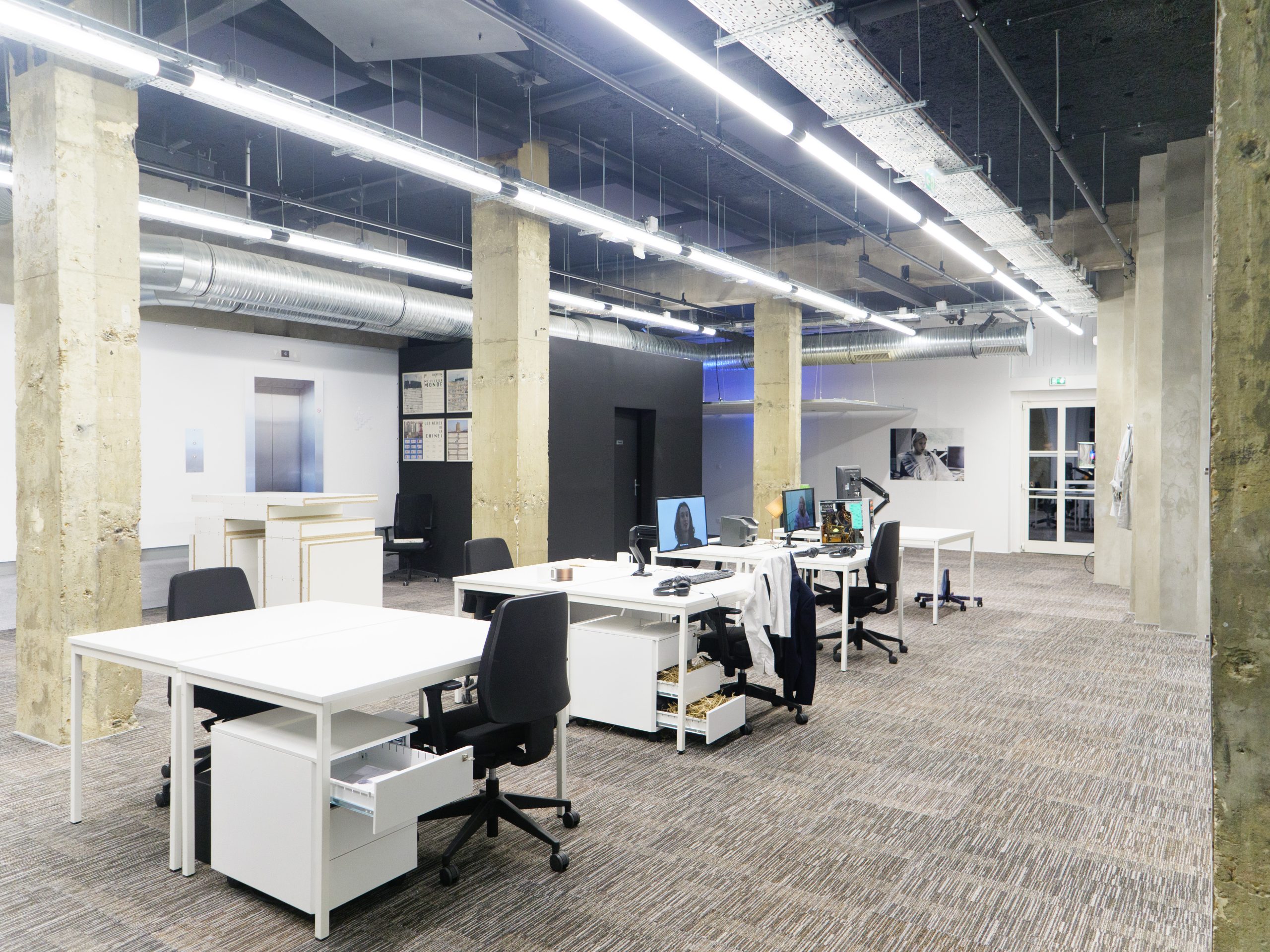
Selected Projects

2025 – Villa Dufraine

Residency with Eruption Exposure collective, a program by the Académie des beaux-arts

2023/2024 – Seine-Saint-Denis departmental collection

Curatorial mentorship for a Year 6 class, Collège Henri Wallon (Aubervilliers), exhibition with works from the collection

2023 – Villa Ruffieux

Two-month residency

2023 – ENSAD Nancy

Year-long mentorship and workshops

2023/present – Oblivion Collection

President and founder of an online archive of missing artworks

2022/2025 – Poush

Member of Le commissariat, informal curatorial collective

2022/2025 – pal project

Gallery representation

2021 – Shrimps Society

Owner of an art center in an aquarium filled with shrimps, supported by Fondation Antoine de Galbert
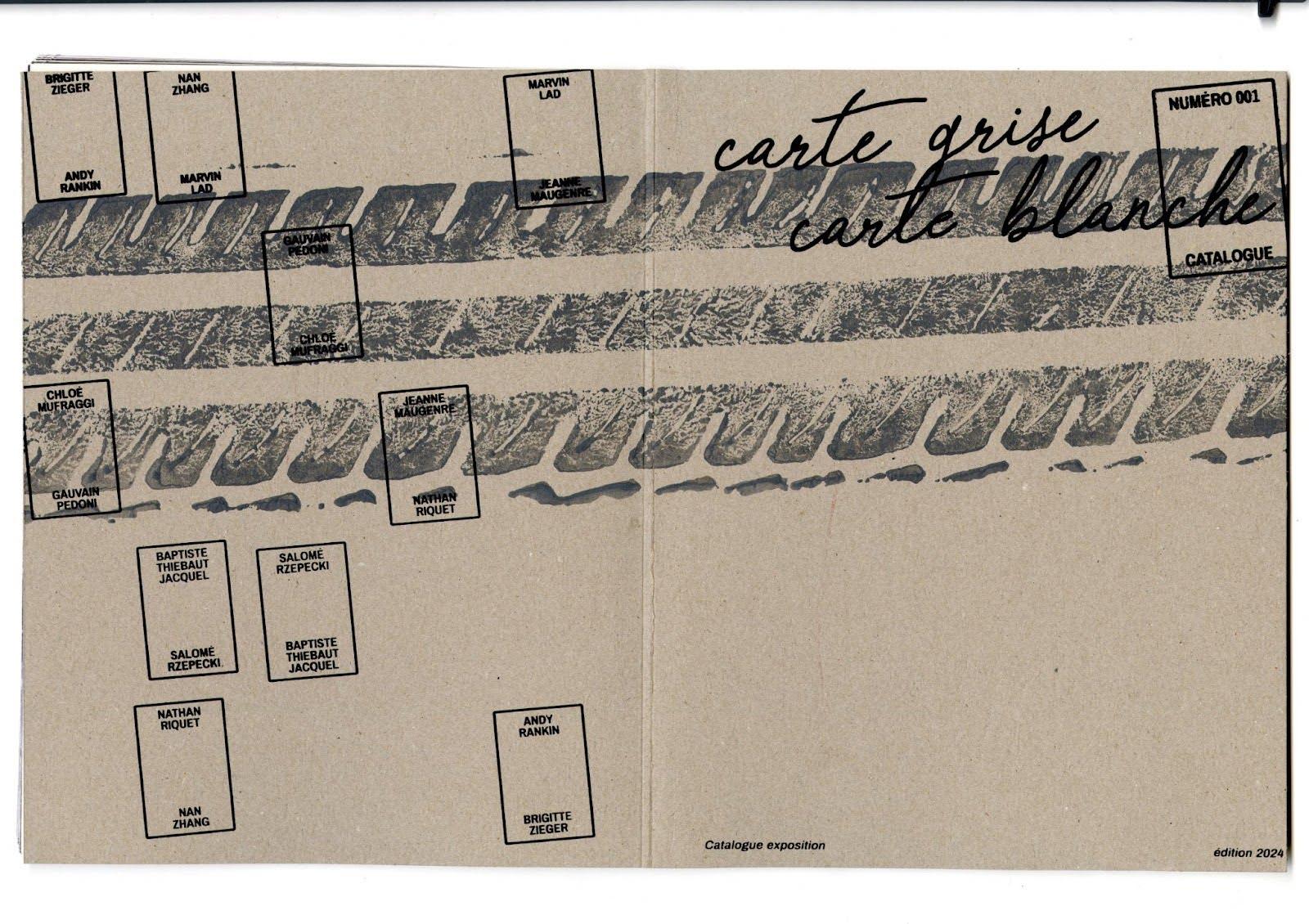
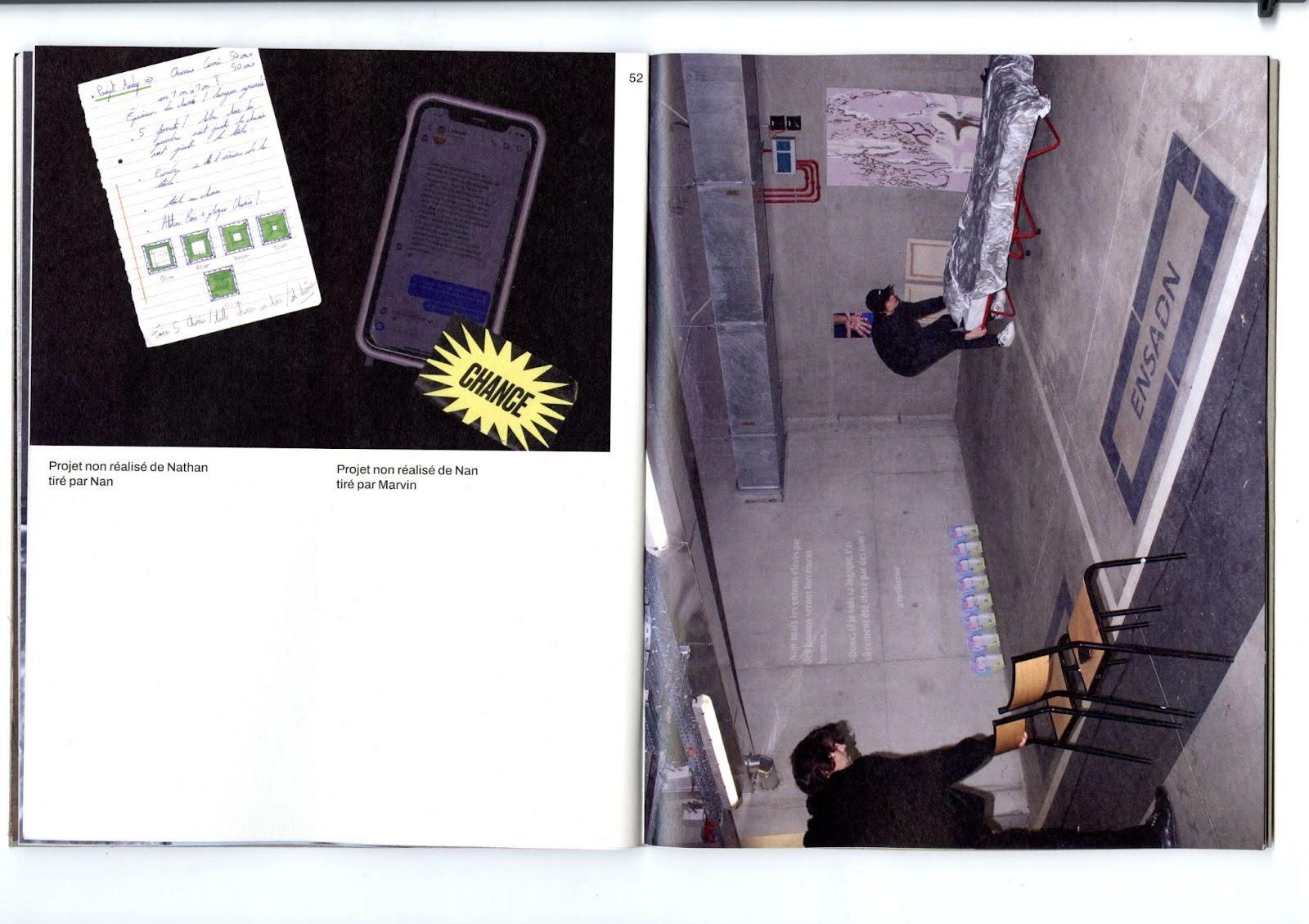
2020/2021 – Cité Internationale des Arts

Ten-month residency, grant by Centre National des Arts Plastiques

2019/present – C-E-A

Member, French association of curators

2015/2022 – Diamètre

Co-founder, curatorial collective for emerging practices

Selected Talks

2025 – Centre Wallonie-Bruxelles

Conférences Mutants – Hybrides & Prométhées. Décorporisation & définalisme à l’ère liquide (#Symbiosium_2)

2024 – BBB Centre d’art

L’art de l’exposition, lecture and professional engagement workshop

2024 – Poush

Launch of the Oblivion Collection showcase website, on the invitation of Thomas Hirschhorn

2023 – Villa Ruffieux

Presentation of curatorial research to EDHEA students

2023 – Art Genève

Introduction to Poush

2021 – Poush/Artech

Workshop : Taking Ownership of the Collapse

2016 – Centre Pompidou

The role of the curator in tomorrow’s museum

Selected Publications

Centre Wallonie-Bruxelles

Guide de survie, Editorial direction of a publication bringing together contributions from 30 art-world professionals, each offering practical guidance for recently graduated artists through dedicated fact sheets, produced in the context of the exhibition Bullshit job, which gathers 30 artists from 10 art schools in France and Belgium. Open-source publication

Académie des Beaux-arts

Un soleil à peine voilé, Editorial direction of a catalogue, authorship of 12 artwork entries and 8 essays on the practices of the artists-in-residence : Louise Belin, Megan Bruinen, Liên Hoàng-Xuân, Elouan Le Bars, Puqi Liu, Mathieu Sauvat, Anne Swaenepoël, Maxime Vignaud

2025 – Université Paris IV

Les limites curatoriales de l’effondrisme, in Collectif Clome

2025 – Liegianos, nos. 217–220

Avalanche

2024 – Résidence Saint Ange

Essay on Nelson Pernisco’s practice

2024 – Classic Edition

Interview with Alexandra Bavard

2023 – Centre Wallonie-Bruxelles

Out of the blue, text on the attempt to send an exhibition into the stratosphere, published in Absys 2023

2023 – ENSAD Nancy

Carte grise, carte blanche, Authorship of an essay on transcending the notion of failure, and authorship of eight introductions to the practices of Baptiste Thiebaut Jacquel, Marvin Lad, Jeanne Maugenre, Chloé Mufraggi, Gauvain Pedoni, Nathan Riquet, Salomé Rzepecki, and Nan Zhang

2023 – Fondation Emerige

Texts on Ismaël Bazri, Frederik Exner, Hugo Ruyant

2023 – Tick Tack Gallery

Essay on Alexandre Bavard’s practice

2023 – Galerie Eric Mouchet

Text on Vincent Voillat, in C’est peut-être un peu plus qu’une histoire (d’amour)

2022 – pal project

35 artist interviews for There will never be a beautiful suicide‘s catalogue

2022 – Fondation Emerige

Texts on Dora Jeridi, Abdelhak Benallou and Clémence Estève

2021 – pal project

Interviews with Hervé Fischer and Nelson Pernisco, and text on François Dufeil’s practice, in Avalanche catalogue

2020 – Park Books

Essay on the practice of Alexander Rosenkranz, in City Cut OFF 2015–2020

2015 – Diamètre

Authorship of several texts for the Ravage catalogue